Category: Cycling

  • 15-minute cities or 15-minute ‘bubbles’?

    15-minute cities or 15-minute ‘bubbles’?

    The motion at today’s Cityscape conference in Riyadh was: The 15-Minute City model will improve quality of life for all communities and can be easily scaled globally. 

    Who would choose to argue against the principles of the 15-Minute City? Walkable. Sociable. Low carbon. 

    Who wouldn’t want any of that?

    But, if not the principles of the 15-Minute City, what we should be deeply concerned about is the experience of translating those principles into practice. 

    My colleague Katya and I are going to argue against the motion from our experience of what many developers and designers are naively promoting in the name of the 15-Minute City. 

    Because what we are seeing in cities all over the world are individualistic, inward-looking, over-localised, gated developments calling themselves 15-Minute Cities. 

    Why do their proponents claim that these are 15-Minute Cities? Well, because they are relatively small, they have a mix of land uses and there’s a varying degree of infrastructure for walking and cycling. 

    But there’s typically very little, if any, public transport and the connections to other so-called 15-Minute Cities usually require the pedestrian or cyclist to cross the major roads and even highways that separate them. So these would-be walkers and cyclists usually end up jumping in a car and driving. 

    We know a lot about this in the UK because the 15-Minute City concept was at the heart of disastrous 20th Century New Town planning, even if we didn’t call them 15-Minute Cities back then.

    Communities – especially women – found themselves unable to walk easily between neighbourhoods because they felt unsafe next to fast cars or having to move through the tunnels that had been built under the highways or up, over and down the bridges that are the visible symbols of civic failure. 

    (more…)
  • World Cities Summit: leveraging the science of cities

    World Cities Summit: leveraging the science of cities

    As an architect & urban planner my principal concern is to make cities work for people. This means understanding how their streets connect to either encourage low carbon transport such as walking and public transport. Or, if they’re disconnected, do they lock in car dependence and its carbon impacts?

    (more…)
  • Is physical distancing possible on city streets?

    Is physical distancing possible on city streets?

    Until a vaccine is found for COVID-19, and perhaps beyond, it will be important to practise physical distancing in towns and cities.

    Whether this is possible will come down to the “carrying capacity” of the urban infrastructure: in particular, the relationship between Pedestrian Supply in the form of sufficiently wide footways and Pedestrian Demand in terms of the need for people to walk, whether that is to work, home, school, the shops or for leisure and pleasure.

    Both supply and demand are calculable using tools from tape measures to multi-variable modelling algorithms.

    Screenshot 2020-04-28 at 17.40.49

    Much well-deserved attention has been paid to the Sidewalk Widths NYC project, a digital map that “is intended to give an impression of how sidewalk widths impact the ability of pedestrians to practice social distancing.” By measuring the available width of footways, the map indicates which footways may or may not be suitable for physical distancing.

    Sidewalk width provides an important piece of the “Pedestrian Supply” equation. However, it is not on its own capable of answering the central question: is physical distancing possible?

    First because it is a one-dimensional measure and physical distancing is at least two-dimensional: it may be possible to keep 6 feet to the side of someone else, but is it possible to keep 6 feet in front and 6 feet behind? Given the length of many streets in New York City it may seem apparent that there is plenty of space to go around but the generously wide sidewalks of Times Square demonstrate that, under normal circumstances it is possible for these to be swamped with human activity and, as a result unsuitable for physical distancing under the new normal. Furthermore, it may be possible to observe distancing while walking mid-block but what happens at street intersections? Is there space to queue? Are the street lights synchronised to let one “platoon” of users cross before the next arrives behind them? Is flow predominantly one-directional (which it may often, but not always, be in the rush hour) or two-directional (as it can be at lunchtime)? One-way flows may have less of the “ordered chaos”, the urban ballet of two-way flows and so one-way flows may be more efficient.  (more…)

  • The return of the impossible – Astana Economic Forum

    The return of the impossible – Astana Economic Forum

    Good afternoon. It’s an honour and a pleasure to be here in Astana today with this distinguished panel.

    In speaking about the cities of the future I’d like to speak about three technologies that I think are not only exciting but are also capable of genuinely addressing the “Global Challenges” theme of this Forum.

    The first is a mobility technology. The second is a physical transaction technology. The third is a digital technology.

    As an architect involved in the design of everything from new buildings and public spaces to entirely new cities, these are three technologies that I’m particularly invested in. (more…)

  • Growth. Are you old school or new school?

    Growth. Are you old school or new school?

    There are two different schools of thought about how to accommodate urban growth. The first says that cities should build more road capacity to handle private vehicle traffic. The second says that less space should be provided for private vehicles and more investment should be made in public transport and “active travel” i.e. walking and cycling. The first approach is generally more costly than the second.

    The old school of thought has prevailed for around a century. The new school is relatively more recent, responding to the frequent failure of the former, where more road space has created more road traffic, which has created more congestion.

    Cities all over the world are now removing expensive car-oriented infrastructure and introducing space for walking, cycling and public transport. Ring roads and bypasses are being unpicked and cities are thriving as a result. Look at Copenhagen, Paris, London, Birmingham, Boston, Poynton or any number of places that have employed the new school approach.

    On Poynton…”This was the busiest junction in Cheshire, with 25,000 vehicle movements per day and the fourth worst performing retail centre in Cheshire East. It now accommodates a similar volume of traffic, but since average speeds have fallen to below 20mph, drive times through the centre are significantly reduced. Anecdotally people feel safer crossing the carriageway and cars will stop for them, make eye-contact and usually elicit a wave of thanks from the pedestrian.” The Academy of Urbanism

    Road speeds are being reduced, from 40 or 50mph to 20 or 30mph. Not only on residential streets but at the intersections of major roads too. Why? Because when you slow traffic down it flows more freely. Why? Because at lower speeds, more vehicles can fit into the same space. This isn’t rocket science. It’s simply a different school of thought.

    When a city pursues “old school thinking” of road capacity increases and banned turns then not only is this going to generate more road traffic it is also going to make it ever harder for people to do anything other than drive. In these circumstances, walking and cycling become harder. “Walking and cycling facilities” might be put in but these are often token gestures because they are fitted in around the needs of traffic. Desire lines – the paths that people prefer to take – are severed and people are encouraged to walk or cycle on unnaturally twisted journeys. What happens as a result? They don’t use these “facilities” and they take risky alternatives, dashing across road lanes or cycling among fast-moving traffic.

    Old school thinking is voracious – once started it is hard to stop. Nevertheless, evidence, analysis and creative thinking can help. If there is a willingness to listen.

    I speak from the perspective of practice – of having observed the behaviour of people on foot, on bikes and in vehicles in a scientific manner for over 25 years. Of having presented evidence of fact to local authorities and of overturning poorly thought-through, old school proposals. Of having designed alternatives that don’t put anyone in particular first but instead balance the needs of all. This isn’t about being pro-bike and anti-car. It’s about being pro-place and pro-cities.

    And let’s be clear, new school thinking is fundamentally about being pro-growth. But pro a form of growth that is smart and sustainable: growth that doesn’t sacrifice the profound benefits of local places for the expedience of cross-city commuting, but growth that promotes alternative ways of traveling and enhances the attractiveness of cities as places to live in and invest in.

  • Backwards plans for Newcastle’s Blue House Roundabout

    Backwards plans for Newcastle’s Blue House Roundabout

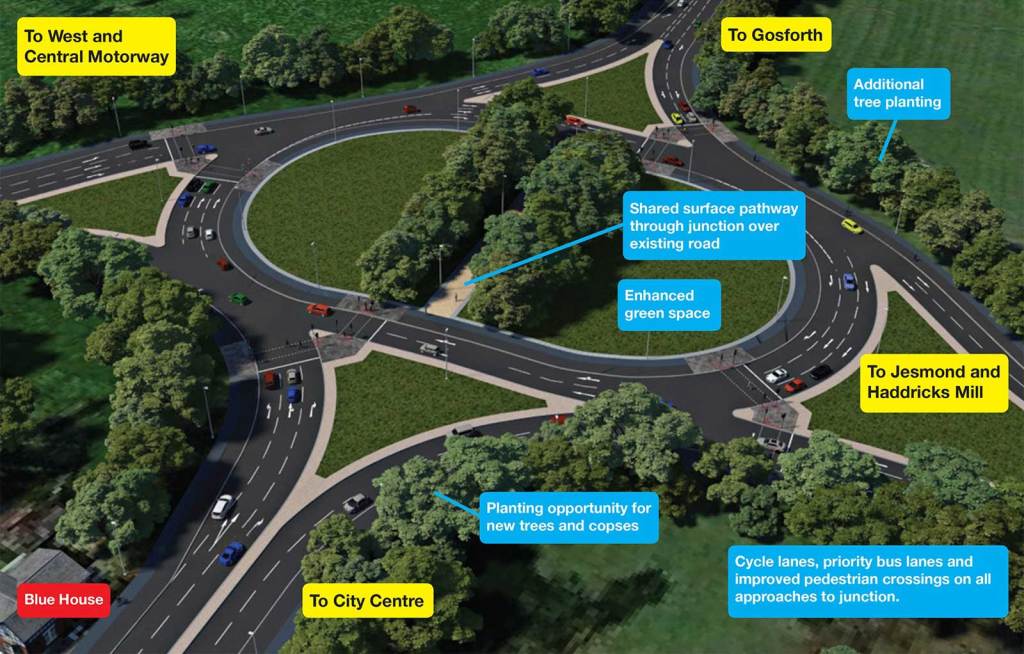
    Newcastle City Council’s plans for the Blue House Roundabout are appalling and unnecessary.

    I know the junction and have walked and driven across it more times than I can remember. The last thing it needs is what is proposed and I intend to do what I can to help stop the scheme.

    There is already a significant body of local opposition to the proposals, for example:

    Self-Loathing on a City Scale

    “At present, it’s a busy, but functioning, junction occupying a particularly striking location – the intersection of two broad avenues of lime trees, some 130 years old, which cross the historic open spaces known as Duke’s Moor, Little Moor and the Town Moor. These spaces belong to the hereditary Freemen of Newcastle upon Tyne, who have been exercising their right to graze cattle here for a thousand years or so. They form a green belt around the city centre and make its inner suburbs surprisingly pastoral.”

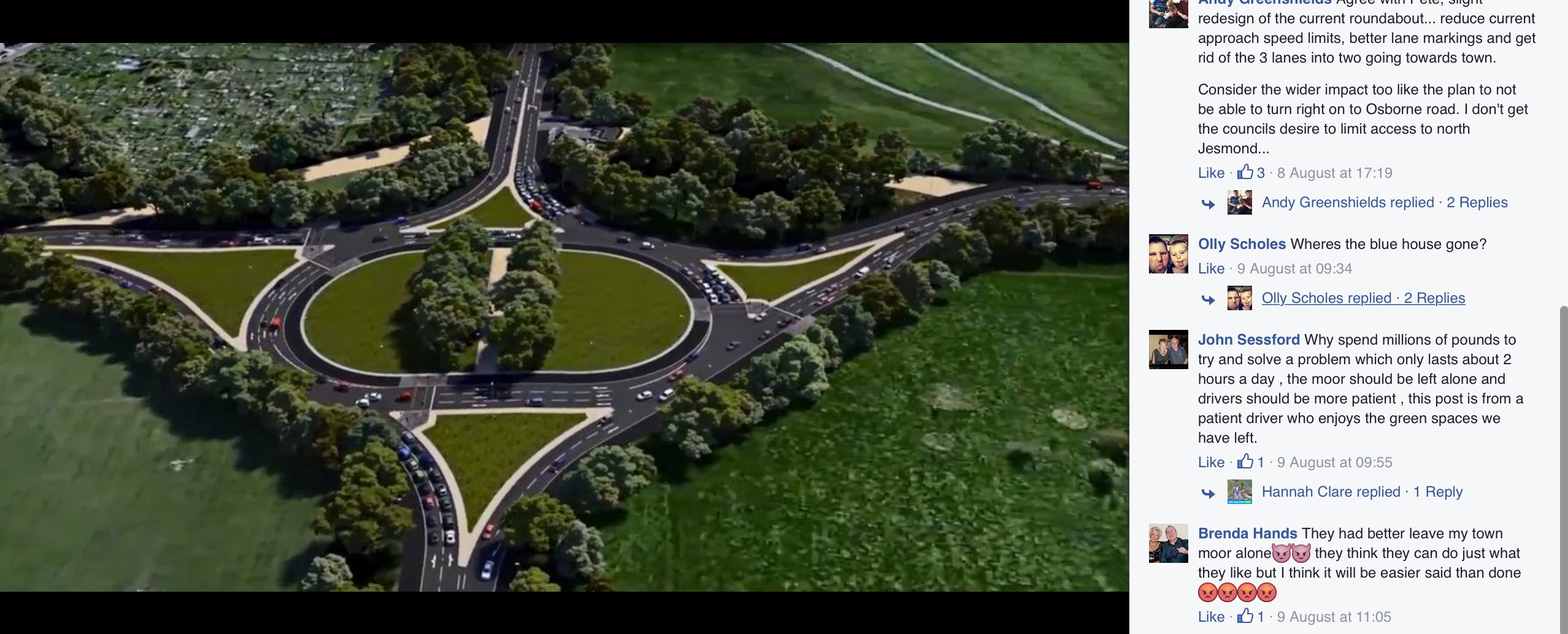
    Facebook and Twitter are both active:

    image

    Yet the more weight that can be brought against these unnecessary, expensive and car-centric proposals, the better.

    Don’t let this nonsense be foisted any further. Take Newcastle forwards not backwards.

  • Sustainable cities of the future – sketch

    Notes for keynote at UK Green Building Council Annual City Summit, Birmingham.

    1. Spatial planning & human behaviour implications of sustainability – reduction of transport carbon through shift towards walking, cycling & public transport

    2. A massive shift needed in transport + land use planning, urban + landscape design, architecture. Professional inertia. Turning the supertanker.

    3. A massive opportunity. Reason to turn.

    4. Lessons from the past eg Pompeii, Brindley Place.

    5. Examples from the present eg Darwin, London SkyCycle, Birmingham Charette.

    6. UK government: Smart & Future cities agenda is a sustainability agenda.

    7. Social inequalities dimension of sustainability.

    8. Need to act at all scales simultaneously ie there’s work for all of us to do.

    9. Challenge for modelling.

    10. Challenge for research.

    11. Challenge for practice: design, development & real estate investment.

    12. Already being acted on. The supertanker is turning.

  • Past, present & future_Space Syntax in practice

    Past, present & future_Space Syntax in practice

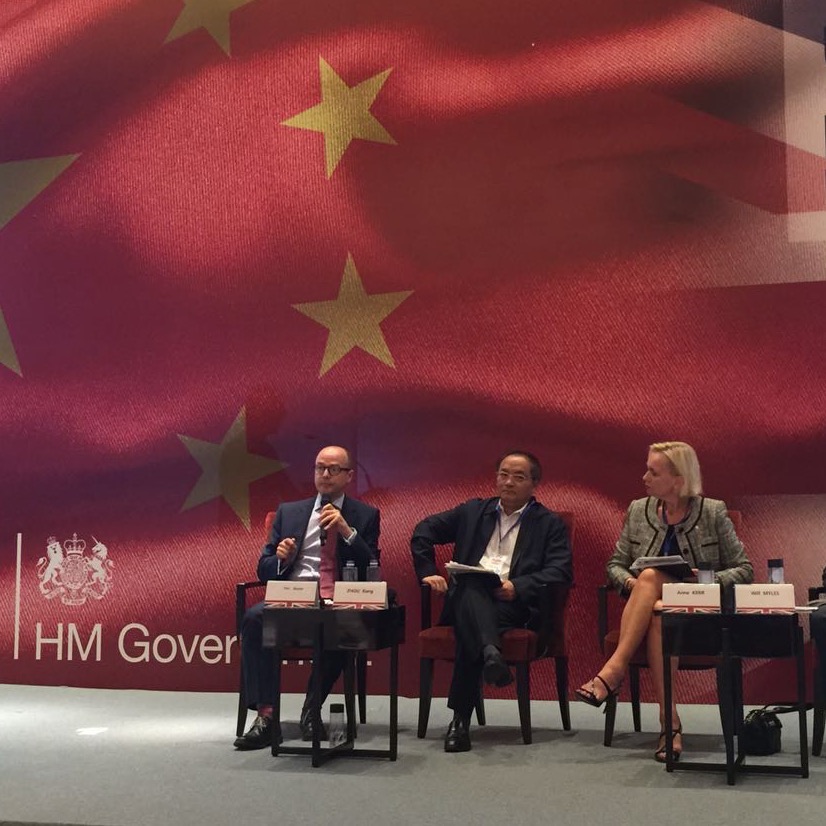
    [Speaking notes for Tim Stonor’s opening presentation at the First Conference on Space Syntax in China, Beijing, 5th December 2015.]

    Good morning. It is an honour to be speaking at this important conference alongside so many distinguished speakers and attendees.

    My talk today will cover the past, present and future of Space Syntax Limited’s experience working on projects in London and around the world, including here in China.

    As you heard from Professor Hillier, the relationship between academic research and practice is fundamental. Practice provides an opportunity to apply Space Syntax techniques – and it also provokes new research questions. (more…)

  • Cargo bikes are an urban game-changer

    Cargo bikes are an urban game-changer

    Cargo bikes are an urban game-changer. The combination of online retail and out-of-town mega-distribution centres means that town centre retail must transform. Shops don’t need so much storage space because goods can be sent straight from depot to home. That storage space can be repurposed as retail or office space, bringing new life back to town centres.
    Trucks can interchange with cargo-bikes at the edge of town.
    Town centres don’t need large swept curves at traffic junctions, making it easier for pedestrians and cyclists to move.

     
    Towns can be designed for slow but effective movement, with all the opportunities for socially and economically beneficial interaction that slow movement supports.

  • Integrated Urban Planning – balancing the multiple flows of the city

    Notes for the UK-China Sustainable Urbanisation Conference in Chengdu, China on 24th September 2015


    My job as an architect and urban planner is to design new towns and cities – as well as new parts of existing urban settlements. This means designing the multiple systems that make up a city. We often think about towns and cities in terms of their physical stuff: their buildings. Perhaps also in terms of their roads and rails. But for me the success of any city can be seen and measured in terms of its flows, the flows of:

    • energy
    • water
    • data

    and, most important of all, the flows of:

    • people: in cars, on public transport, on bicycles and on foot.

    Each of these flows is impacted by urban development: how much of which land uses are placed where, and how they are then connected to each other. Flows impact on other flows.

    Sometimes these impacts are positive, sometimes negative. They have enormous social and economic implications.

    Urban planning is as much about designing flows as it is designing buildings.

    We live in an age of unprecedented computing power – this gives us the ability to better predict the nature of these impacts.

    This is especially important to avoid the unwanted effects of urban development: congestion, air pollution, social isolation and unsustainable stresses on natural resources.

    And computing can help create the positive impacts that are needed to support the essential purpose of cities: to be:

    • machines for human interaction
    • crucibles of invention
    • factories for cultural creation.

    The last decade has seen the emergence of Integrated Urban Modelling. My company, Space Syntax, is a leader in the field: one of the UK companies referred to by the Chancellor as contributing to China’s growth and development. Working, for example, with the China Academy of Urban Planning and Design across China in Suzhou and Beijing.

    Integrated Urban Models link the data generated by the multiple flows and reveal the interactions that help architects and urban planners create sustainable plans. Space Syntax has identified the essential role of spatial layout as the principal influence on urban performance. Spatial analytics are at the heart of our approach to Integrated Urban Modelling and we have made our discovery open source and openly available so that others can benefit too.

    The Space Syntax Online Training Platform is a freely available, web-based resource through which urban practitioners, policymakers and local residents can equip themselves with information and skills to create more sustainable urban futures.

    I’m pleased to announce that this platform is currently being translated into Chinese so that the Space Syntax’s discoveries and experiences can be more readily disseminated here in China.
    _____________

    Integration, balance, glue, pivot: space
    In many ways, urban planning is the integration and balancing of multiple flows. Integration needs glue and balance needs a pivot. Spatial layout provides both.


  • What did the Romans ever do for us? Pompei’s 5 lessons for placemaking…

    What did the Romans ever do for us? Pompei’s 5 lessons for placemaking…

    Download the presentation
    Tim Stonor_Future mobility 15.001

    In looking forwards it is important to learn the lessons of history.

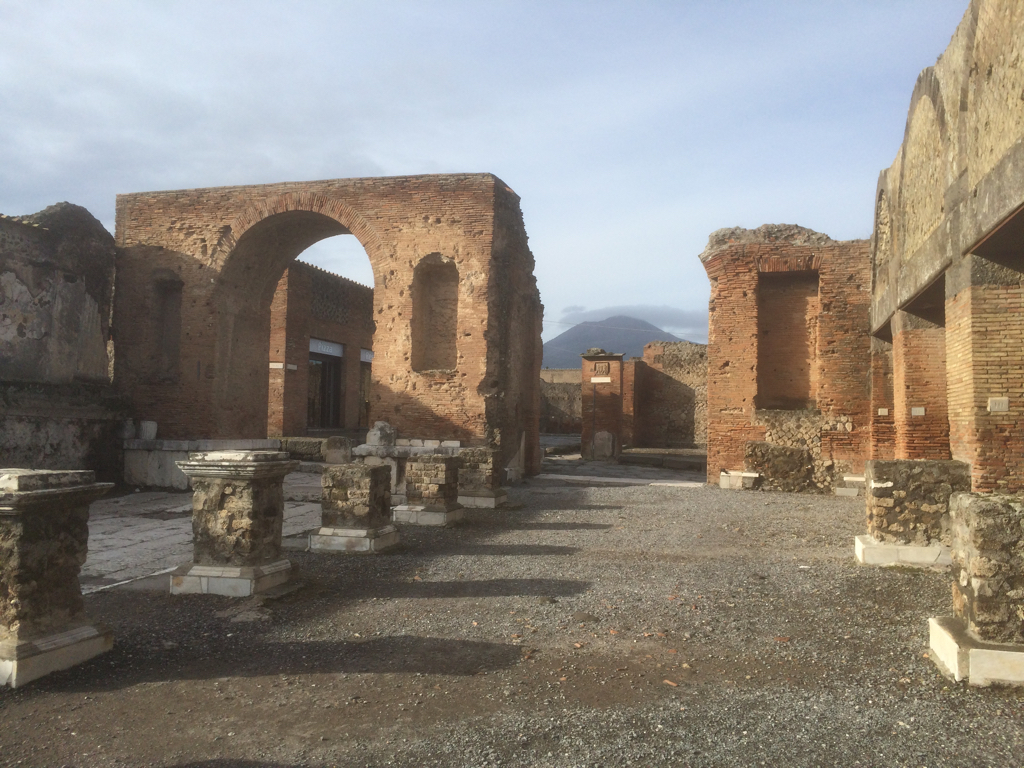
    Look at Pompei. A city built for efficient mobility. 

    A model of the 1st century with lessons for the 21st century. 
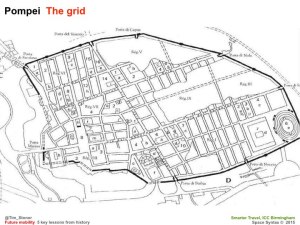
    Tim Stonor_Future mobility 15.002

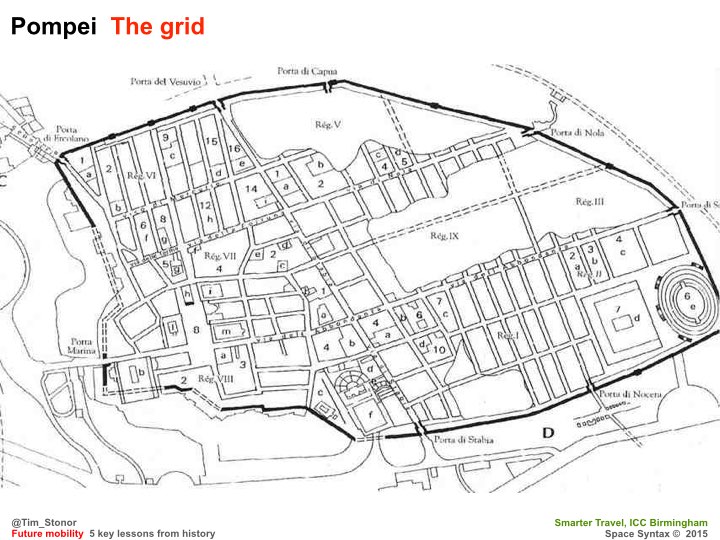
    The grid – no cul de sacs. Built for mobility. Built for commerce. 

    More or less rectilinear – not labyrinthine. A layout that brains like. Easy to wayfind. Hard to get lost in.
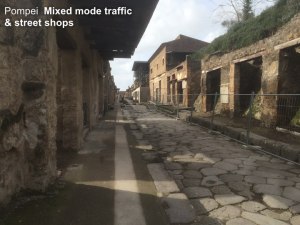
    Tim Stonor_Future mobility 15.003

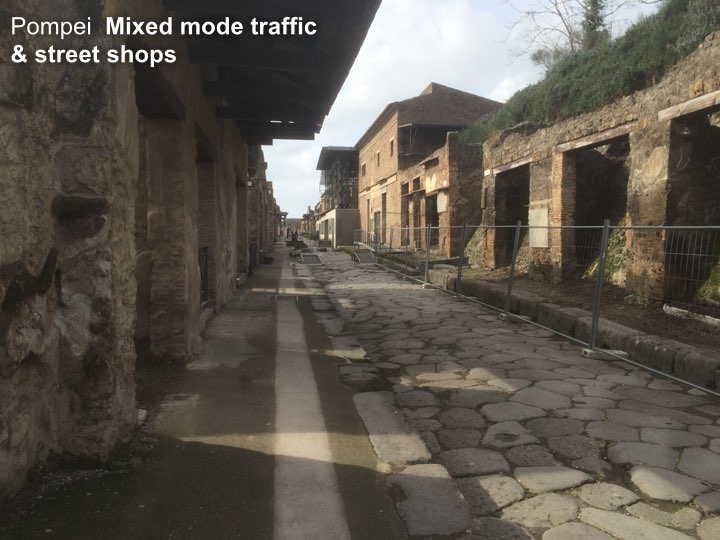
    A Main Street with shops – no inward-looking shopping malls. Active frontages. About as much surface for pedestrians as for vehicles – the right balance for then. Perhaps also for now?
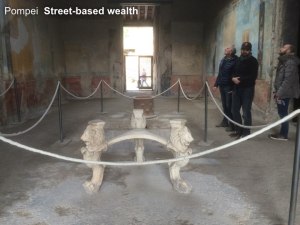
    Tim Stonor_Future mobility 15.004

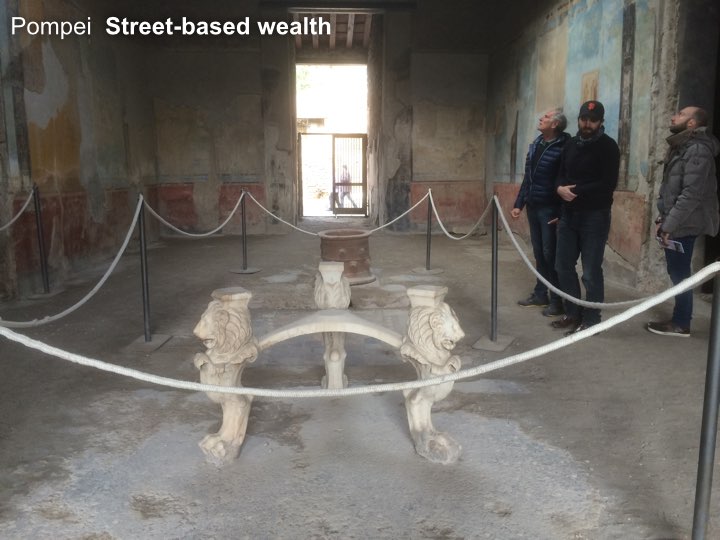
    And shopkeepers of great wealth! It was not a compromise to open onto a Main Street. It was a sound commercial investment. Who would turn their back on the flow of the street?
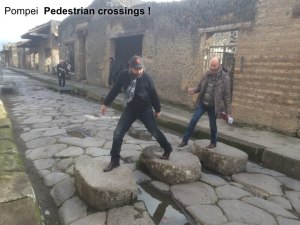
    Tim Stonor_Future mobility 15.005

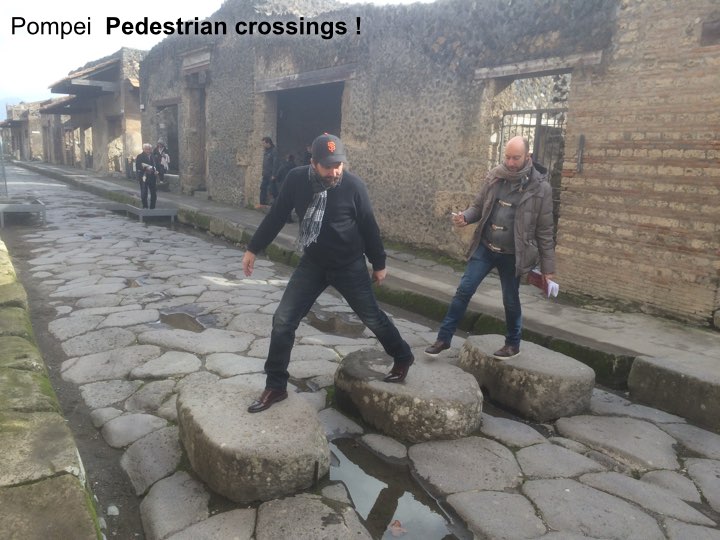
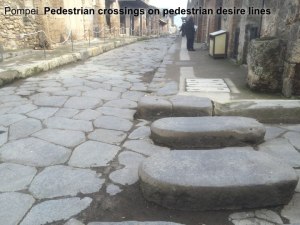
    Pedestrian crossings! The deep kerbs channel water when it rains, flushing the dirt from the road and keeping it clean. Integrated infrastructure.
    Tim Stonor_Future mobility 15.006

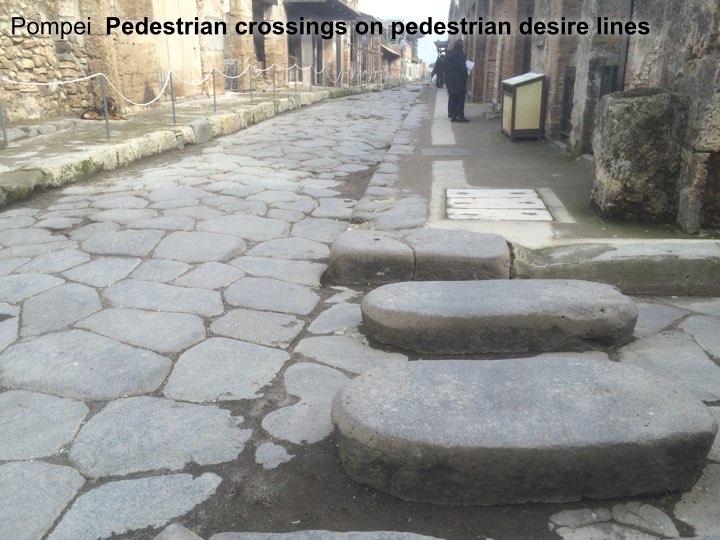
    Pedestrian crossings that are aligned with pedestrian desire lines – not following the convenience of traffic engineers’ vehicle turning arrangements. Pedestrians first because its the pedestrians that carried the money, not the vehicles.
    Tim Stonor_Future mobility 15.007

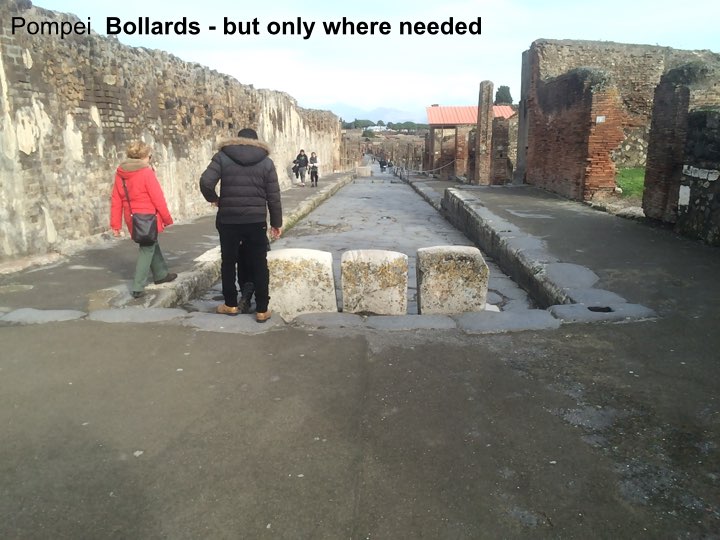
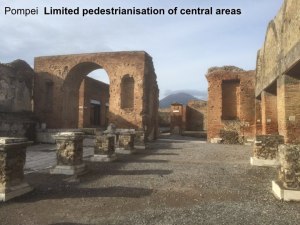
    A small, pedestrian only zone in the very heart of the city. No bigger than it needs to be…
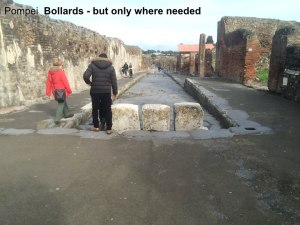
    Tim Stonor_Future mobility 15.008

    …unambiguously signed that this is where you have to get out of your chariot and onto your feet. 
    Tim Stonor_Future mobility 15.009

    Pompei: a city of great streets – great street sense.
    Tim Stonor_Future mobility 15.010

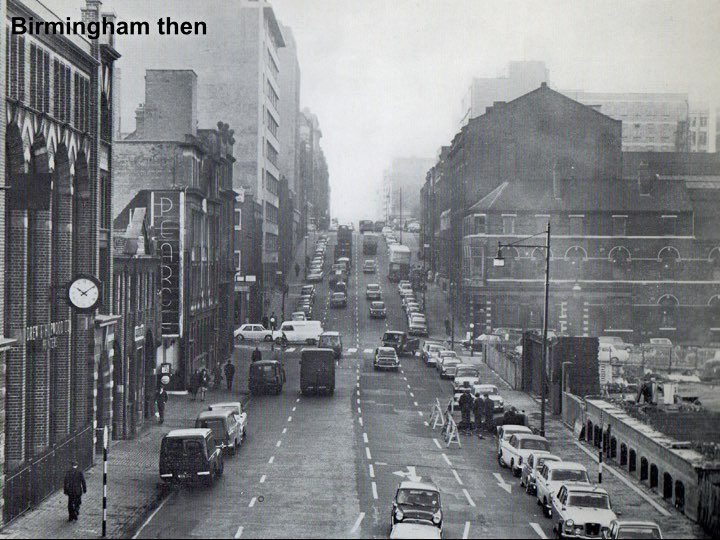
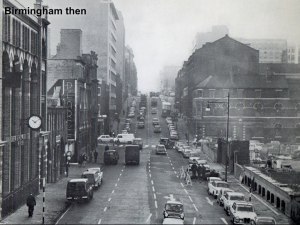
    But in recent times we lost our street-sense. 

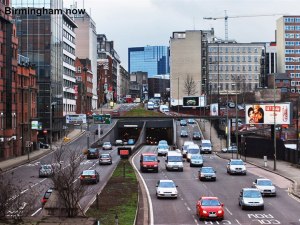
    Look at Birmingham then…
    Tim Stonor_Future mobility 15.011

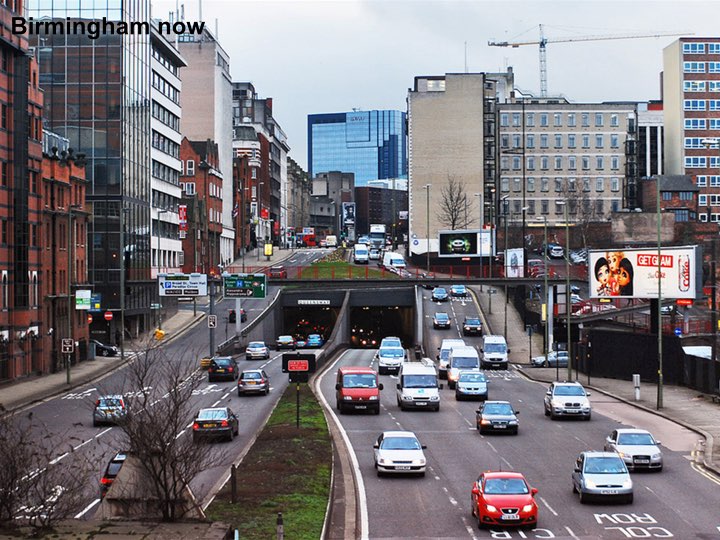
    And now. What happened to our street sense?
    Tim Stonor_Future mobility 15.012

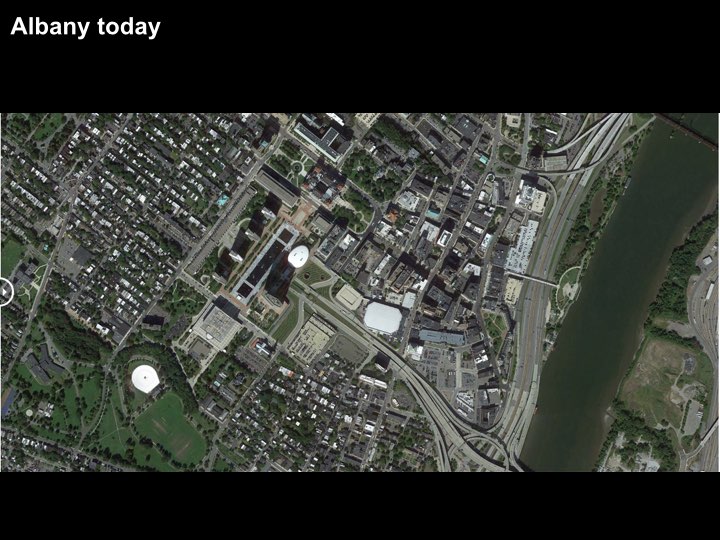
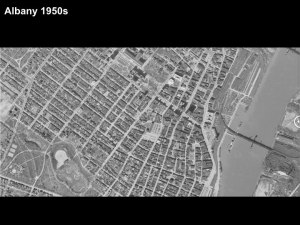
    And Birmingham was not alone. 

    Look at US cities:

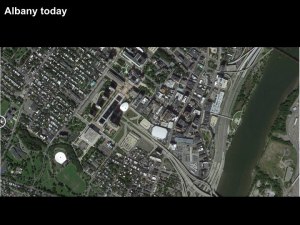
    What they were…only 60 years ago – recognisably like Pompei: simple, rectilinear grids.
    Tim Stonor_Future mobility 15.013

    Then what they became…

    We became entrapped by traffic models. 

    And a love-affair with the car. 

    We need to regain our street-sense. 
    Tim Stonor_Future mobility 15.014

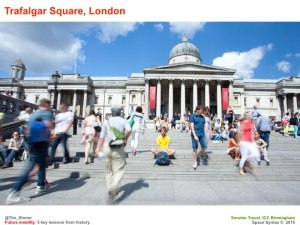
    Fortunately this is happening. 

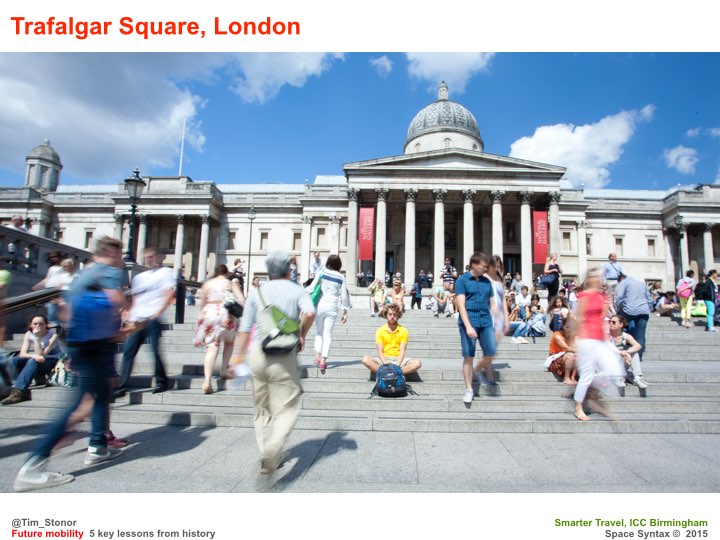
    Trafalgar Square,

    Nottingham.
    Tim Stonor_Future mobility 15.015

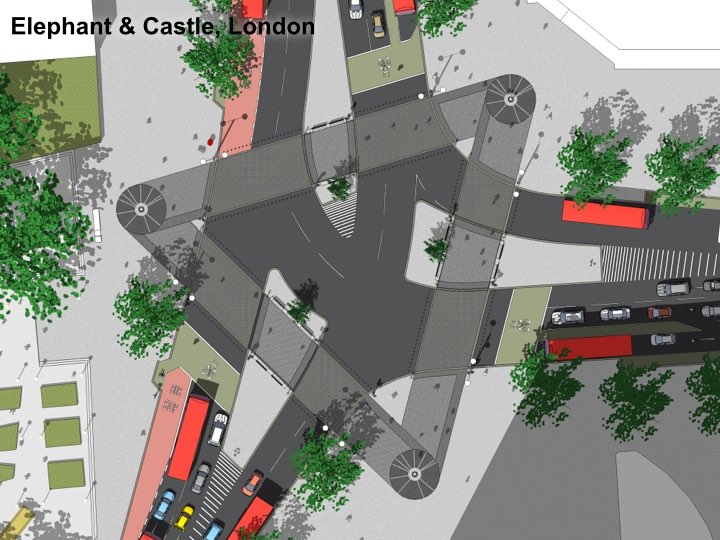
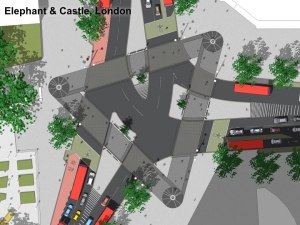
    At the Elephant & Castle, this design puts the pedestrian crossings on the pedestrian desire lines – just like those crossings in Pompei. We’ve talen pedestrians out of subways and given them their proper place at street level, next to the shopfronts. We’ve made the humble crossing an object of beauty, spending many different budgets (landscape, planting, pedestrian, cycling, highways) on one project so that each budget gets more than if it had been spent separately.

    Tim Stonor_Future mobility 15.016

    This new approach – a rediscovery of street sense – has been made possible through advances in science that have made us see the errors of previous ways.
    Tim Stonor_Future mobility 15.017

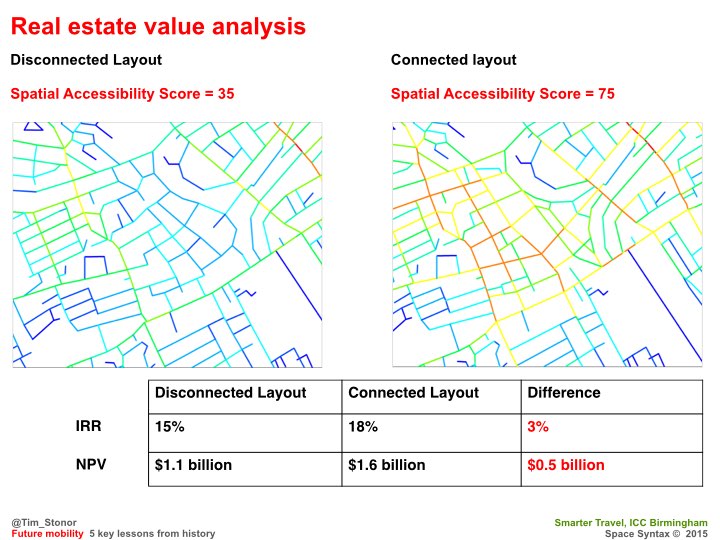
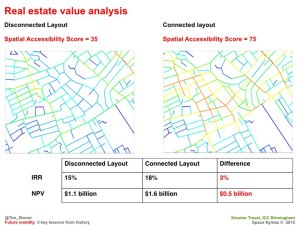
    The more we look into this the more we find of value: for example, how connected street grids create higher property values in the long run.
    Tim Stonor_Future mobility 15.018

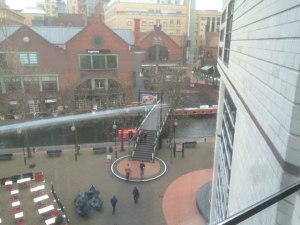
    And Birmingham has pioneered this science:

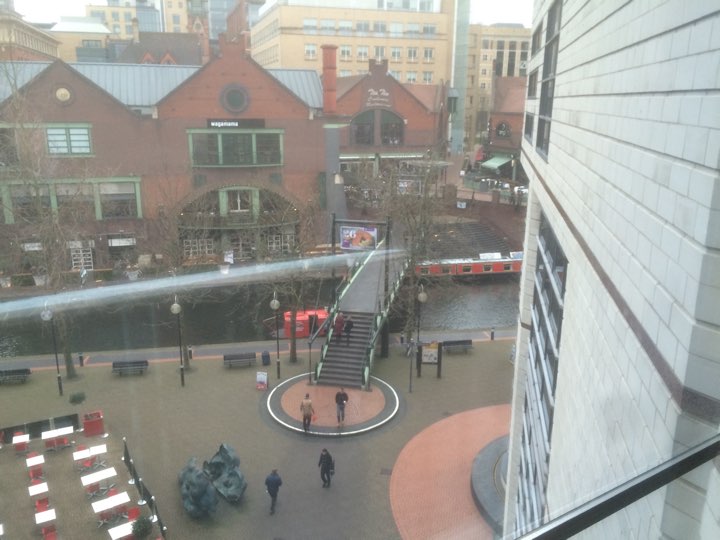
    Brindley Place – the bridge on the straight east-west route – a lesson from Pompeii! It may seem obvious today – because it’s a natural solution – but it wasn’t obvious to some people at the time, who wanted the bridge to be hidden round the corner because, they said, there would be a greater sense of surprise and delight! What nonsense. We had to model the alternatives and show just how powerful the straight alignment was.

    We still have to do so today. Many urban designers and transport planners have been slow on the uptake. The average pedestrian gets it immediately. What does that say for our professions?
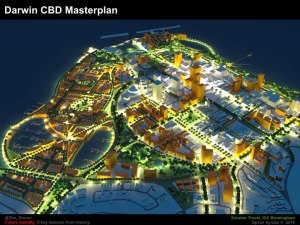
    Tim Stonor_Future mobility 15.019

    Now cities all over the world are recovering their street sense, creating plans for their expansion that are street-based, not mall-based.
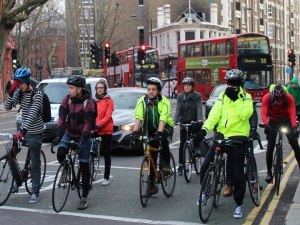
    Tim Stonor_Future mobility 15.020

    In time to accommodate a new, two-wheeled chariot: the bicycle.
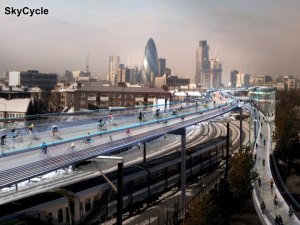
    Tim Stonor_Future mobility 15.021

    SkyCycle – a new approach to urban mobility. Creating space for over half a billion cycle journeys every year. Constructed above the tracks, allowing smooth, predictable, junction-free movement between edge and centre. Developed by a consortium of Exterior Architecture, Foster + Partners and Space Syntax.

    Adding to cycling at street level – not taking it away.
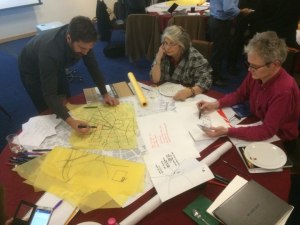
    Tim Stonor_Future mobility 15.022

    Recently, at the Birmingham Health City workshop,a discussion about the location of healthcare facilities quickly became one focused less on hospitals and wards and more on streets and public spaces. On “free”, preventative public health rather than expensive, clinical curative care. Free in that it comes as the byproduct of good urban development. 

    Tim Stonor_Future mobility 15.023

    Rob Morrison’s drawing of the Birmingham Boulevard…
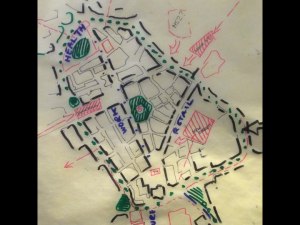
    Tim Stonor_Future mobility 15.024

    …an idea to turn the Inner Ring Road into an active street.
    Tim Stonor_Future mobility 15.025

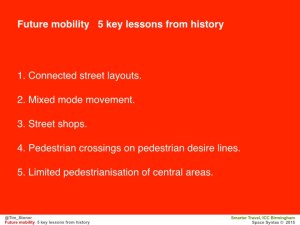
    And to achieve this there are clear principles to follow:

    1. Connected street layouts.

    2. Mixed mode movement – not separated by tunnels and walkways.

    3. Active streets ie lined with street shops not mall shops.

    4. Pedestrian crossings on desire lines, not where it’s most convenient for traffic turnings.

    5. Limited pedestrianisation of the most important civic areas.

    A thought – yes Pompeii was a city of commerce but the houses of the city are filled with references to literature, poetry, music: the arts. 

    Huge cultural value. 

    After all, this is the important, aspirational aspect of living in cities that comes with the efficient mobility that results from pragmatic planning: the grid, mixed modes, active frontages on main streets and special, limited, high intensity, pedestrian only places. 

    When we get this right we have time to truly enjoy ourselves in the arts and sciences. In culture. That is truly great urbanism.

    Download the presentation
  • From cities of movement to places of transaction

    Summary of Tim Stonor’s talk at the World Cities Summit, Singapore, 3rd June 2014

    From cities of movement to places of transaction – a new mobility focus for city leaders, planners and everyday users

    Key responsibilities for cities
    1. Imagining the future of cities and mobility.

    2. Designing integrated, people-focused planning to sustain cities.

    3. Measuring the social, economic and environmental value created by the movement, interaction and transaction of people.

    The fundamental purpose of cities
    Cities are for transaction: economic and social transaction. People come to cities to trade. It is why we have cities – they are intensifications of opportunities to trade. The public realm of the city – its network of streets and spaces – is where much of this trade occurs: a “transaction machine” which, like any machine, is more or less efficient depending on how it is engineered. (more…)

  • SkyCycle – elevated but not remote

    The comparison between SkyCycle – a proposal to create a network of strategic cycling routes above London’s radial railway lines – and the City of London’s much maligned network of (unbuilt or demolished) upper level walkways is one worthy of attention.

    1.         The City of London “Pedways” often paralleled routes at street level. When they did so they effectively split the pedestrian flow between upper level and street level – thus typically making neither level particularly/sufficiently vibrant. This is why most of them did not work or were resisted from being built in the first place.

    However, as all good students of spatial networks understand, not all links are equal. When upper level walkways genuinely create routes that are not available at ground level then the evidence of observation surveys shows that they can be very well used. Some of the upper level routes through the Barbican are as well used as ground level residential streets elsewhere in London. Reality is, as always, more subtle than simplistic classification.

    2.         In contrast, SkyCycle follows railway lines that have historically created morphological “fissures” in the street network either side of them. In this way SkyCycle does not recreate routes that are already available. Instead, it create new routes.

    3.         Spatially, these SkyCycle routes have two important characteristics:

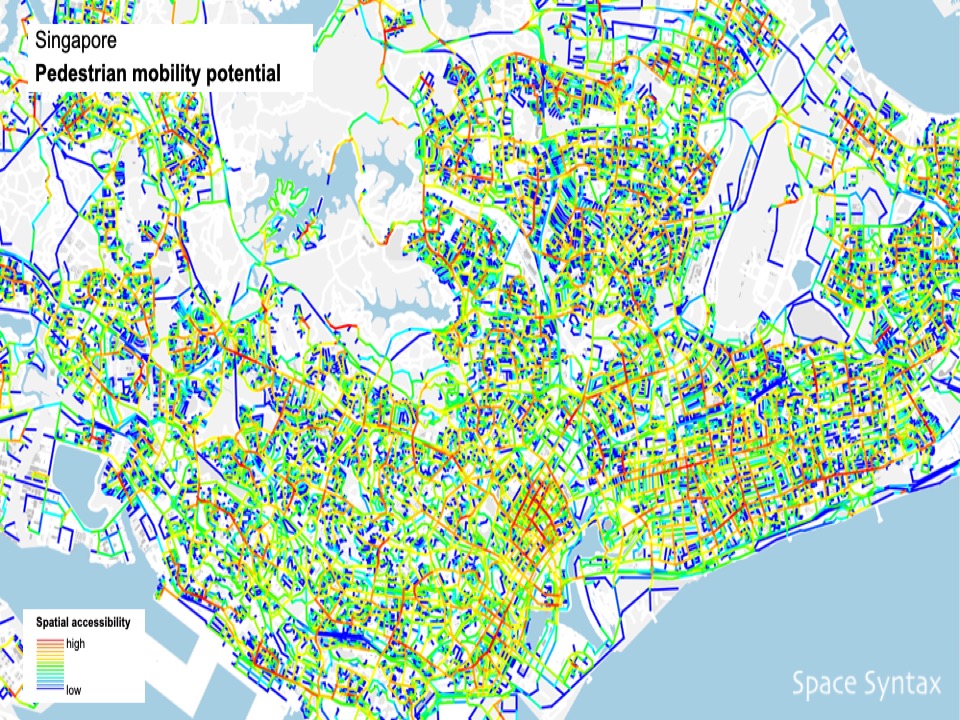
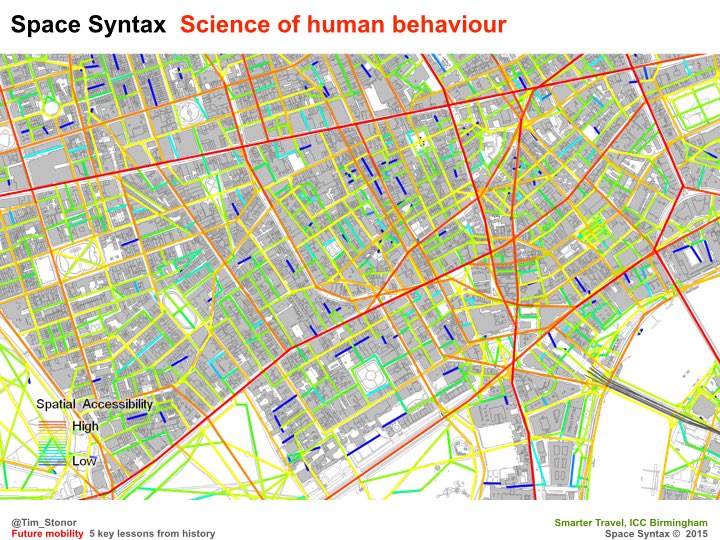
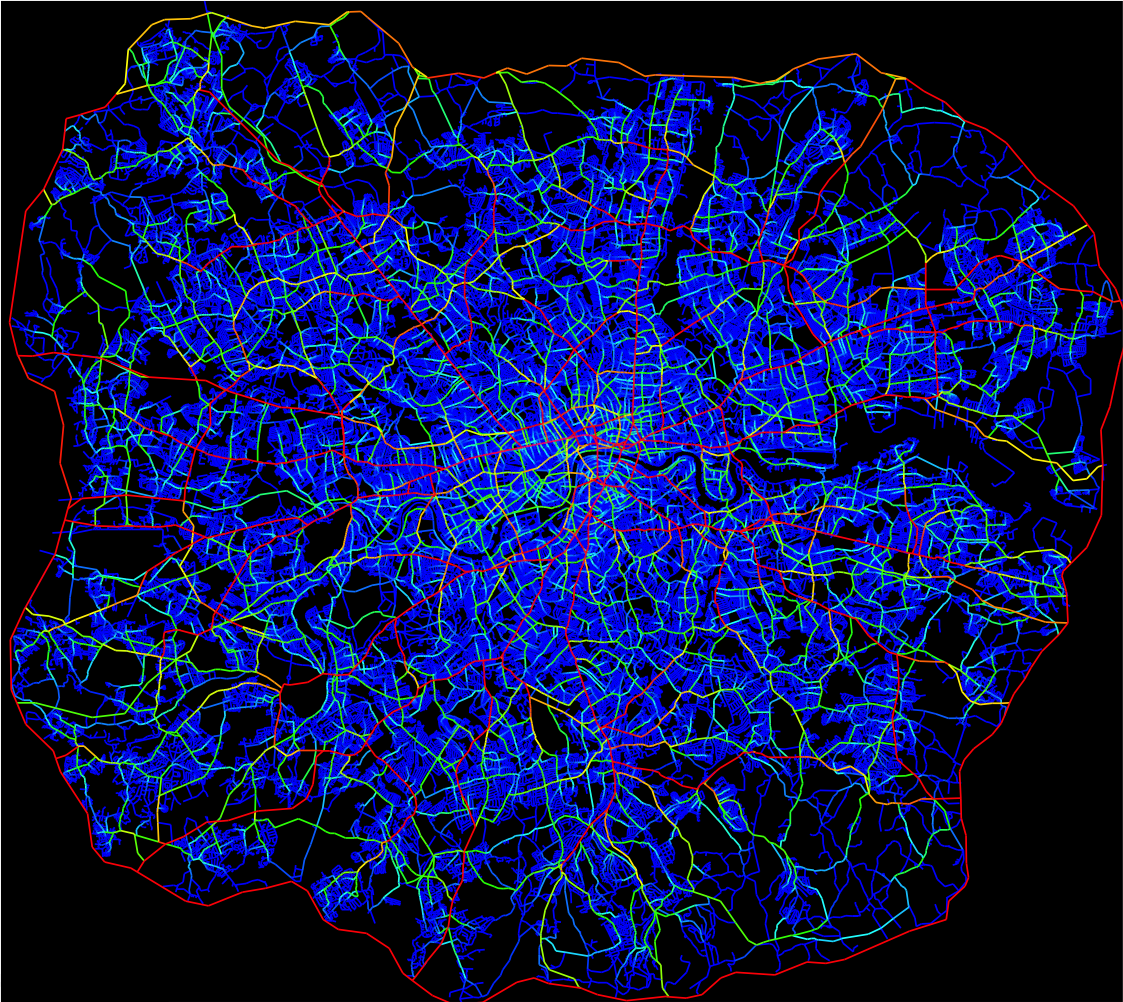
    a)         because they connect directly from the edge of London to the centre, linking to the ground level at accessible points in the street network (identified by Space Syntax through spatial accessibility analysis) SkyCycle routes add to London’s “foreground network” of important arterials (the red and orange links in a Space Syntax map of London).

    London_Global Choice

    (more…)