Category: Spatial layout

  • The urban cortex

    The urban cortex

    A talk given at Lombardini22 architects in Milan on 13th May 2025.

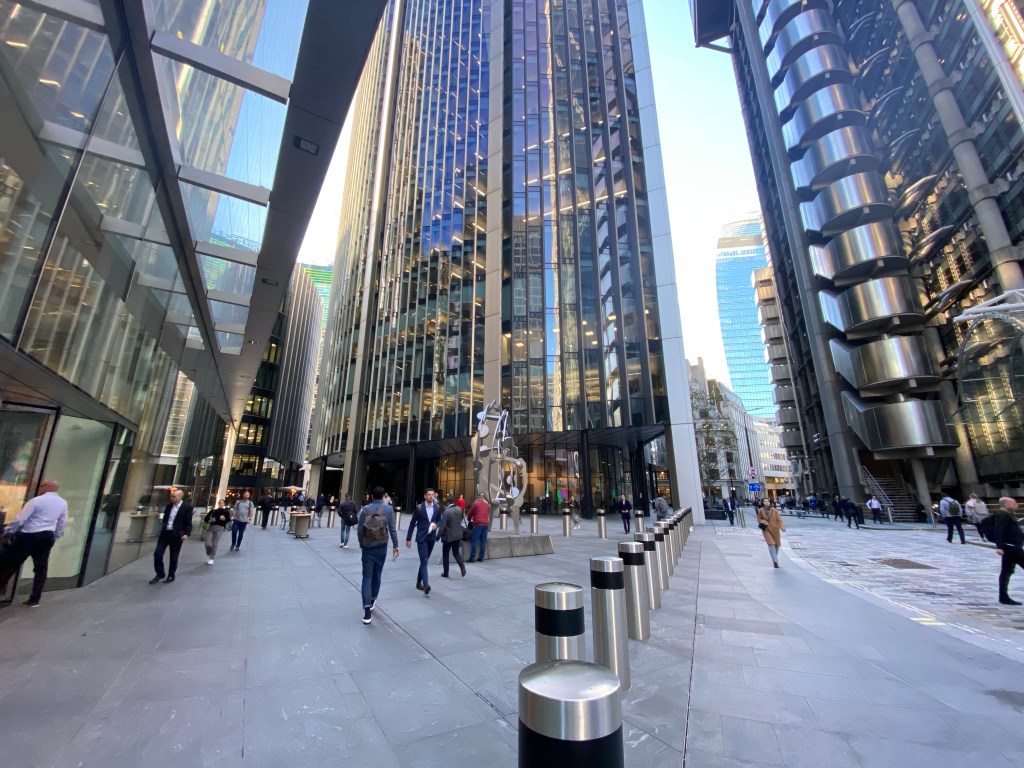
    The idea I’d like to explore this evening is that cities serve a higher purpose than we typically credit them with, and this idea is that cities are natural extensions of the human brain. Far from being artificial, alien objects, cities work with us, their users, to help us solve the problems of our times. Cities are extensions of our brains and, just like our brains, cities are sophisticated computers.

    At least they are, if we design them well. 

    Great cities are not just beautiful to look at and stimulating to be in. They are also highly efficient human transactions machines: bringing people together to form relationships and generate outcomes. Cities are the outermost layer of our common existence. Hence the title of this talk: the ‘urban cortex’.  

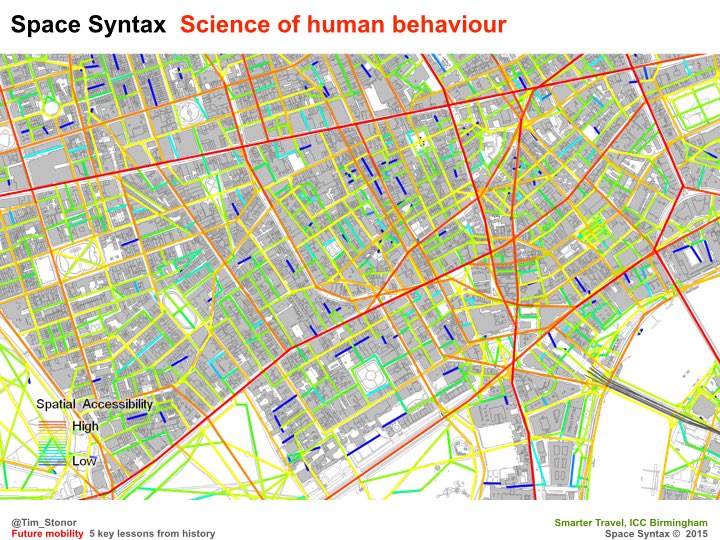
    One challenge when discussing cities is that urban commentators often begin by describing cities as chaotic, that their street networks are ‘labyrinthine’. This is a lazy approach to urbanism – and not one that we share at Space Syntax. Instead, we’ve spent the last 50 years studying the apparent chaos of cities and discovering regularities within them – of spatial layout, of land use distribution, of density, mobility and the distribution of inequalities. 

    These discoveries help us both to understand cities and to better design them. 

    Cities are not chaotic. We don’t build them by chance. Within their apparently labyrinthine randomness there are structures that organise the ways we move through cities – and interact with each other within them.

    There are regularities that allow us to understand cities – not just as urban scientists might pick them apart but as every day users make sense of the places they’re in:

    • how they feel comfortable in them
    • feel like they want to visit and explore them
    • meet people in them
    • go to work in them
    • invest their time and their money 
    • have fun
    • feel excitement. 

    This is the ‘urban buzz’ that draws people to cities.  

    (more…)
  • 15-minute cities or 15-minute ‘bubbles’?

    15-minute cities or 15-minute ‘bubbles’?

    The motion at today’s Cityscape conference in Riyadh was: The 15-Minute City model will improve quality of life for all communities and can be easily scaled globally. 

    Who would choose to argue against the principles of the 15-Minute City? Walkable. Sociable. Low carbon. 

    Who wouldn’t want any of that?

    But, if not the principles of the 15-Minute City, what we should be deeply concerned about is the experience of translating those principles into practice. 

    My colleague Katya and I are going to argue against the motion from our experience of what many developers and designers are naively promoting in the name of the 15-Minute City. 

    Because what we are seeing in cities all over the world are individualistic, inward-looking, over-localised, gated developments calling themselves 15-Minute Cities. 

    Why do their proponents claim that these are 15-Minute Cities? Well, because they are relatively small, they have a mix of land uses and there’s a varying degree of infrastructure for walking and cycling. 

    But there’s typically very little, if any, public transport and the connections to other so-called 15-Minute Cities usually require the pedestrian or cyclist to cross the major roads and even highways that separate them. So these would-be walkers and cyclists usually end up jumping in a car and driving. 

    We know a lot about this in the UK because the 15-Minute City concept was at the heart of disastrous 20th Century New Town planning, even if we didn’t call them 15-Minute Cities back then.

    Communities – especially women – found themselves unable to walk easily between neighbourhoods because they felt unsafe next to fast cars or having to move through the tunnels that had been built under the highways or up, over and down the bridges that are the visible symbols of civic failure. 

    (more…)
  • Form ⇝ Flow ⇝ Function

    Form ⇝ Flow ⇝ Function

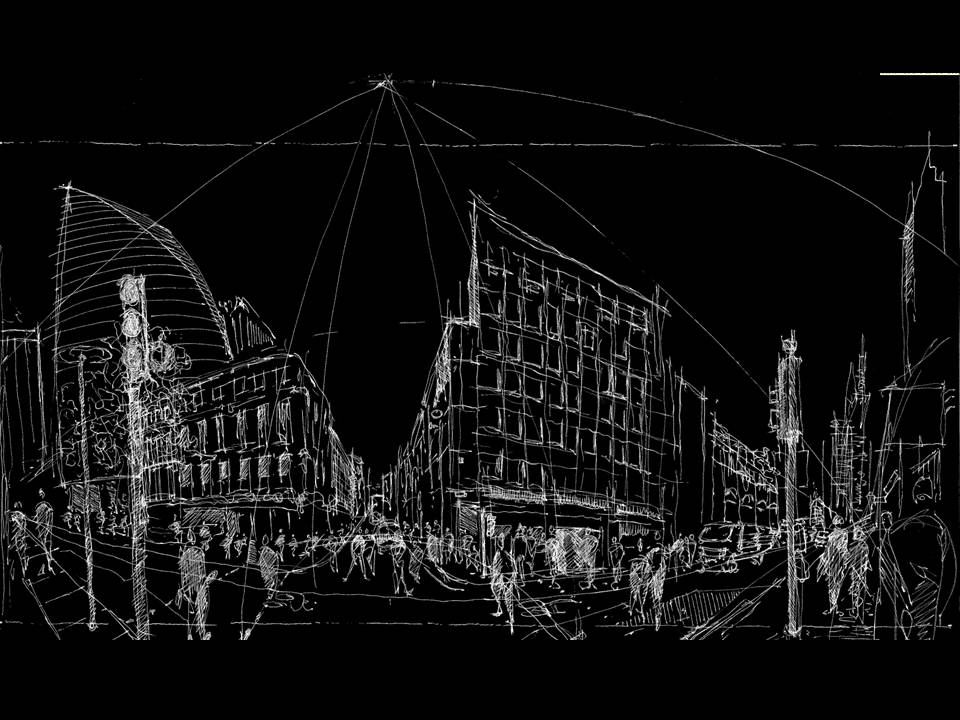
    Many places work in ways not originally intended. The artist’s impression is often unrealised, with public spaces less well used than in the drawings, shops not getting the footfall shown in the CGIs, tracks worn into green spaces painted as pristine in the renderings.

    The actual function of places – as opposed to their intended function – follows the flows set up by the spatial form of those places, independent of their designers’ wishes otherwise.

    It’s risky to think that form follows function if you don’t first understand how the actual functioning of places is a consequence of the flows shaped by their physical forms.

    If you don’t understand how physical forms shape human flows and these flows then support functions (such as sitting, shopping, resting, feeling comfortable or feeling unsafe) then you risk designing the wrong physical forms and ending up with problematic functions.

    So, in the classroom it might be:

    “Form follows function”

    But in reality it’s the other way round:

    Function follows flow, and flow follows form.

    In other words:

    Function follows flow follows form.

    With software that forecasts flows by analysing physical forms, and with design principles shaped by decades of experience, my colleagues at Space Syntax and I have been able to de-risk the design process. We’ve analysed forms, predicted flows and been able to anticipate the functioning of schemes at the earliest stages of design, feeding back our recommended changes to the physical shape of design proposals in order to optimise flows and close the gap between intended and actual functions.

  • Choosing the office of the future: a time for quality, not quantity

    Choosing the office of the future: a time for quality, not quantity

    Released today, Deloitte Real Estate’s London Office Crane Survey reports a 50% reduction in the construction of new office space in central London in six months. Yet even such a significant reduction in supply may not be enough to offset a greater reduction in demand. As a result, there is likely to be an oversupply of office space in central London. 

    Mike Cracknell, director at Deloitte Real Estate, said, “By transforming outdated buildings into COVID-safe, high-quality workspaces, developers are looking to upgrade and futureproof their offices in a market where occupational demand is increasingly discerning.”

    Indeed, in a buyers’ market, what matters is quality not quantity. And not only the functional specification of office space in terms of health and safety – such as air quality, general environmental cleanliness and the presence or not of touchless interfaces – but also in terms of organisational performance: is this an office in which my organisation can thrive?

    When evaluating their needs, organisations must consider the fundamental purpose of an office. 

    It is no longer enough – if ever it were – to think of an office as a place that’s big enough to get most people together to give them a place to work from where they can occasionally gather in large rooms for group meetings. That can all be done, to some degree of success, on Zoom. Nor is it about having a desk where everyone can work from. For most, a kitchen table or home office may still be good enough. 

    No, what matters is everything that doesn’t get programmed into the working day: the incidental, the serendipitous. Sometimes thought only of in terms of ‘the social side of things’, the informal interactions that occur in offices are actually the hard currency of operational effectiveness. Offices that ‘buzz’ are places where ideas are born and shared. Where people not only want to work but want to stay working. And where outsiders want to visit, bringing with them their own ideas, their own colleagues and, in so doing, enhancing the melting pot of creativity.

    (more…)

  • “7Ls” of urban planning & design

    “7Ls” of urban planning & design

    Location – where is the site and what’s around it

    Linkage – where are the principal ways into the site (can any new ones be established?)

    Layout – the pattern & hierarchy of streets

    Land use – more than housing?

    Landscape – the look and feel of the place (covers a lot eg materials, blue/green)

    Lining – how the buildings meet the street (active or blank frontages)

    Longevity – quality construction & operational expectations

  • No board rooms, no desks. The office of the future…

    No board rooms, no desks. The office of the future…

    Images of future offices, with physically distanced workstations to separate desk-bound workers, seem to miss the point. Offices aren’t for staying apart – they’re for coming together. But how can that be organised in a post-COVID world?

    Offices have desks because we’ve long thought that people couldn’t or shouldn’t work from home. Attitudes were changing slowly, with progressively greater levels of home working in recent years. Now, enforced lockdown has shown, in a short space of time, that for many of us it’s entirely possible to do much of our work from the place we live.

    This is especially so when we’ve got the right kit and the right applications, and when we’ve moved sufficiently well along the learning curve to use our tech properly. And home working is likely to be even easier when, for many, the kids are back at school and home is an emptier, quieter and less disruptive place to be.

    To continue to be relevant, to be attractive to people who are used to the comforts of home working, offices should no longer be boxes where people sit further apart from each other. Instead, they need to be places for doing what can’t be as easily done at home:

    ⁃ serendipitous encounter outside of planned meetings

    ⁃ overheard conversations that prompt interruptions, discussions and, as a result, new ideas

    ⁃ introductions between the person you’re with and the person you bump into. (more…)

  • Silver linings: how design can exploit the virus

    Silver linings: how design can exploit the virus

    A “to do” list for urban planners, architects & interior designers, in response to the coronavirus.

    In towns & cities:

    • reduce traffic speeds to 20mph/30kph to discourage speeding on empty streets during lockdown & to keep the air clean, the sound low & the accidents down after the “return”.

    On wide streets:

    • broaden footways to improve physical distancing in the short term & encourage pedestrian flow in the long
    • then narrow roadways further with cycle lanes to support physical activity during lockdown & active commuting on the return.

    In public spaces:

    • provide more shade, more seats, more WiFi
    • place more seats on broadened footways so calls can be answered & people can convert from moving to sitting down…
    • …and so “I’ll call you back” becomes “Just give me a second to sit down.”

    (more…)

  • The Auranga Story: create streets = create jobs

    The Auranga Story: create streets = create jobs

    Research by Mike Cullen of Urbacity has shown that:

    Out-of-town malls generate 0.5 non-retail jobs per retail job created.

    Mall-dominated towns generate 1.2.

    Street-based retail generates 2.6

    Answer = build street-based retail

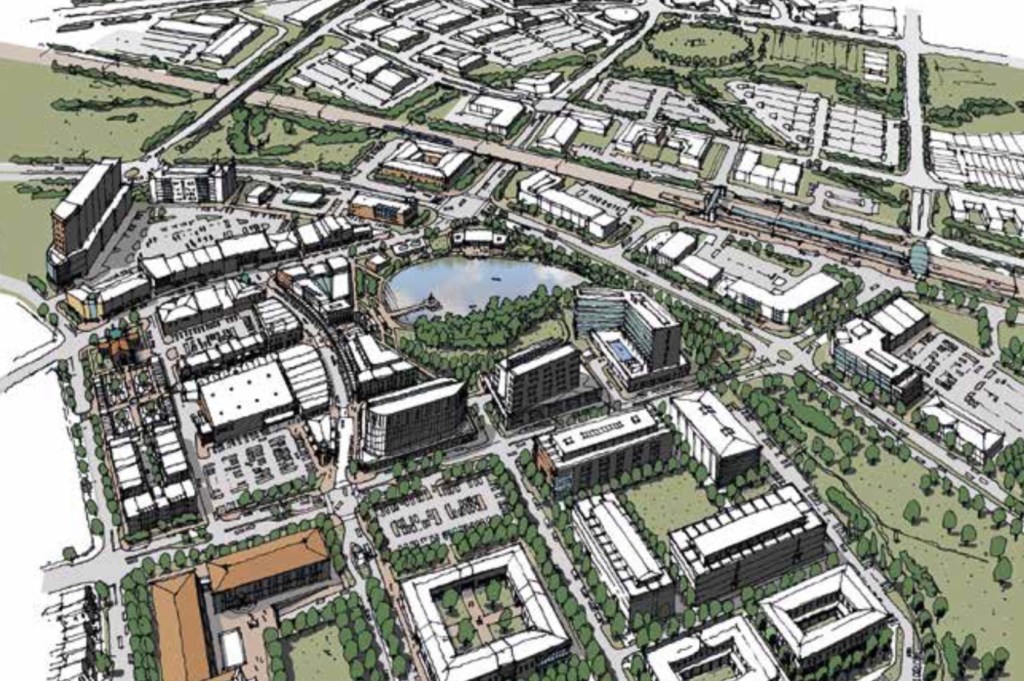
    As if we didn’t know enough already about the social, economic and environmental benefits of connected, mixed-use urbanism, Cullen’s research provides one more good reason to plan towns and cities around beautiful, shaded, slow, thriving streets.

    Space Syntax is working with Urbacity in support of Design Urban in its masterplan for Auranga, a new urban settlement to the south of Auckland. Developed by Made, Auranga breaks the mould of car-based sprawl by co-locating residential and employment uses around a tight-knit, walkable town centre and rail station.

    Read more about the Auranga development.

    Image (c) Design Urban

  • Intense relationships: measuring urban intensity

    Enriching design practice by the mapping of human behaviour patterns could transform urban space

    An article published in the Architectural Review on 30th April 2018.

    There’s much debate about how to measure density – dwellings per hectare, bedrooms per hectare or people per hectare; including or excluding major highways, parks and open spaces; the permanent population only or the transient one too? 

    While this gives urban planners something to disagree about, it risks missing the point: great urban places are not created by density; they’re created by intensity. The difference matters. When people describe the buzz of a market they don’t say, ‘Wow – it was so dense’. They’re much more likely to say how intense it was. Density is a word used by planners. Intensity is a word that real people use, and perhaps because it describes the outcomes that people experience rather than the inputs that have gone into creating them. It’s the outcomes that are ultimately more important.

    But planning professionals like density. Even though density doesn’t capture the essence of what it feels like to be somewhere, the term appeals to professional instincts. It describes the raw ingredients that planners have to handle and, once you choose which version of the formula to use, density is easy to measure. It involves a simple calculation of straightforward urban quantities such as the number of people, of houses or of bedrooms, all divided by the geographic area over which those ingredients occur. Easy.

    By contrast, intensity seems more difficult to pin down, not least because it appears to have a subjectively emotional dimension; it speaks of feelings, responses, stimuli; raising problems about how it can be measured. But intensity is also a response to context, to place and above all to people – and here we find clues to its measurement.

    (more…)
  • How cities connect people across space & time

    How cities connect people across space & time

    The subject of “connectivity” is much mentioned in urban planning practice, not least by the Space Syntax community. 

    But what do we mean by connectivity? 

    1. Urban practice should connect across different scales of activity:

    Urban Planning (macro scale)

    Urban Design (meso scale)

    Building Design (micro scale)

    ie 3 scales of space.

    2. Urban practice should also connect across different phases of activity:

    Design (before construction)

    Construction (during construction)

    Operations (after construction)

    ie 3 phases of time

    This gives urban practice a clear space/time organisational framework. 

    3. This framework can then be used to discuss the subject of connectivity according to several key dimensions:

    Physical connections – connecting buildings, streets and spaces.

    Human connections – connecting people with each other.

    Environmental connections – connecting human interventions to the natural environment: climate, topography. 

    Digital connections – using data to support physical connections and enhance human connections. 

    Professional connections – connecting across practice boundaries. 

    Connectivity is key. But how we connect is complex and multi-dimensional.

  • Sustainable cities of the future – sketch

    Notes for keynote at UK Green Building Council Annual City Summit, Birmingham.

    1. Spatial planning & human behaviour implications of sustainability – reduction of transport carbon through shift towards walking, cycling & public transport

    2. A massive shift needed in transport + land use planning, urban + landscape design, architecture. Professional inertia. Turning the supertanker.

    3. A massive opportunity. Reason to turn.

    4. Lessons from the past eg Pompeii, Brindley Place.

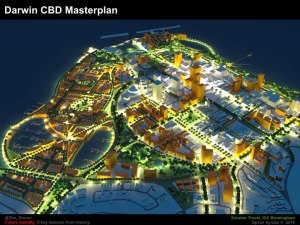
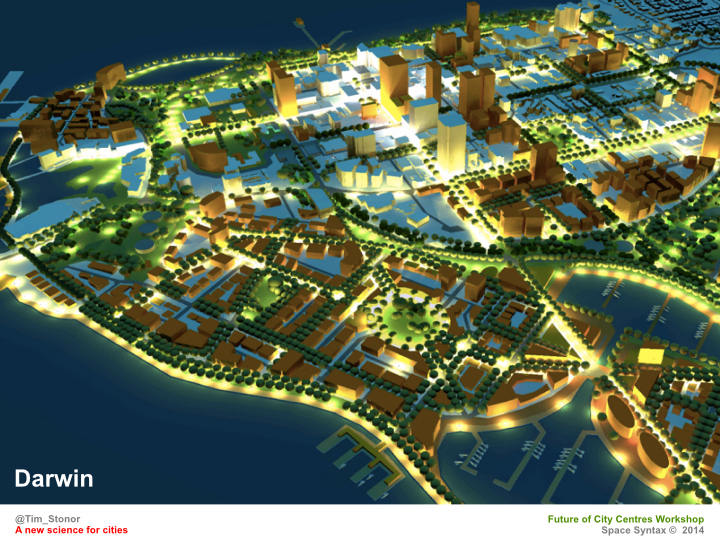
    5. Examples from the present eg Darwin, London SkyCycle, Birmingham Charette.

    6. UK government: Smart & Future cities agenda is a sustainability agenda.

    7. Social inequalities dimension of sustainability.

    8. Need to act at all scales simultaneously ie there’s work for all of us to do.

    9. Challenge for modelling.

    10. Challenge for research.

    11. Challenge for practice: design, development & real estate investment.

    12. Already being acted on. The supertanker is turning.

  • Past, present & future_Space Syntax in practice

    Past, present & future_Space Syntax in practice

    [Speaking notes for Tim Stonor’s opening presentation at the First Conference on Space Syntax in China, Beijing, 5th December 2015.]

    Good morning. It is an honour to be speaking at this important conference alongside so many distinguished speakers and attendees.

    My talk today will cover the past, present and future of Space Syntax Limited’s experience working on projects in London and around the world, including here in China.

    As you heard from Professor Hillier, the relationship between academic research and practice is fundamental. Practice provides an opportunity to apply Space Syntax techniques – and it also provokes new research questions. (more…)

  • Permeability & connectivity: a tale of two cities

    Permeability & connectivity: a tale of two cities

    Notes from a response to questions from the Strelka Institute. 

    How would you describe the situation with the permeability and connectivity of city spaces today?

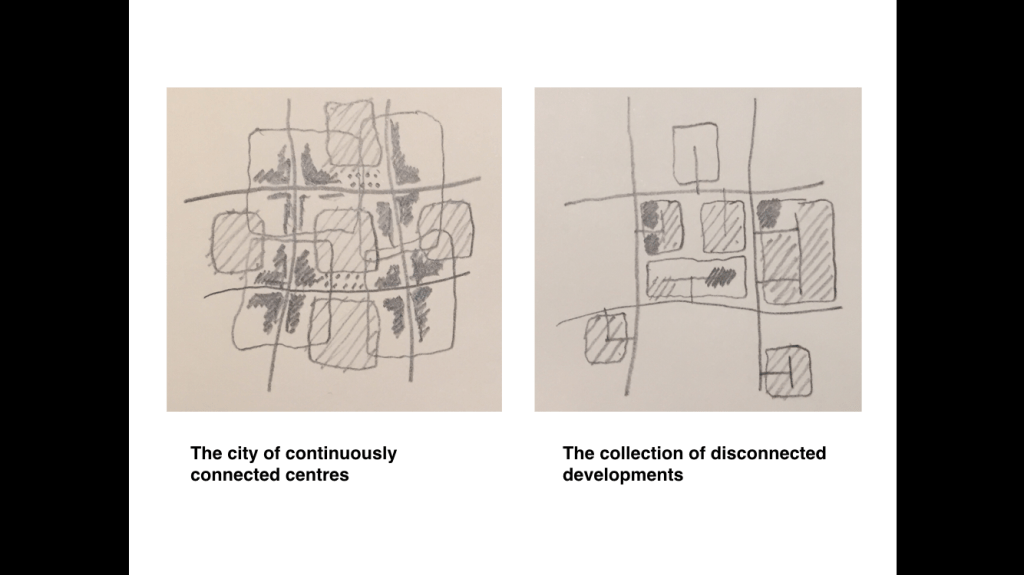
    There is no single state of permeability and connectivity in the contemporary city. Instead we find two main types of urban layout: first, the finely grained, continuously connected street network in the historic city and second, the system of largely impermeable housing estates separated by fast-moving roads in the 20th century city.

    In the historic city, space is well used. Most space use is movement and most movement is through movement. Movement supports commercial activities, which locate themselves on the principal streets where footfall is greatest. Movement brings people to places of opportunity – to buy, sell, exchange and interact. Effective exchange and interaction drives urban economies, social networks, cultures and innovations.

    In the 20th century city, the large, impermeable blocks of the housing estates do not encourage through movement. People move around the estates rather than through them. As a result, commercial activity is undermined, with its market divided between people moving locally inside the estate and those moving globally around it. Commercial activities are more likely to fail, especially inside estates where the marketplace is too weak. Instead, shops form at the entrances to the estates and on the surrounding roads. Since these roads have often been designed to favour the car, the shops are likely to be car-based, with large parking lots that further separate local people from them.

    A further, social consequence of this is that local people do not see people from outside the estate on the regular basis that people in traditional streets take for granted. The effect of this is to create social isolation and fear of strangers in estates.
    The irony is that the inward-looking urban block was created purposefully to foster a stronger community spirit. Traditional streets were considered to be noisy, dirty and dangerous. 20th century town planning’s idea was that, if life could be created away from streets then people would be cleaner, happier and safer.

    It is the greatest tragedy of 20th century international planning that its well-intended model of urban living has failed. Indeed it has done the opposite: creating highly negative social and economic outcomes for all people with perhaps the exception of the super rich for whom social and economic relations are formed in different spatial contexts.

    Connectivity is closely connected with the structure of property ownership, how will it change in the next 5 years? Will it shift towards privatisation of public spaces? And what will be the case 20 years from now?

    Undoubtedly the next decade will see more private spaces set within gated communities. Such forms of urbanism are still favoured by developers and aspirational residents for whom the idea of living in a cleaner and supposedly safer environment is expected to make them happier. The history of 20th century failure may not be considered to be relevant, perhaps because of a belief that it happened somewhere else, or in a different socio-political era, or because new digital communications technologies can effectively span the spatial divide between such places and their urban settings.

    At the same time, the resurgence of traditional street design will see more places created that look more like the continuously connected form of the historic city. This trend can be seen in cities as diverse as Beijing, London and Dubai, where permeable street networks have been created by commercial property developers as well as public municipalities precisely because they are seen to deliver places that are popular with people. The social and economic benefits of a street-based approach have been witnessed with a combination of satisfaction and surprise.

    Perhaps the most significant impact on the form of urbanism in the future city will come from the digital technologies that will record and analyse the outcomes of both approaches – the gated community and the open street network – and demonstrate with evidence how each performs.

    My clear view is that the continuously connected street network will outperform the gated community in terms of Urban GVA, making a greater contribution to the overall social and economic value of the city. The emerging Science of Cities, in which my company Space Syntax has been a pioneer, is one of the key areas of future urban practice that will cut through the inaccurate claims that have been made about the benefits of estates – claims that have been promoted by architects and urban planners throughout the 20th century, based on the passion of their beliefs rather than on the evidence of facts. Urban analytics will transform urban practice over the next 20 years, shaping a new, evidence-rich approach to architecture and town planning and, crucially, returning a highly effective, street-based form of urbanism to the position it had held for centuries before professionalised town planning imagined it could do better.

    During our work for the classification of Moscow streets we highlighted three different zones of the city: centre (inside the Garden Ring), middle zone (between the Garden and the Third Transport Rings), and periphery (outside the Third Ring). The pattern is completely different in these zones. Could you comment on the implication of global trends of connectivity in the city on different zones in Moscow?

    No city is the same from its centre to its edge. Or, more precisely, from its centres to the edges of those centres because cities are formed of multiple centres that create a system of connected urban quarters. The quality of the connections between centres is a fundamental determinant of overall urban performance, having a strong bearing on whether people are more likely to walk and cycle between neighbourhoods and whether those links will be effective places for social and economic activity. When centres are continuously connected to each other through a set of connections with a regular grain then it is likely that many, if not all of these will be suitable for walking and cycling as well as driving along.

    Cities like London and Paris are composed of multiple centres that have distinct centres of differing characters yet are continuously connected to each other. Indeed it is the magic of such cities that it is possible to move from one centre to the other in such a subtle way that you are uncertain exactly when you have left one centre and entered another. The connective “tissue” between centres is typically comprised of residential streets, which therefore link to – and carry movement belonging to – multiple centres. People may identify more with one centre than others but they are provided with a choice of more than one. And,min doing so, they interface with people from more than one centre. The benefits of this arrangement are simultaneously social and economic.

    Such choice is denied by the 20th century city of separated estates. People living in one estate have limited, if any direct access to the centres of other estates. Increasingly, the roads that connect between estates are hostile to pedestrians and cyclists. Social and economic life is suppressed.

    All cities are systems of linked centres that each work in individualistic, local ways but that also form an overall city system. Within this city system, the centres have a hierarchy with more central centres typically supporting greater economic activity than centres at the edge. This is not only because more central centres are larger but also because these centres are surrounded by a larger number of other centres than are peripheral centres.

    In the case of Moscow, Space Syntax analysis would be used to examine the hierarchy of centres, the quality of the connections between them and the degree to which spatial connectivity is directly related to social and economic performance. Data on economic performance – such as land value, property transactions, commercial performance, retail sales – would be correlated with measures of spatial connectivity – such as spatial centrality (choice) and betweenness (integration) at a range of spatial scales. These Big Data sets would be interrogated in order to form a diagnosis of the current spatial conditions. On the basis of this diagnosis, a set of spatial planning principles would be created that would lead to the production of a spatial vision for the city. We anticipate that this form of data-rich, evidence-informed planning will become normal in the next 20 years.

    While improving and redeveloping city streetscape how should trends in the connectivity and permeability of city space be taken into account? 

    Space Syntax analysis shows how patterns of spatial connectivity have profound influences on the social and economic performance of all cities. The hierarchy of spatial connections influences:
    movement patterns of cars, cycles and pedestrians

    – public transit demand

    – land use performance

    – land value

    – transport emissions.

    Future urban plans should therefore be created with a special emphasis on the design of the spatial layout of the city. Opportunities should be identified to strengthen the network of streets and open spaces, pursuing an overall objective to create a city of continuously connected centres. Constraints should equally be identified so that reasonable plans can be made.

    “Spatial geometry” standards should be set for the number and frequency of connections as well as for the geometrical means by which centres can be most effectively connected ie first, a small set of longer, more direct connections (the “foreground grid” of boulevards and high streets) that will carry larger volumes of people and therefore be suitable for commercial uses and second, a large set of smaller, less direct connections (the “background grid” of local streets) that will carry smaller volumes of principally residential movement.

    Once these spatial geometry standards have been established then further standards of urban design quality should be set – but not before. High quality urban design in the form of green landscape, seating, signage me surface treatment will not create high quality urban performance if the spatial layout geometry is weak.

    The living city is built on human interaction. Without this, the city is dead. Human interaction relies on effective movement corridors and effective places of human transaction. Effective street connectivity is a critical determinant of the living city.

  • Integrated Urban Planning – balancing the multiple flows of the city

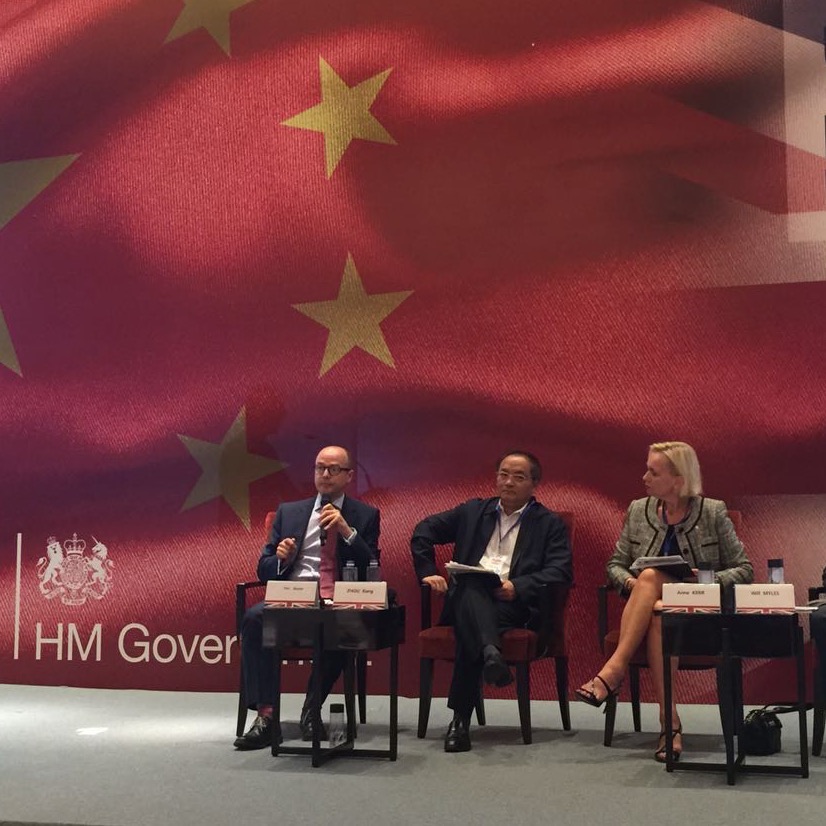
    Notes for the UK-China Sustainable Urbanisation Conference in Chengdu, China on 24th September 2015


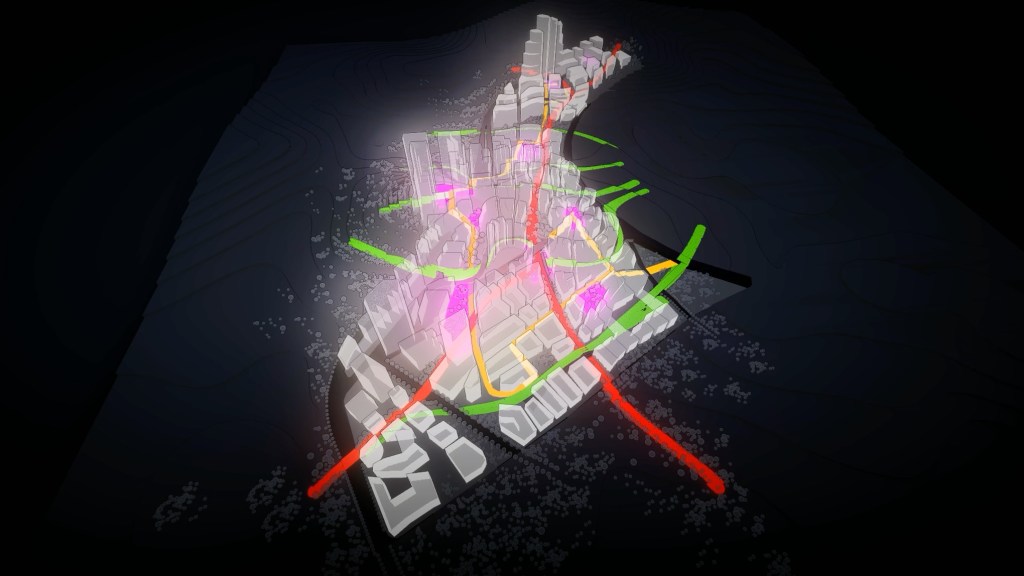
    My job as an architect and urban planner is to design new towns and cities – as well as new parts of existing urban settlements. This means designing the multiple systems that make up a city. We often think about towns and cities in terms of their physical stuff: their buildings. Perhaps also in terms of their roads and rails. But for me the success of any city can be seen and measured in terms of its flows, the flows of:
    • energy
    • water
    • data

    and, most important of all, the flows of:

    • people: in cars, on public transport, on bicycles and on foot.

    Each of these flows is impacted by urban development: how much of which land uses are placed where, and how they are then connected to each other. Flows impact on other flows.

    Sometimes these impacts are positive, sometimes negative. They have enormous social and economic implications.

    Urban planning is as much about designing flows as it is designing buildings.

    We live in an age of unprecedented computing power – this gives us the ability to better predict the nature of these impacts.

    This is especially important to avoid the unwanted effects of urban development: congestion, air pollution, social isolation and unsustainable stresses on natural resources.

    And computing can help create the positive impacts that are needed to support the essential purpose of cities: to be:

    • machines for human interaction
    • crucibles of invention
    • factories for cultural creation.

    The last decade has seen the emergence of Integrated Urban Modelling. My company, Space Syntax, is a leader in the field: one of the UK companies referred to by the Chancellor as contributing to China’s growth and development. Working, for example, with the China Academy of Urban Planning and Design across China in Suzhou and Beijing.

    Integrated Urban Models link the data generated by the multiple flows and reveal the interactions that help architects and urban planners create sustainable plans. Space Syntax has identified the essential role of spatial layout as the principal influence on urban performance. Spatial analytics are at the heart of our approach to Integrated Urban Modelling and we have made our discovery open source and openly available so that others can benefit too.

    The Space Syntax Online Training Platform is a freely available, web-based resource through which urban practitioners, policymakers and local residents can equip themselves with information and skills to create more sustainable urban futures.

    I’m pleased to announce that this platform is currently being translated into Chinese so that the Space Syntax’s discoveries and experiences can be more readily disseminated here in China.
    _____________

    Integration, balance, glue, pivot: space
    In many ways, urban planning is the integration and balancing of multiple flows. Integration needs glue and balance needs a pivot. Spatial layout provides both.


  • The future of Faversham Creek

    Address to the Faversham Creek Trust event on board SB Repertor – speaking notes

    Tim Stonor
    2nd September 2015

    Good evening. It is an honour to have been asked to speak this evening and I’m grateful to Lady Sondes, Sir David Melville and Chris Wright for their invitation. As I prepared for this evening I wondered if I had ever given a talk on the water. I thought I hadn’t and then I remembered I once spoke at a conference on board a cruise ship between Genoa and Marseille. I’m pleased to say I’d trade the crystal waters of the Côte D’Azur for the muds of the Côte de North Kent any day. 

    We are lucky to be here and lucky to be part of Faversham. Simon Foster mentioned the work I’m involved in that’s looking at the UK 50 years from now. This may seem like a long time but it’s a drop in the ocean/Creek for Faversham. Here we have at least 9,000 years of continuous human habitation. There aren’t many other places in the UK that can claim this. In fact we don’t yet know of any that can.

    And why did people first come here and then stick around for so long? It’s the Creek. First for the hunting: its game, its fish and its fowl. Then for its waterborne trade. We are one tide from London, where merchants could poise offshore, like greyhounds in the trap, waiting for fire signals from London to tell them their stock prices were high enough to catch the next tide in.

    This place is important. This water is important. Many of us feel this viscerally. Others still need persuading. How can we do that?

    I have seven thoughts. (more…)

  • Designing Resilient Cities – creating a future Avalon

    Designing Resilient Cities – notes from Day 1
    A note from the Vice-Mayor for Infrastructure to the Mayor

    cc
    Vice-Mayor for Sustainability
    Vice-Mayor for Engagement
    Vice-Mayor for Disruption
    The Public

    Avalon faces the risk of functional failure. The only way forward is to change.

    Our infrastructure is inefficient. It needs to become efficient. This is not just a question of maintenance. There won’t be enough money to run the transport network, supply water, remove waste, provide broadband. Unless the city either shrinks to a size its current economic structures can afford; or grows to create a larger tax base – so long as the city can retain control over how that tax is spent.

    The view of the infrastructure team is that Avalon should grow. But not off the back of its existing industries. These are running out of steam. The industrial infrastructure of the city needs to expand and to reinvigorate. Creative industries will be central to this.

    A new population will come to Avalon. A younger population, joining the older, wiser and more experienced population that built the city’s wealth in the 20th century. Joining young people who, having grown up in Avalon have chosen to stay there rather than take the increasingly well-trodden path elsewhere. The city has seen too much of this. Its infrastructure of talent must be rebuilt.

    And these people will need somewhere to live. Houses that are affordable. We need to build.

    But this does not mean ever further sprawl into our precious countryside – which is too beautiful and too productive to become a building site. No, it means building on our existing urban footprint. We need to find space within the city, not outside. Some of our redundant industrial sites will provide excellent places for new housing: close to transport infrastructure, with excellent, ready-made supplies of water and power. We need to look hard at the vast city parks that were built many years ago and have simply not worked as they were intended – they have harboured crime rather than nurtured culture.

    And culture is central to what we must do. Avalon needs to recapture the spirit in which it was first built: a pioneering spirit where anything was possible. Music, art, sculpture, performance: song and dance – we were good at it when we tried. The future memories of Avalon will be built on the strength of the cultural infrastructure that we put in place in the next few years.

    And to achieve all of this we need to change the way that we make decisions in the city. No more top down dictats. We need a governance infrastructure that involves everyone: participatory planning, budgeting and decision-taking. An elected mayor for a start.
    _____________

    Components of infrastructure
    Demographics
    Life satisfaction.

    Transportation
    – on ground
    – above ground
    – below ground.

    Health
    Not just
    – physical buildings

    but also
    – insurance.

    Security
    – police
    – building protection
    – wellbeing.

    Equality

    Utilities
    – water
    – gas
    – waste
    – digital.

    Green environment

    Culture
    – facilities.

    Place
    – connections.

    Diagnosis
    Avalon is…

    Set in its ways.

    Boring.

    No desire to change.

    Reliant on the public sector.

    Declining core industry.

    Few common places.

    Weak cultural identity.
    Car-reliant.

    Running out of time.

    Risks
    Functional failure
    – not enough revenue to run the city.
    Fragmentation
    – in governance, leading to rivalry and underperformance.

    Disenchantment
    – no sense of belonging.

    Disconnection
    – of people from planning
    – reinforced by physical remoteness of outlying centres.

    Civic unrest
    – class distinctions, unintegrated, breeding distrust.

    Poverty
    – when older population retire.

    Complacency

    Cultural sterility
    – no fun
    – no stimulation
    – no sense of belonging.

    Industrial stagnation
    – no innovation.

    Objectives
    Governance
    – committees to reflect areas
    – directly elected mayor
    – participatory planning
    – devolved management of infrastructure.

    Identity
    – common vision
    – campaign
    – slogan.

    Industry
    – built around the creative industries
    – attracting people from outside, not only serving existing population
    – business development area
    – enhance links to surrounding agriculture.

    Public realm
    – enhanced

    Consumption
    – reduce
    – reuse
    – recycle
    – multiple uses of each infrastructure asset e.g. reservoir is boating lake.

    Housing
    – more affordable.

    Density
    – intensify existing urban footprint rather than further sprawl.

    Connectivity
    – revitalise the centre.

    Transport
    – integrate existing modes.
    _____________

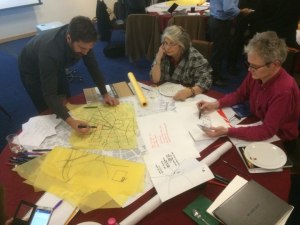
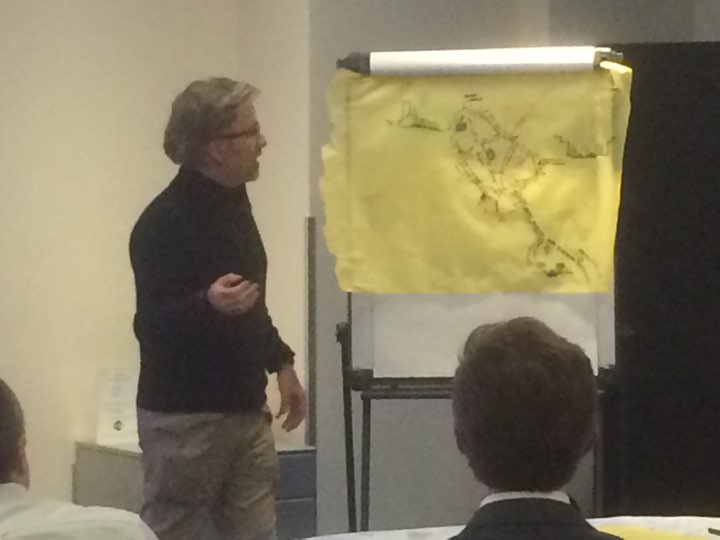
    Designing City Resilience is a two-day summit at the RIBA, 17-18th June 2015. Avalon is one of four imaginary cities being looked at during the event in a creative approach that breaks the mould of typical, presentation-only conference agendas. By engaging in a rapid prototyping exercise, delegates immediately test the ideas they have heard in the keynote presentations and on-stage discussions. They also bring to the event their own international experiences.

    The result is a two-way, creative conversation that produces a richer outcome: a set of designs for the transformation of the physical, spatial, environmental, industrial, educational, healthcare and governmental structures of the four cities.

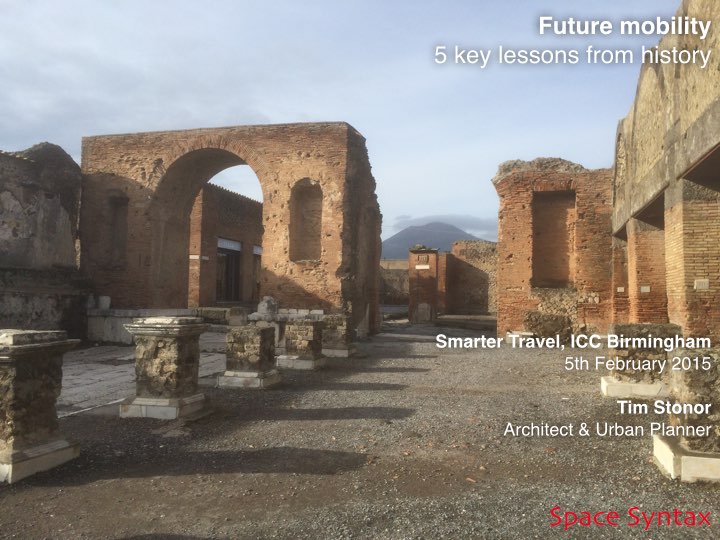
  • What did the Romans ever do for us? Pompei’s 5 lessons for placemaking…

    What did the Romans ever do for us? Pompei’s 5 lessons for placemaking…

    Download the presentation

    Tim Stonor_Future mobility 15.001

    In looking forwards it is important to learn the lessons of history.
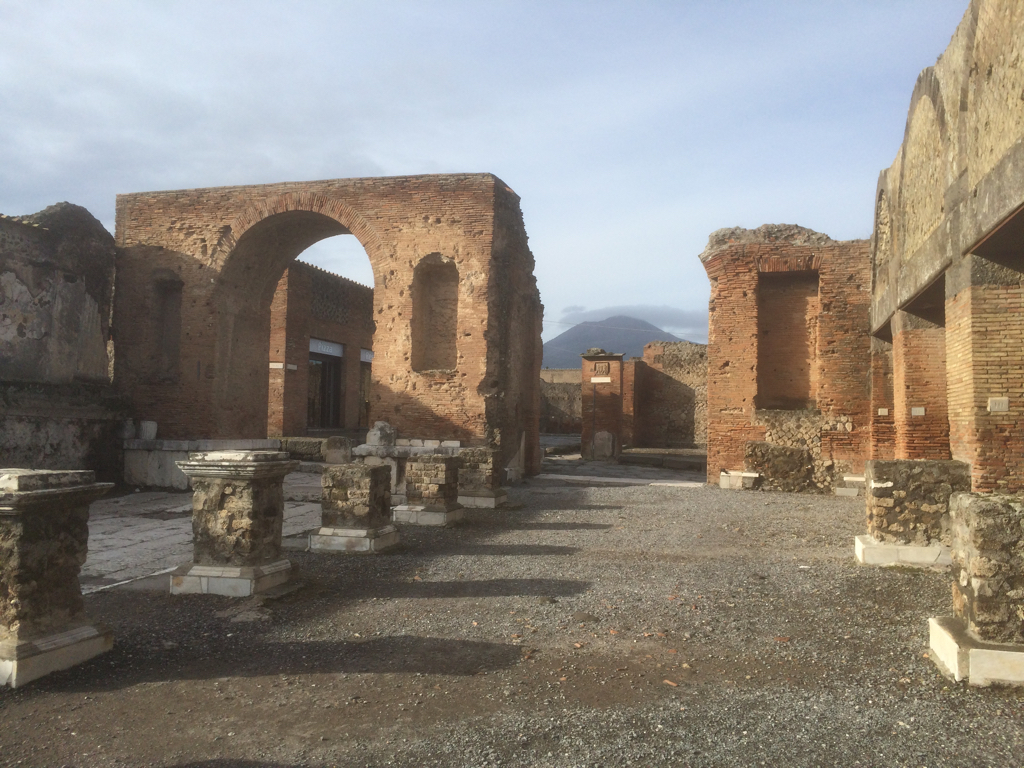
    Look at Pompei. A city built for efficient mobility. 
    A model of the 1st century with lessons for the 21st century. 

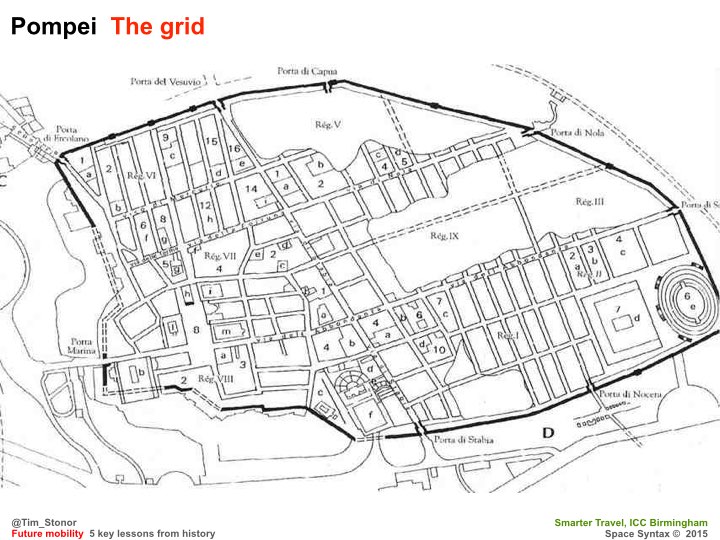
    Tim Stonor_Future mobility 15.002

    The grid – no cul de sacs. Built for mobility. Built for commerce. 

    More or less rectilinear – not labyrinthine. A layout that brains like. Easy to wayfind. Hard to get lost in.

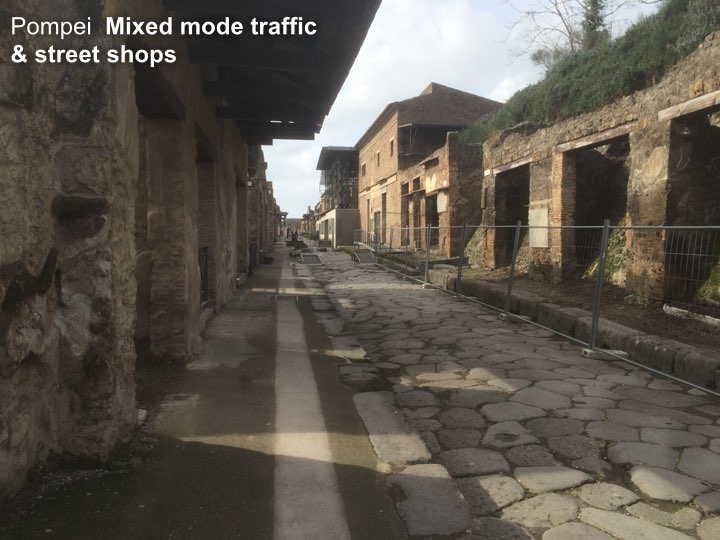
    Tim Stonor_Future mobility 15.003

    A Main Street with shops – no inward-looking shopping malls. Active frontages. About as much surface for pedestrians as for vehicles – the right balance for then. Perhaps also for now?

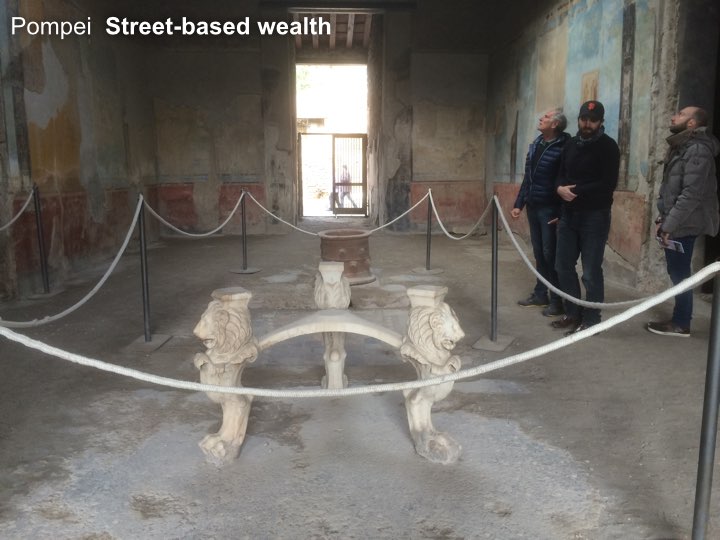
    Tim Stonor_Future mobility 15.004

    And shopkeepers of great wealth! It was not a compromise to open onto a Main Street. It was a sound commercial investment. Who would turn their back on the flow of the street?

    Tim Stonor_Future mobility 15.005

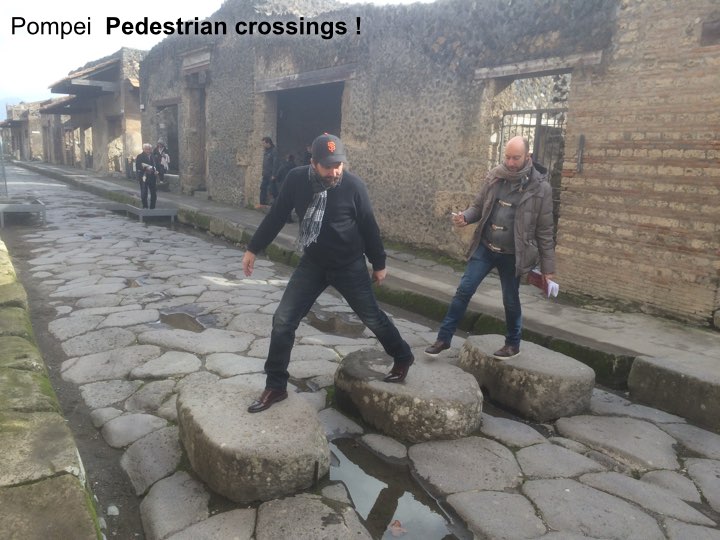
    Pedestrian crossings! The deep kerbs channel water when it rains, flushing the dirt from the road and keeping it clean. Integrated infrastructure.

    Tim Stonor_Future mobility 15.006

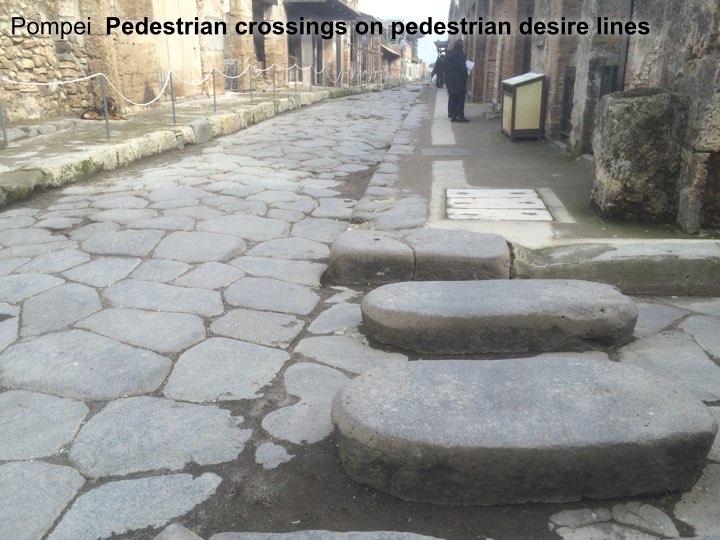
    Pedestrian crossings that are aligned with pedestrian desire lines – not following the convenience of traffic engineers’ vehicle turning arrangements. Pedestrians first because its the pedestrians that carried the money, not the vehicles.

    Tim Stonor_Future mobility 15.007

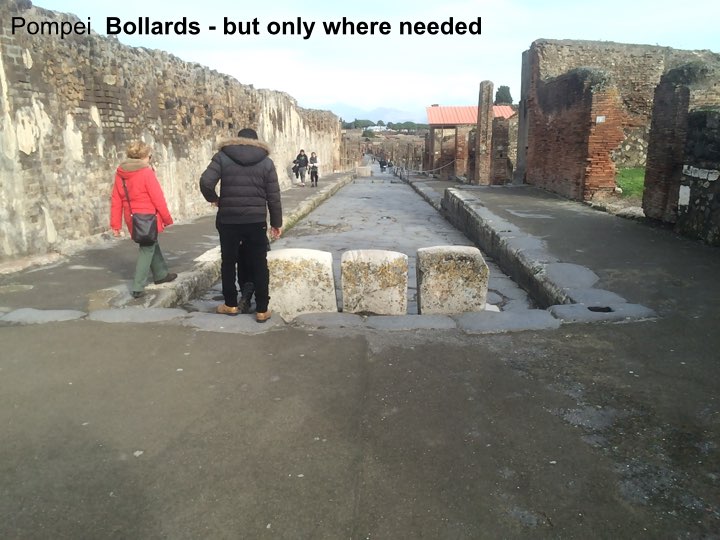
    A small, pedestrian only zone in the very heart of the city. No bigger than it needs to be…

    Tim Stonor_Future mobility 15.008

    …unambiguously signed that this is where you have to get out of your chariot and onto your feet. 

    Tim Stonor_Future mobility 15.009

    Pompei: a city of great streets – great street sense.

    Tim Stonor_Future mobility 15.010

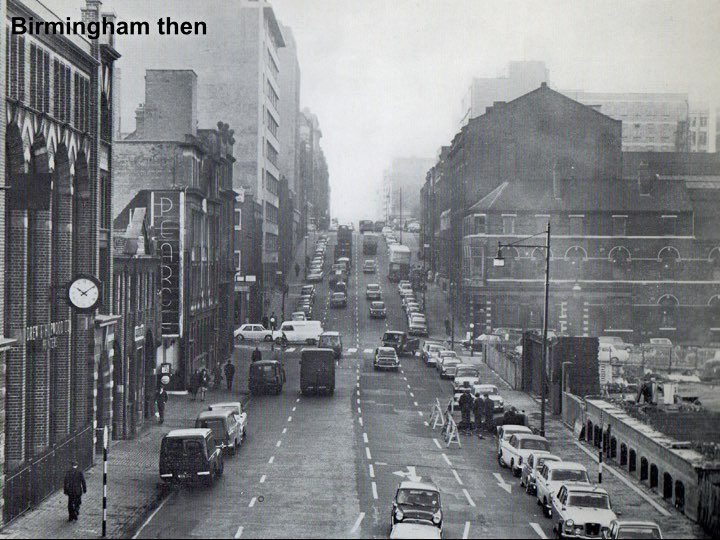
    But in recent times we lost our street-sense. 

    Look at Birmingham then…

    Tim Stonor_Future mobility 15.011

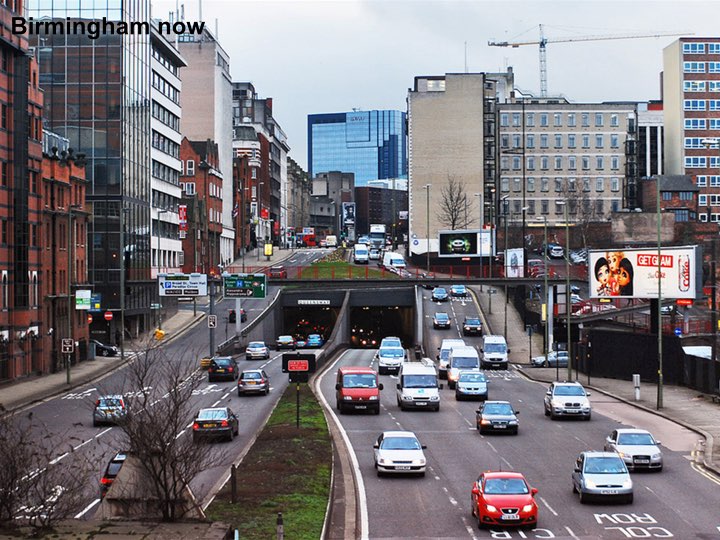
    And now. What happened to our street sense?

    Tim Stonor_Future mobility 15.012

    And Birmingham was not alone. 

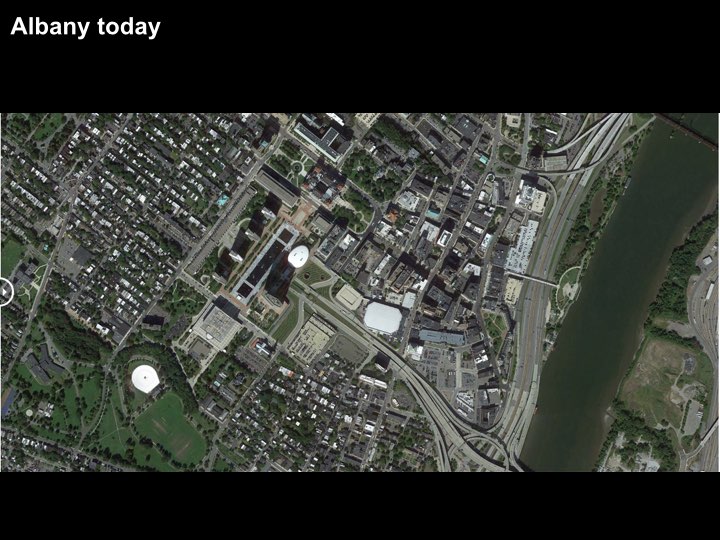
    Look at US cities:

    What they were…only 60 years ago – recognisably like Pompei: simple, rectilinear grids.

    Tim Stonor_Future mobility 15.013

    Then what they became…

    We became entrapped by traffic models. 

    And a love-affair with the car. 

    We need to regain our street-sense. 

    Tim Stonor_Future mobility 15.014

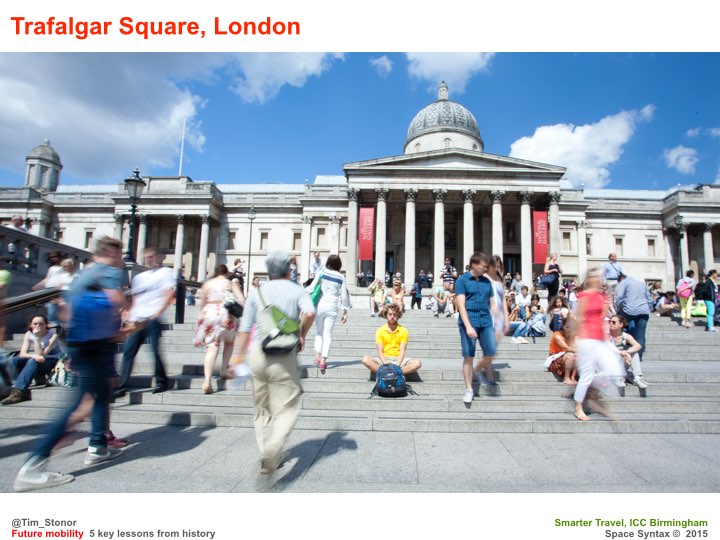
    Fortunately this is happening. 

    Trafalgar Square,

    Nottingham.

    Tim Stonor_Future mobility 15.015

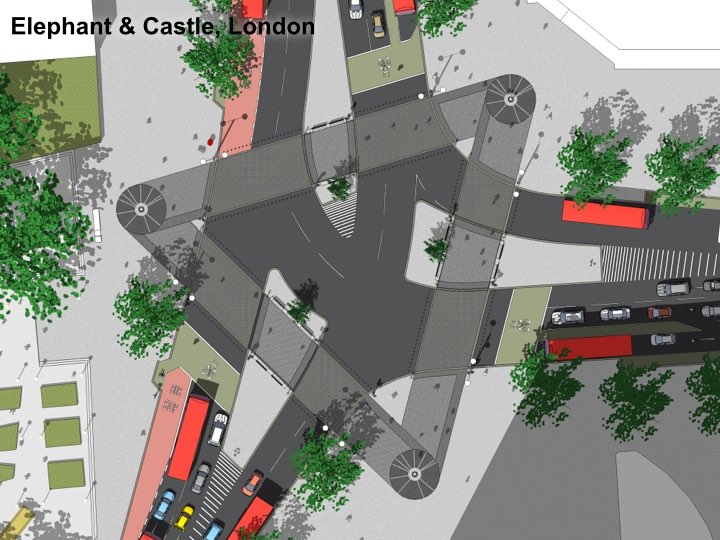
    At the Elephant & Castle, this design puts the pedestrian crossings on the pedestrian desire lines – just like those crossings in Pompei. We’ve talen pedestrians out of subways and given them their proper place at street level, next to the shopfronts. We’ve made the humble crossing an object of beauty, spending many different budgets (landscape, planting, pedestrian, cycling, highways) on one project so that each budget gets more than if it had been spent separately.

    Tim Stonor_Future mobility 15.016

    This new approach – a rediscovery of street sense – has been made possible through advances in science that have made us see the errors of previous ways.

    Tim Stonor_Future mobility 15.017

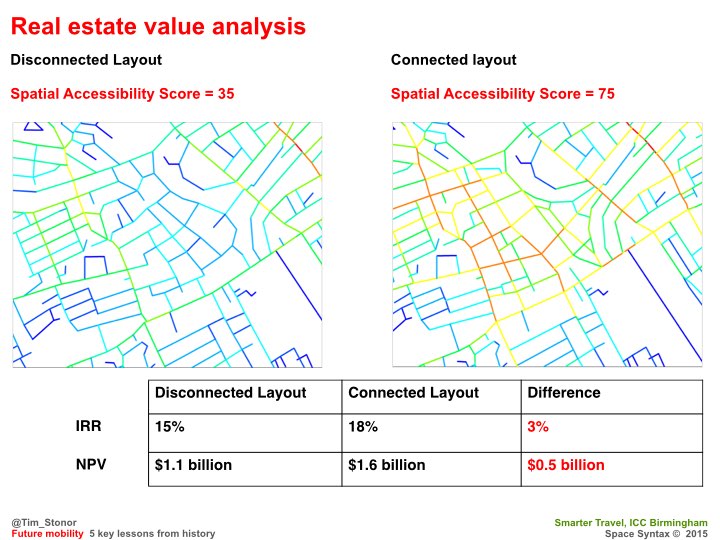
    The more we look into this the more we find of value: for example, how connected street grids create higher property values in the long run.

    Tim Stonor_Future mobility 15.018

    And Birmingham has pioneered this science:

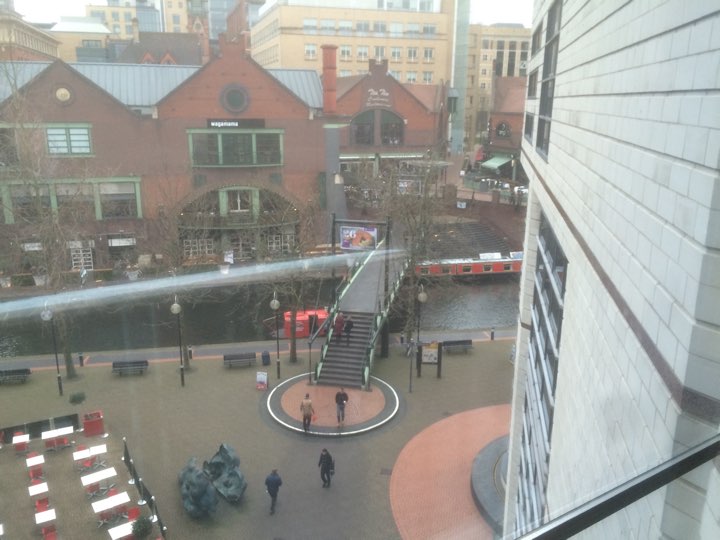
    Brindley Place – the bridge on the straight east-west route – a lesson from Pompeii! It may seem obvious today – because it’s a natural solution – but it wasn’t obvious to some people at the time, who wanted the bridge to be hidden round the corner because, they said, there would be a greater sense of surprise and delight! What nonsense. We had to model the alternatives and show just how powerful the straight alignment was.

    We still have to do so today. Many urban designers and transport planners have been slow on the uptake. The average pedestrian gets it immediately. What does that say for our professions?

    Tim Stonor_Future mobility 15.019

    Now cities all over the world are recovering their street sense, creating plans for their expansion that are street-based, not mall-based.

    Tim Stonor_Future mobility 15.020

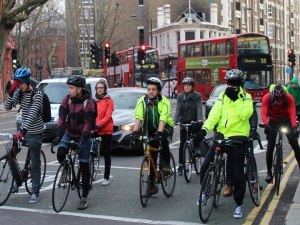
    In time to accommodate a new, two-wheeled chariot: the bicycle.

    Tim Stonor_Future mobility 15.021

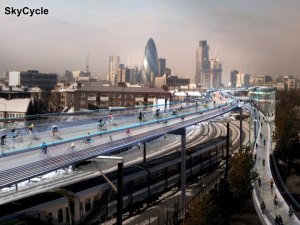
    SkyCycle – a new approach to urban mobility. Creating space for over half a billion cycle journeys every year. Constructed above the tracks, allowing smooth, predictable, junction-free movement between edge and centre. Developed by a consortium of Exterior Architecture, Foster + Partners and Space Syntax.

    Adding to cycling at street level – not taking it away.

    Tim Stonor_Future mobility 15.022

    Recently, at the Birmingham Health City workshop,a discussion about the location of healthcare facilities quickly became one focused less on hospitals and wards and more on streets and public spaces. On “free”, preventative public health rather than expensive, clinical curative care. Free in that it comes as the byproduct of good urban development. 

    Tim Stonor_Future mobility 15.023

    Rob Morrison’s drawing of the Birmingham Boulevard…

    Tim Stonor_Future mobility 15.024

    …an idea to turn the Inner Ring Road into an active street.

    Tim Stonor_Future mobility 15.025

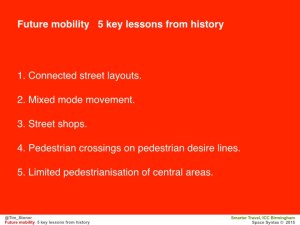
    And to achieve this there are clear principles to follow:

    1. Connected street layouts.

    2. Mixed mode movement – not separated by tunnels and walkways.

    3. Active streets ie lined with street shops not mall shops.

    4. Pedestrian crossings on desire lines, not where it’s most convenient for traffic turnings.

    5. Limited pedestrianisation of the most important civic areas.

    A thought – yes Pompeii was a city of commerce but the houses of the city are filled with references to literature, poetry, music: the arts. 

    Huge cultural value. 

    After all, this is the important, aspirational aspect of living in cities that comes with the efficient mobility that results from pragmatic planning: the grid, mixed modes, active frontages on main streets and special, limited, high intensity, pedestrian only places. 

    When we get this right we have time to truly enjoy ourselves in the arts and sciences. In culture. That is truly great urbanism.

    Download the presentation

  • The spatial architecture of the SMART city

    The spatial architecture of the SMART city

    Tim Stonor_The spatial architecture of the SMART city_Japanese_141028.001

    Download this presentation.

    Good morning. It is a pleasure and an honour to have been invited to give this presentation today at the Nikkei Smart City Week conference. The subject of my talk is architecture – not only the architecture of buildings but, also, the architecture of public space: the space that we move through and live our lives in; the glue that binds us together.

    Tim Stonor_The spatial architecture of the SMART city_Japanese_141028.002

    In the first part of my presentation I will address three key questions:

    First, what is a Smart City?

    Second, how can a Smart City be planned & governed?

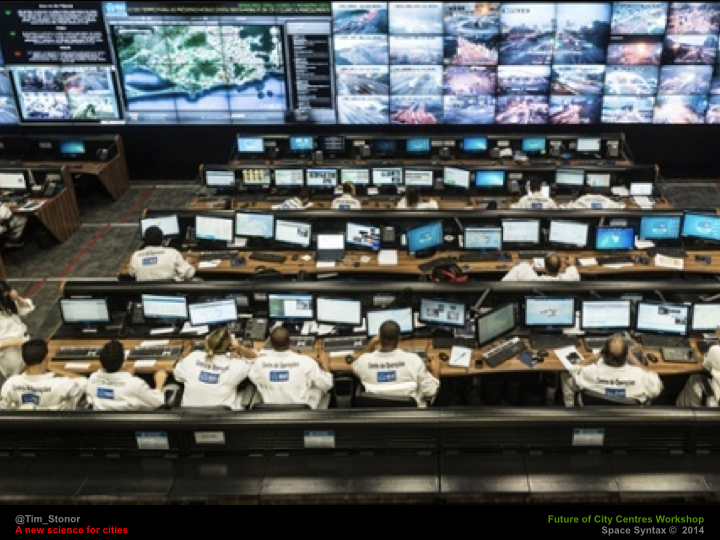
    Third, where is the place for technology in the Smart City?

    And I will relate each of these questions to the architecture of space.

    Tim Stonor_The spatial architecture of the SMART city_Japanese_141028.003

    In the second part of my presentation I will describe the very significant effort that the UK is making to plan for its urban future, embracing the opportunities that new technologies provide.

    Tim Stonor_The spatial architecture of the SMART city_Japanese_141028.004

    In the third part of my presentation I will describe the use of computer modelling techniques in the creation of the London 2012 urban masterplanning process. (more…)

  • A new science for cities

    A new science for cities

    A talk given to the Leaders and Chief Executives of the Key Cities, Brighton, 24th October 2014.

    Tim Stonor_Key Cities_20141024.001

    Download this presentation.

    We hear a lot about smart cities as the solution to the needs of urban places. But although technology allows us to live remotely and speak to each other from deep forests and mountaintops, humanity as a species has become more and more urban. The more that we could be apart, the more we have actually come together.

    Perhaps we need to understand that smart cities is not a new concept: cities were always smart – if they weren’t smart we wouldn’t have them. (more…)

  • Bill Hillier’s Smart London

    Bill Hillier’s Smart London

    Notes of Bill Hilliers opening talk about the NLA Smarter London exhibition, 8th October 2014.

    Congratulations to the NLA and CASA for the exhibition.

    It’s evidence that London is the original smart city – nowhere such a collection of top class practices, imaginative authorities and academic departments developing new ways of doing things, and new technologies –and talking to each other !

    But I think London is a smart city also in another sense – the city itself and how it’s put together.

    When I was young London was regarded as an unplanned mess, in need of being tidied up into a system of well-defined neighbourhood units separated by main roads – a bit like Milton Keynes.

    I’ve been asked to say something about one of the technologies on show – space syntax.

    When we apply space syntax analysis to London it suggests it’s not mess at all

    That under the apparent disorder, there is a pretty smart city. (more…)