Category: Space Syntax

  • Permeability & connectivity: a tale of two cities

    Permeability & connectivity: a tale of two cities

    Notes from a response to questions from the Strelka Institute. 

    How would you describe the situation with the permeability and connectivity of city spaces today?

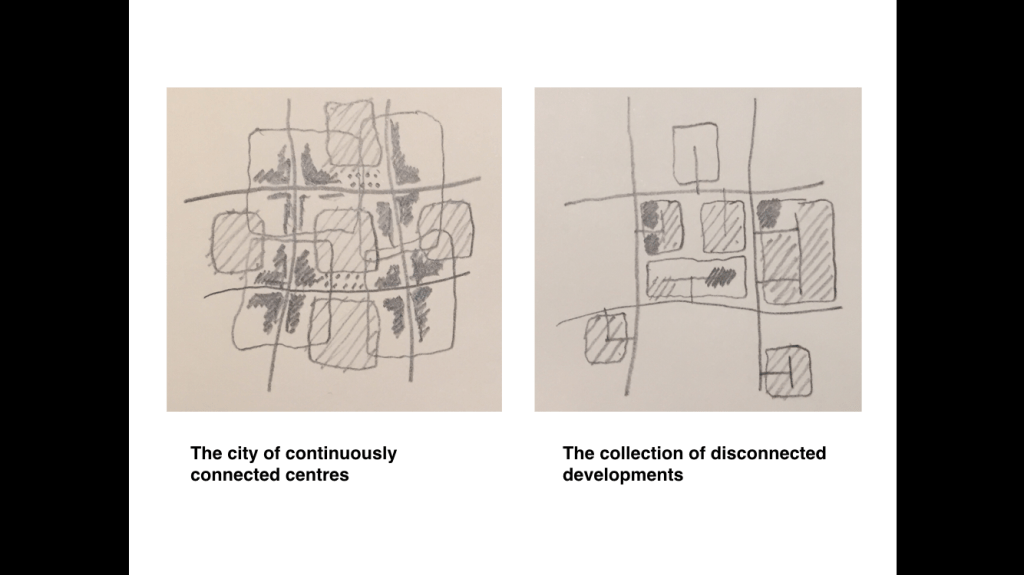
    There is no single state of permeability and connectivity in the contemporary city. Instead we find two main types of urban layout: first, the finely grained, continuously connected street network in the historic city and second, the system of largely impermeable housing estates separated by fast-moving roads in the 20th century city.

    In the historic city, space is well used. Most space use is movement and most movement is through movement. Movement supports commercial activities, which locate themselves on the principal streets where footfall is greatest. Movement brings people to places of opportunity – to buy, sell, exchange and interact. Effective exchange and interaction drives urban economies, social networks, cultures and innovations.

    In the 20th century city, the large, impermeable blocks of the housing estates do not encourage through movement. People move around the estates rather than through them. As a result, commercial activity is undermined, with its market divided between people moving locally inside the estate and those moving globally around it. Commercial activities are more likely to fail, especially inside estates where the marketplace is too weak. Instead, shops form at the entrances to the estates and on the surrounding roads. Since these roads have often been designed to favour the car, the shops are likely to be car-based, with large parking lots that further separate local people from them.

    A further, social consequence of this is that local people do not see people from outside the estate on the regular basis that people in traditional streets take for granted. The effect of this is to create social isolation and fear of strangers in estates.
    The irony is that the inward-looking urban block was created purposefully to foster a stronger community spirit. Traditional streets were considered to be noisy, dirty and dangerous. 20th century town planning’s idea was that, if life could be created away from streets then people would be cleaner, happier and safer.

    It is the greatest tragedy of 20th century international planning that its well-intended model of urban living has failed. Indeed it has done the opposite: creating highly negative social and economic outcomes for all people with perhaps the exception of the super rich for whom social and economic relations are formed in different spatial contexts.

    Connectivity is closely connected with the structure of property ownership, how will it change in the next 5 years? Will it shift towards privatisation of public spaces? And what will be the case 20 years from now?

    Undoubtedly the next decade will see more private spaces set within gated communities. Such forms of urbanism are still favoured by developers and aspirational residents for whom the idea of living in a cleaner and supposedly safer environment is expected to make them happier. The history of 20th century failure may not be considered to be relevant, perhaps because of a belief that it happened somewhere else, or in a different socio-political era, or because new digital communications technologies can effectively span the spatial divide between such places and their urban settings.

    At the same time, the resurgence of traditional street design will see more places created that look more like the continuously connected form of the historic city. This trend can be seen in cities as diverse as Beijing, London and Dubai, where permeable street networks have been created by commercial property developers as well as public municipalities precisely because they are seen to deliver places that are popular with people. The social and economic benefits of a street-based approach have been witnessed with a combination of satisfaction and surprise.

    Perhaps the most significant impact on the form of urbanism in the future city will come from the digital technologies that will record and analyse the outcomes of both approaches – the gated community and the open street network – and demonstrate with evidence how each performs.

    My clear view is that the continuously connected street network will outperform the gated community in terms of Urban GVA, making a greater contribution to the overall social and economic value of the city. The emerging Science of Cities, in which my company Space Syntax has been a pioneer, is one of the key areas of future urban practice that will cut through the inaccurate claims that have been made about the benefits of estates – claims that have been promoted by architects and urban planners throughout the 20th century, based on the passion of their beliefs rather than on the evidence of facts. Urban analytics will transform urban practice over the next 20 years, shaping a new, evidence-rich approach to architecture and town planning and, crucially, returning a highly effective, street-based form of urbanism to the position it had held for centuries before professionalised town planning imagined it could do better.

    During our work for the classification of Moscow streets we highlighted three different zones of the city: centre (inside the Garden Ring), middle zone (between the Garden and the Third Transport Rings), and periphery (outside the Third Ring). The pattern is completely different in these zones. Could you comment on the implication of global trends of connectivity in the city on different zones in Moscow?

    No city is the same from its centre to its edge. Or, more precisely, from its centres to the edges of those centres because cities are formed of multiple centres that create a system of connected urban quarters. The quality of the connections between centres is a fundamental determinant of overall urban performance, having a strong bearing on whether people are more likely to walk and cycle between neighbourhoods and whether those links will be effective places for social and economic activity. When centres are continuously connected to each other through a set of connections with a regular grain then it is likely that many, if not all of these will be suitable for walking and cycling as well as driving along.

    Cities like London and Paris are composed of multiple centres that have distinct centres of differing characters yet are continuously connected to each other. Indeed it is the magic of such cities that it is possible to move from one centre to the other in such a subtle way that you are uncertain exactly when you have left one centre and entered another. The connective “tissue” between centres is typically comprised of residential streets, which therefore link to – and carry movement belonging to – multiple centres. People may identify more with one centre than others but they are provided with a choice of more than one. And,min doing so, they interface with people from more than one centre. The benefits of this arrangement are simultaneously social and economic.

    Such choice is denied by the 20th century city of separated estates. People living in one estate have limited, if any direct access to the centres of other estates. Increasingly, the roads that connect between estates are hostile to pedestrians and cyclists. Social and economic life is suppressed.

    All cities are systems of linked centres that each work in individualistic, local ways but that also form an overall city system. Within this city system, the centres have a hierarchy with more central centres typically supporting greater economic activity than centres at the edge. This is not only because more central centres are larger but also because these centres are surrounded by a larger number of other centres than are peripheral centres.

    In the case of Moscow, Space Syntax analysis would be used to examine the hierarchy of centres, the quality of the connections between them and the degree to which spatial connectivity is directly related to social and economic performance. Data on economic performance – such as land value, property transactions, commercial performance, retail sales – would be correlated with measures of spatial connectivity – such as spatial centrality (choice) and betweenness (integration) at a range of spatial scales. These Big Data sets would be interrogated in order to form a diagnosis of the current spatial conditions. On the basis of this diagnosis, a set of spatial planning principles would be created that would lead to the production of a spatial vision for the city. We anticipate that this form of data-rich, evidence-informed planning will become normal in the next 20 years.

    While improving and redeveloping city streetscape how should trends in the connectivity and permeability of city space be taken into account? 

    Space Syntax analysis shows how patterns of spatial connectivity have profound influences on the social and economic performance of all cities. The hierarchy of spatial connections influences:
    movement patterns of cars, cycles and pedestrians

    – public transit demand

    – land use performance

    – land value

    – transport emissions.

    Future urban plans should therefore be created with a special emphasis on the design of the spatial layout of the city. Opportunities should be identified to strengthen the network of streets and open spaces, pursuing an overall objective to create a city of continuously connected centres. Constraints should equally be identified so that reasonable plans can be made.

    “Spatial geometry” standards should be set for the number and frequency of connections as well as for the geometrical means by which centres can be most effectively connected ie first, a small set of longer, more direct connections (the “foreground grid” of boulevards and high streets) that will carry larger volumes of people and therefore be suitable for commercial uses and second, a large set of smaller, less direct connections (the “background grid” of local streets) that will carry smaller volumes of principally residential movement.

    Once these spatial geometry standards have been established then further standards of urban design quality should be set – but not before. High quality urban design in the form of green landscape, seating, signage me surface treatment will not create high quality urban performance if the spatial layout geometry is weak.

    The living city is built on human interaction. Without this, the city is dead. Human interaction relies on effective movement corridors and effective places of human transaction. Effective street connectivity is a critical determinant of the living city.
  • Integrated Urban Planning – balancing the multiple flows of the city

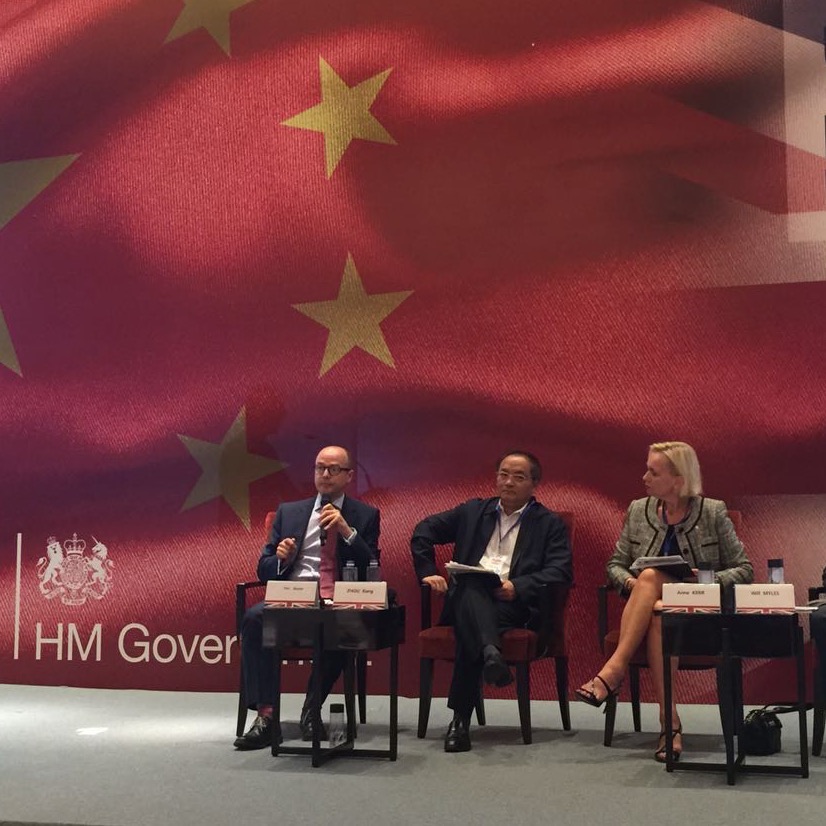
    Notes for the UK-China Sustainable Urbanisation Conference in Chengdu, China on 24th September 2015


    My job as an architect and urban planner is to design new towns and cities – as well as new parts of existing urban settlements. This means designing the multiple systems that make up a city. We often think about towns and cities in terms of their physical stuff: their buildings. Perhaps also in terms of their roads and rails. But for me the success of any city can be seen and measured in terms of its flows, the flows of:

    • energy
    • water
    • data

    and, most important of all, the flows of:

    • people: in cars, on public transport, on bicycles and on foot.

    Each of these flows is impacted by urban development: how much of which land uses are placed where, and how they are then connected to each other. Flows impact on other flows.

    Sometimes these impacts are positive, sometimes negative. They have enormous social and economic implications.

    Urban planning is as much about designing flows as it is designing buildings.

    We live in an age of unprecedented computing power – this gives us the ability to better predict the nature of these impacts.

    This is especially important to avoid the unwanted effects of urban development: congestion, air pollution, social isolation and unsustainable stresses on natural resources.

    And computing can help create the positive impacts that are needed to support the essential purpose of cities: to be:

    • machines for human interaction
    • crucibles of invention
    • factories for cultural creation.

    The last decade has seen the emergence of Integrated Urban Modelling. My company, Space Syntax, is a leader in the field: one of the UK companies referred to by the Chancellor as contributing to China’s growth and development. Working, for example, with the China Academy of Urban Planning and Design across China in Suzhou and Beijing.

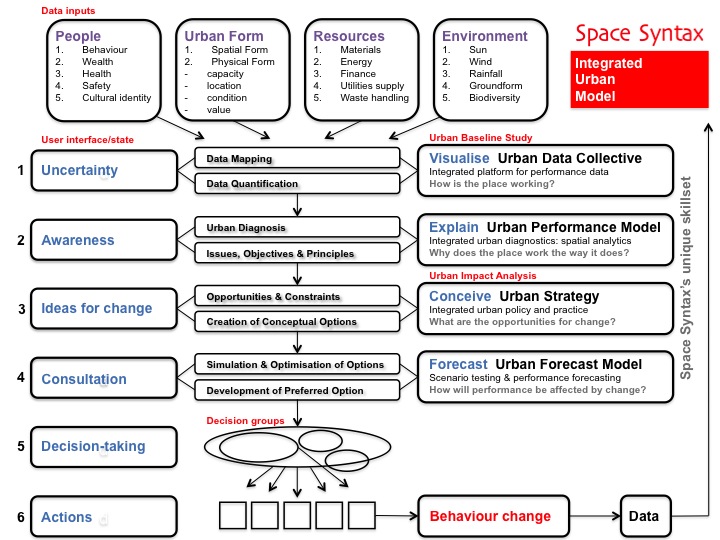
    Integrated Urban Models link the data generated by the multiple flows and reveal the interactions that help architects and urban planners create sustainable plans. Space Syntax has identified the essential role of spatial layout as the principal influence on urban performance. Spatial analytics are at the heart of our approach to Integrated Urban Modelling and we have made our discovery open source and openly available so that others can benefit too.

    The Space Syntax Online Training Platform is a freely available, web-based resource through which urban practitioners, policymakers and local residents can equip themselves with information and skills to create more sustainable urban futures.

    I’m pleased to announce that this platform is currently being translated into Chinese so that the Space Syntax’s discoveries and experiences can be more readily disseminated here in China.
    _____________

    Integration, balance, glue, pivot: space
    In many ways, urban planning is the integration and balancing of multiple flows. Integration needs glue and balance needs a pivot. Spatial layout provides both.


  • What did the Romans ever do for us? Pompei’s 5 lessons for placemaking…

    What did the Romans ever do for us? Pompei’s 5 lessons for placemaking…

    Download the presentation

    Tim Stonor_Future mobility 15.001

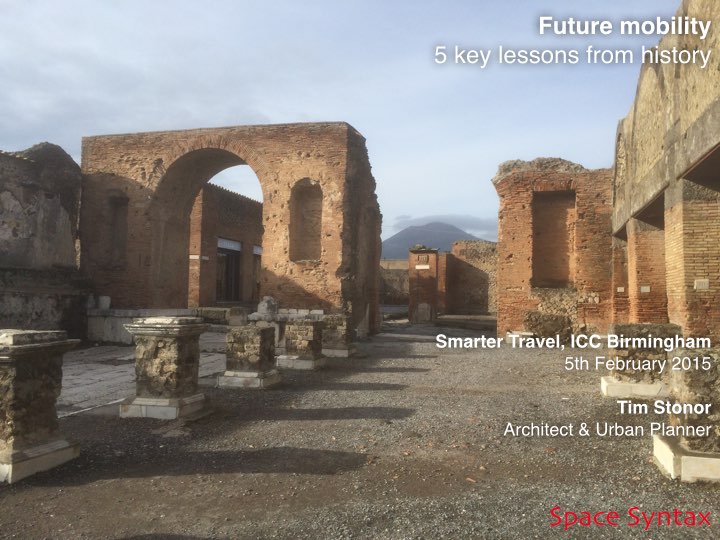
    In looking forwards it is important to learn the lessons of history.

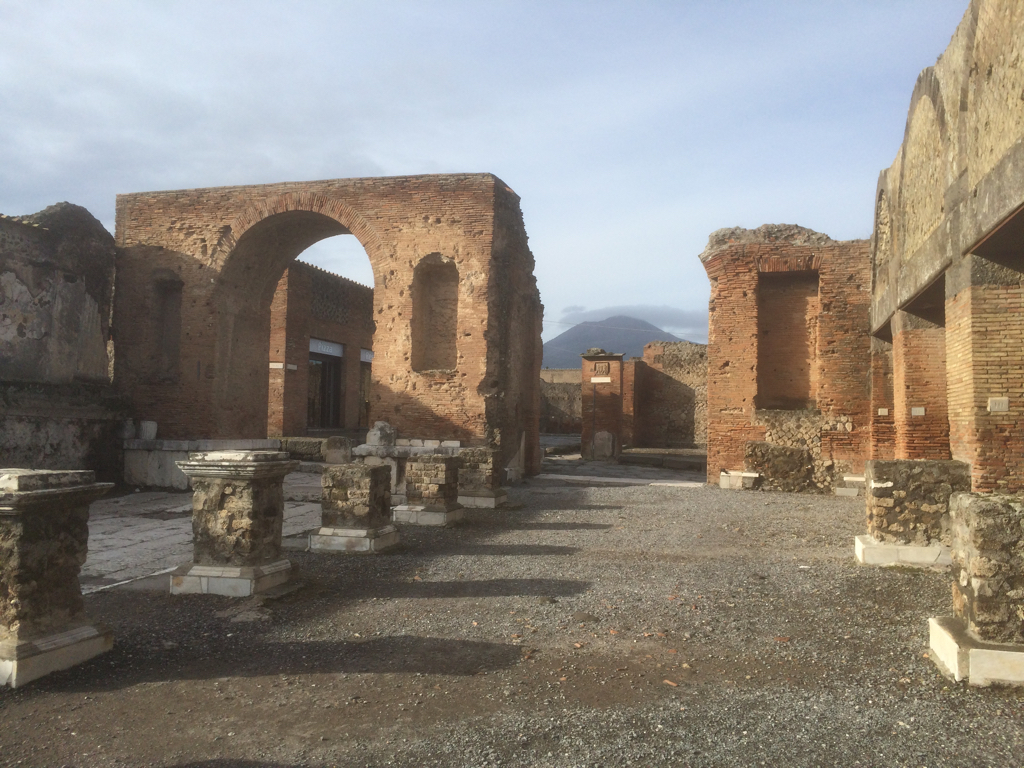
    Look at Pompei. A city built for efficient mobility. 

    A model of the 1st century with lessons for the 21st century. 

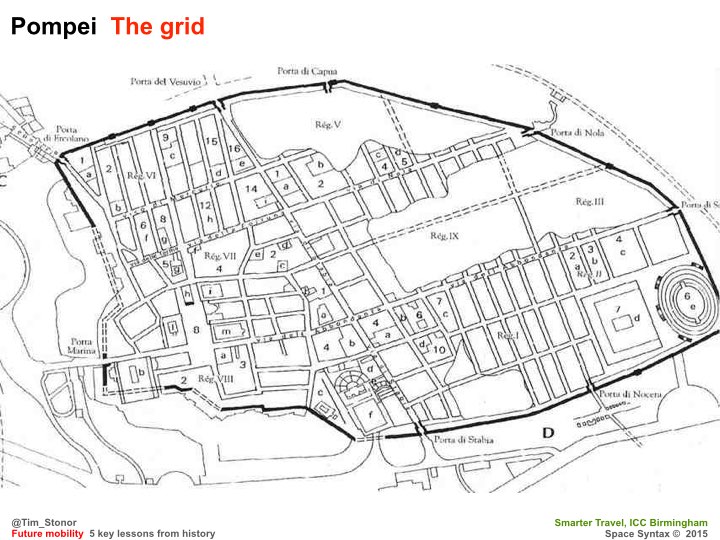
    Tim Stonor_Future mobility 15.002

    The grid – no cul de sacs. Built for mobility. Built for commerce. 

    More or less rectilinear – not labyrinthine. A layout that brains like. Easy to wayfind. Hard to get lost in.

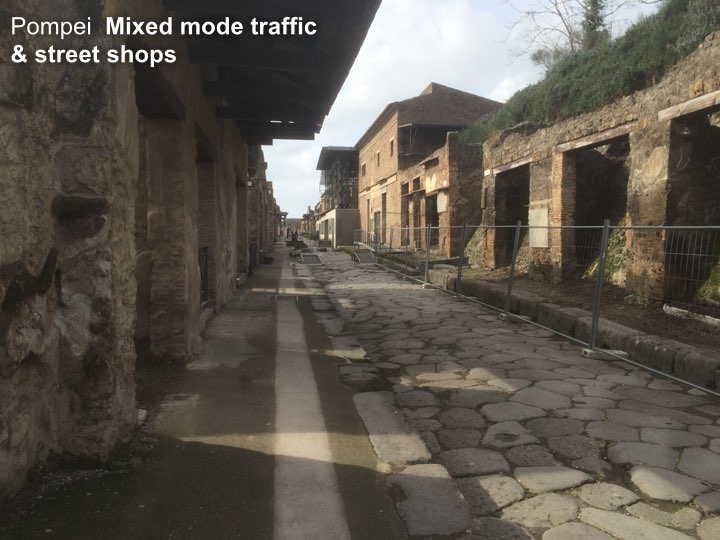
    Tim Stonor_Future mobility 15.003

    A Main Street with shops – no inward-looking shopping malls. Active frontages. About as much surface for pedestrians as for vehicles – the right balance for then. Perhaps also for now?

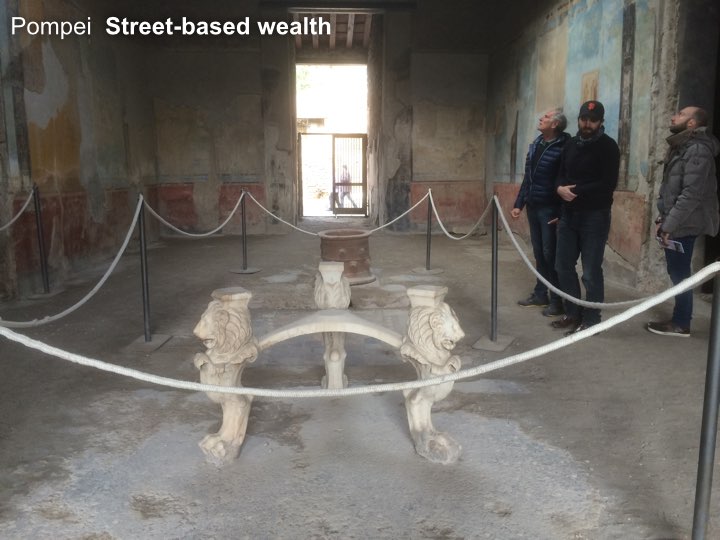
    Tim Stonor_Future mobility 15.004

    And shopkeepers of great wealth! It was not a compromise to open onto a Main Street. It was a sound commercial investment. Who would turn their back on the flow of the street?

    Tim Stonor_Future mobility 15.005

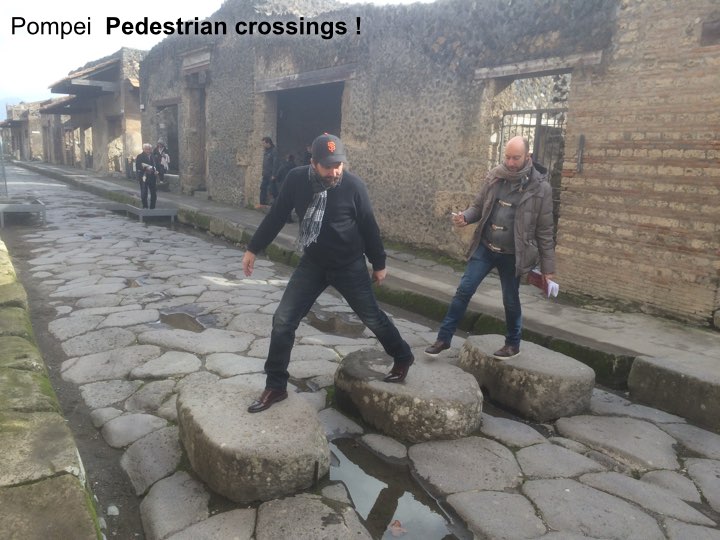
    Pedestrian crossings! The deep kerbs channel water when it rains, flushing the dirt from the road and keeping it clean. Integrated infrastructure.

    Tim Stonor_Future mobility 15.006

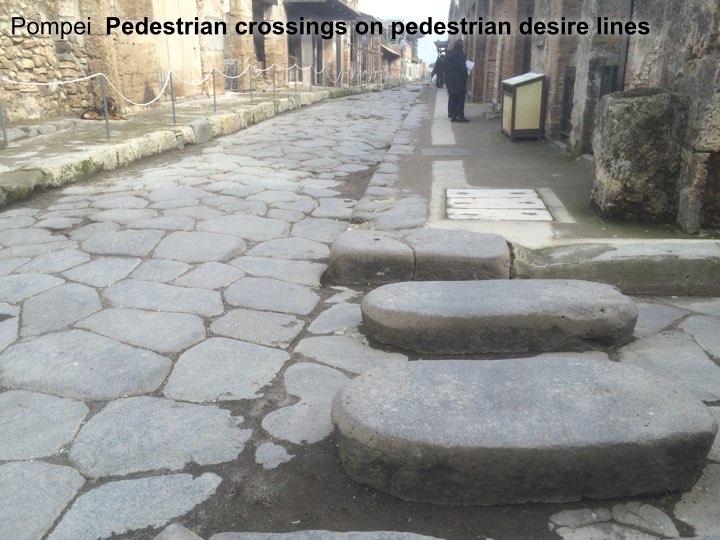
    Pedestrian crossings that are aligned with pedestrian desire lines – not following the convenience of traffic engineers’ vehicle turning arrangements. Pedestrians first because its the pedestrians that carried the money, not the vehicles.

    Tim Stonor_Future mobility 15.007

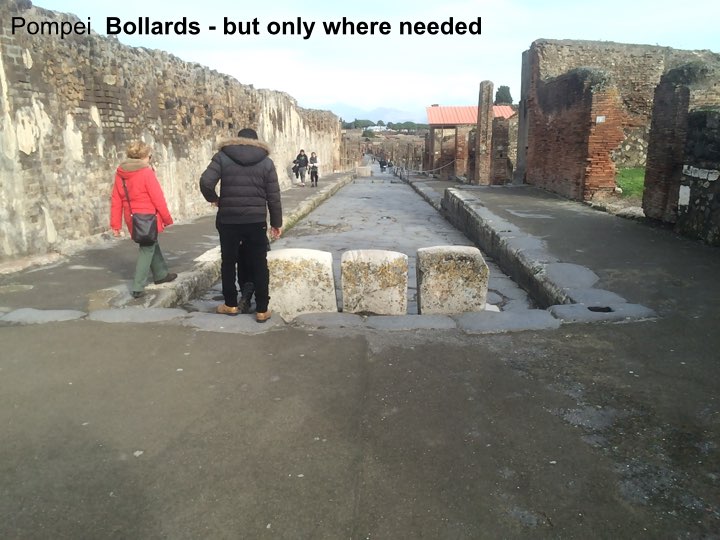
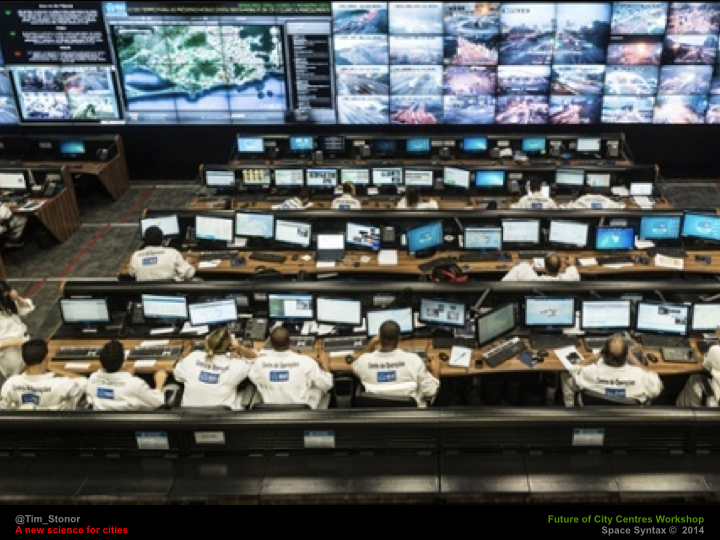
    A small, pedestrian only zone in the very heart of the city. No bigger than it needs to be…
    Tim Stonor_Future mobility 15.008

    …unambiguously signed that this is where you have to get out of your chariot and onto your feet. 

    Tim Stonor_Future mobility 15.009

    Pompei: a city of great streets – great street sense.

    Tim Stonor_Future mobility 15.010

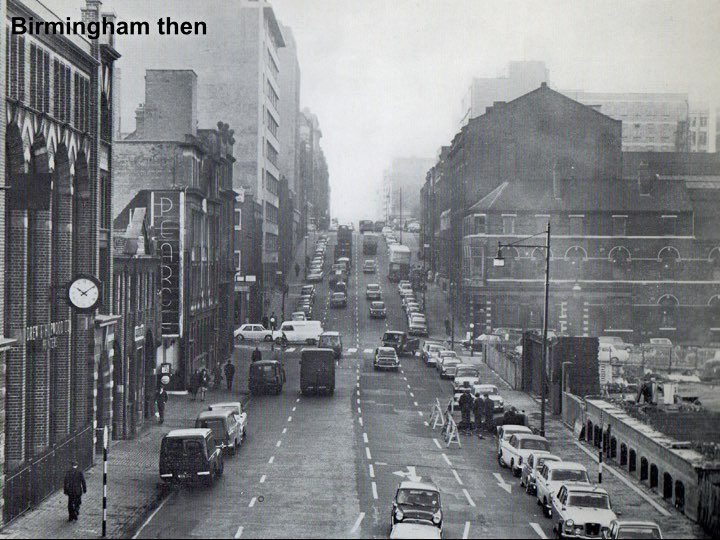
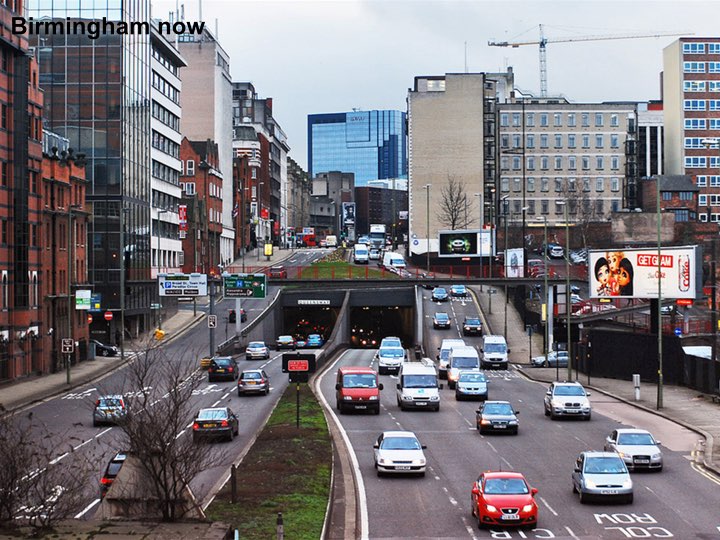
    But in recent times we lost our street-sense. 

    Look at Birmingham then…

    Tim Stonor_Future mobility 15.011

    And now. What happened to our street sense?

    Tim Stonor_Future mobility 15.012

    And Birmingham was not alone. 

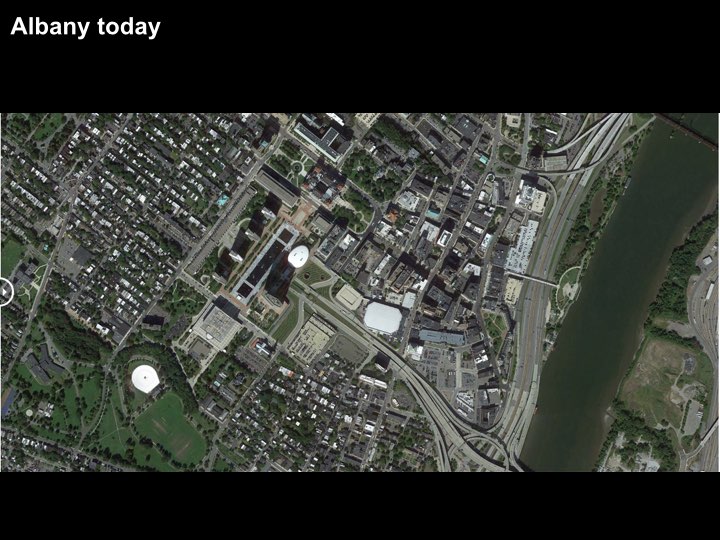
    Look at US cities:

    What they were…only 60 years ago – recognisably like Pompei: simple, rectilinear grids.

    Tim Stonor_Future mobility 15.013

    Then what they became…

    We became entrapped by traffic models. 

    And a love-affair with the car. 

    We need to regain our street-sense. 

    Tim Stonor_Future mobility 15.014

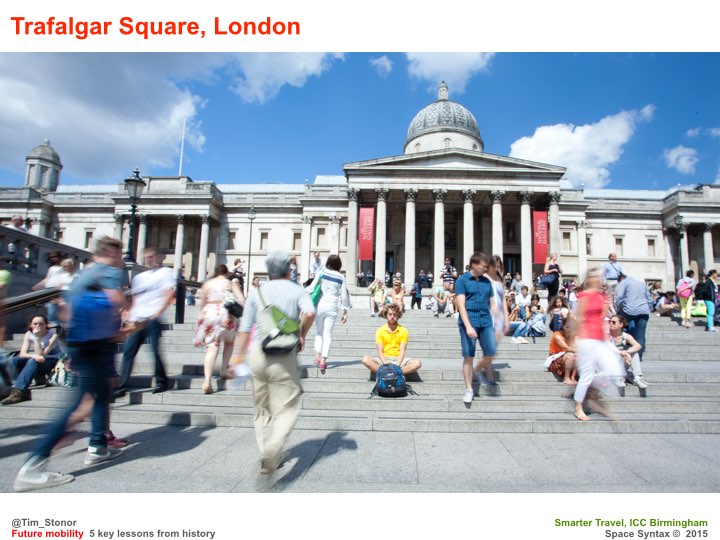
    Fortunately this is happening. 

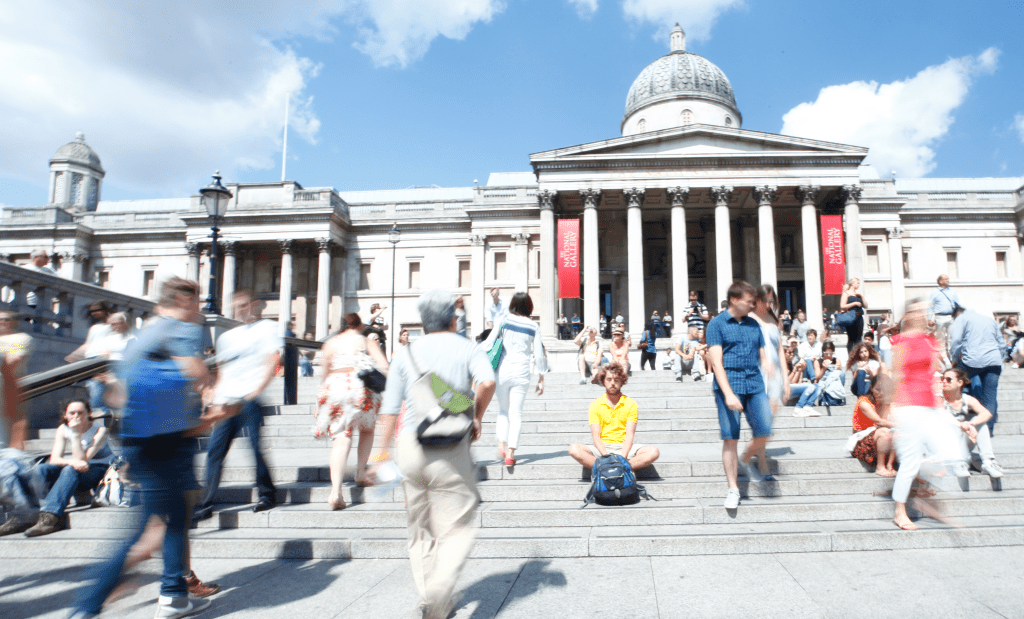
    Trafalgar Square,

    Nottingham.

    Tim Stonor_Future mobility 15.015

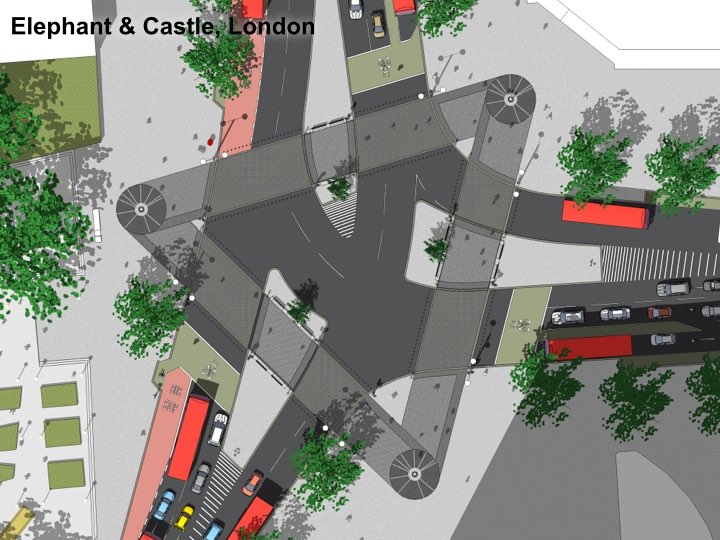
    At the Elephant & Castle, this design puts the pedestrian crossings on the pedestrian desire lines – just like those crossings in Pompei. We’ve talen pedestrians out of subways and given them their proper place at street level, next to the shopfronts. We’ve made the humble crossing an object of beauty, spending many different budgets (landscape, planting, pedestrian, cycling, highways) on one project so that each budget gets more than if it had been spent separately.

    Tim Stonor_Future mobility 15.016

    This new approach – a rediscovery of street sense – has been made possible through advances in science that have made us see the errors of previous ways.

    Tim Stonor_Future mobility 15.017

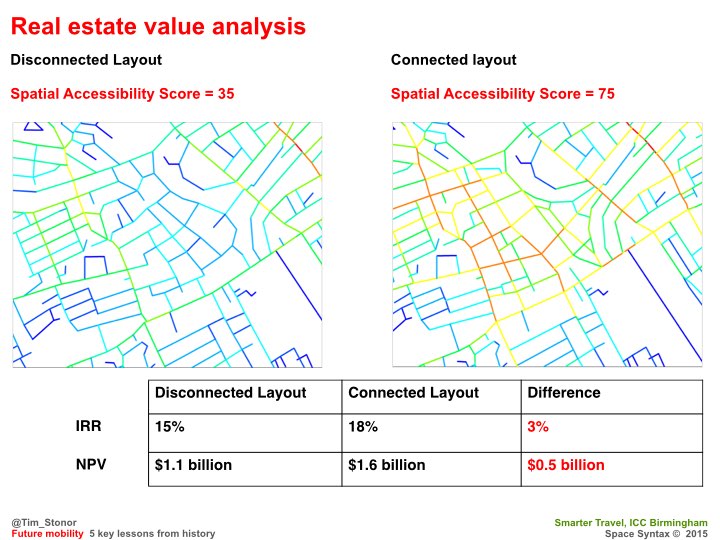
    The more we look into this the more we find of value: for example, how connected street grids create higher property values in the long run.

    Tim Stonor_Future mobility 15.018

    And Birmingham has pioneered this science:

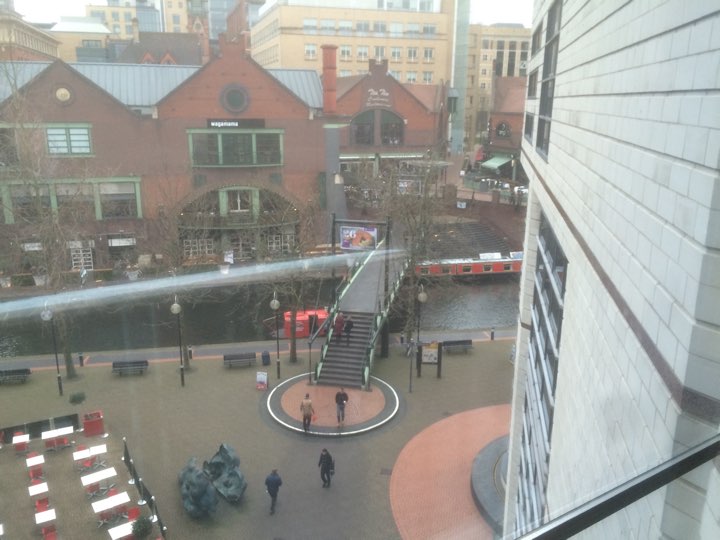
    Brindley Place – the bridge on the straight east-west route – a lesson from Pompeii! It may seem obvious today – because it’s a natural solution – but it wasn’t obvious to some people at the time, who wanted the bridge to be hidden round the corner because, they said, there would be a greater sense of surprise and delight! What nonsense. We had to model the alternatives and show just how powerful the straight alignment was.

    We still have to do so today. Many urban designers and transport planners have been slow on the uptake. The average pedestrian gets it immediately. What does that say for our professions?

    Tim Stonor_Future mobility 15.019

    Now cities all over the world are recovering their street sense, creating plans for their expansion that are street-based, not mall-based.

    Tim Stonor_Future mobility 15.020

    In time to accommodate a new, two-wheeled chariot: the bicycle.

    Tim Stonor_Future mobility 15.021

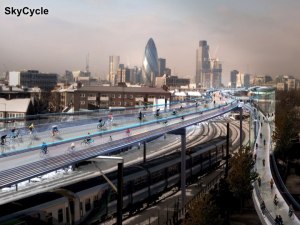
    SkyCycle – a new approach to urban mobility. Creating space for over half a billion cycle journeys every year. Constructed above the tracks, allowing smooth, predictable, junction-free movement between edge and centre. Developed by a consortium of Exterior Architecture, Foster + Partners and Space Syntax.

    Adding to cycling at street level – not taking it away.

    Tim Stonor_Future mobility 15.022

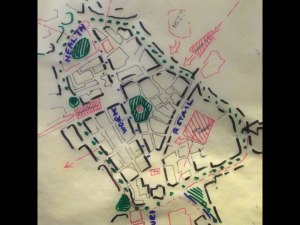
    Recently, at the Birmingham Health City workshop,a discussion about the location of healthcare facilities quickly became one focused less on hospitals and wards and more on streets and public spaces. On “free”, preventative public health rather than expensive, clinical curative care. Free in that it comes as the byproduct of good urban development. 

    Tim Stonor_Future mobility 15.023

    Rob Morrison’s drawing of the Birmingham Boulevard…

    Tim Stonor_Future mobility 15.024

    …an idea to turn the Inner Ring Road into an active street.

    Tim Stonor_Future mobility 15.025

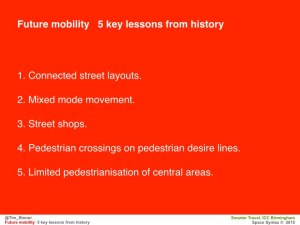
    And to achieve this there are clear principles to follow:

    1. Connected street layouts.

    2. Mixed mode movement – not separated by tunnels and walkways.

    3. Active streets ie lined with street shops not mall shops.

    4. Pedestrian crossings on desire lines, not where it’s most convenient for traffic turnings.

    5. Limited pedestrianisation of the most important civic areas.

    A thought – yes Pompeii was a city of commerce but the houses of the city are filled with references to literature, poetry, music: the arts. 

    Huge cultural value. 

    After all, this is the important, aspirational aspect of living in cities that comes with the efficient mobility that results from pragmatic planning: the grid, mixed modes, active frontages on main streets and special, limited, high intensity, pedestrian only places. 

    When we get this right we have time to truly enjoy ourselves in the arts and sciences. In culture. That is truly great urbanism.

    Download the presentation

  • Technology by necessity

    Technology by necessity

    Notes for today’s talk at the NLA’s conference on “How do we build a smarter London

    The London context:

    – more people (growing population)
    – more data (sensors everywhere)
    – more sophisticated computing.

    Strategic problem: how to handle it all.

    Space Syntax’s experience: address the problem via “the questions of reality”.

    The commercial application of Space Syntax research was catalysed by approaches from London residents in the early/mid 1980s eg Limehouse Basin, South Bank, King’s Cross: citizens groups opposing property developments they saw as being alien to London life. Today we work for those developers as well as community groups. Developers have learned to “get it”.

    Data and computing create an art of the possible (sometimes the seemingly impossible too eg the wonderful Pigeon Sim). Pass the art of the possible through the filter of reality/market demand. Then it’s possible to make sense of it all – to know what to do.

    The questions asked by our clients are the necessary filter.

    Then evolve the technology according to new and difficult questions.

    This is what we had to do to understand Trafalgar Square – we’d never studied such a complex open space before.

    Technology by necessity.
  • The spatial architecture of the SMART city

    The spatial architecture of the SMART city

    Tim Stonor_The spatial architecture of the SMART city_Japanese_141028.001

    Download this presentation.

    Good morning. It is a pleasure and an honour to have been invited to give this presentation today at the Nikkei Smart City Week conference. The subject of my talk is architecture – not only the architecture of buildings but, also, the architecture of public space: the space that we move through and live our lives in; the glue that binds us together.

    Tim Stonor_The spatial architecture of the SMART city_Japanese_141028.002

    In the first part of my presentation I will address three key questions:

    First, what is a Smart City?

    Second, how can a Smart City be planned & governed?

    Third, where is the place for technology in the Smart City?

    And I will relate each of these questions to the architecture of space.

    Tim Stonor_The spatial architecture of the SMART city_Japanese_141028.003

    In the second part of my presentation I will describe the very significant effort that the UK is making to plan for its urban future, embracing the opportunities that new technologies provide.

    Tim Stonor_The spatial architecture of the SMART city_Japanese_141028.004

    In the third part of my presentation I will describe the use of computer modelling techniques in the creation of the London 2012 urban masterplanning process. (more…)

  • A new science for cities

    A new science for cities

    A talk given to the Leaders and Chief Executives of the Key Cities, Brighton, 24th October 2014.

    Tim Stonor_Key Cities_20141024.001

    Download this presentation.

    We hear a lot about smart cities as the solution to the needs of urban places. But although technology allows us to live remotely and speak to each other from deep forests and mountaintops, humanity as a species has become more and more urban. The more that we could be apart, the more we have actually come together.

    Perhaps we need to understand that smart cities is not a new concept: cities were always smart – if they weren’t smart we wouldn’t have them. (more…)

  • Bill Hillier’s Smart London

    Bill Hillier’s Smart London

    Notes of Bill Hilliers opening talk about the NLA Smarter London exhibition, 8th October 2014.

    Congratulations to the NLA and CASA for the exhibition.

    It’s evidence that London is the original smart city – nowhere such a collection of top class practices, imaginative authorities and academic departments developing new ways of doing things, and new technologies –and talking to each other !

    But I think London is a smart city also in another sense – the city itself and how it’s put together.

    When I was young London was regarded as an unplanned mess, in need of being tidied up into a system of well-defined neighbourhood units separated by main roads – a bit like Milton Keynes.

    I’ve been asked to say something about one of the technologies on show – space syntax.

    When we apply space syntax analysis to London it suggests it’s not mess at all

    That under the apparent disorder, there is a pretty smart city. (more…)

  • Let them smoke ciggies because it keeps them calm

    Let them smoke ciggies because it keeps them calm

    “Cul de sac layouts may be the opium of the unwary – seemingly an analgesic against high-density urbanism – but beware the risks of over-indulgence”.

    Steve Morgan, founder of housebuilder Redrow, attacks high-density urbanism in today’s Building Design. He says:

    “Build cul de sacs because that’s how people want to live”.

    This reminds me of some other things I’ve heard:

    “Give them salty food because they enjoy the taste.”

    “Let them smoke ciggies because it keeps them calm.”
    (more…)

  • Forwards to the past! Technology’s greatest triumph

    WhatdidItellyou-HQ

    Rick

    There are so many reasons why what you have set out below is interesting. But I think I can take a different position to the one that you are developing.

    My approach will be that, far from taking the human mind, behaviours, and cultural norms beyond where they have ever been before, the true value of modern technology, analytics and predictive capacity will be for cities and civilisations to recover the unbelievable sophistication that they once had. (more…)

  • Integrated Urbanism – Massachusetts & the United Kingdom Partnership Forum

    Introduction
    Good afternoon Governor Patrick, visiting delegates and colleagues from the UK. As a recent resident of Massachusetts myself, it is a special pleasure to speak alongside the Governor on the subject of data and cities: and to share some remarks on the common interest in this room: the science of cities.

    Massachusetts and the United Kingdom Partnership Forum

    A few words about me: I am an architect and an urban planner in private practice. My company, Space Syntax is a consulting company that specialises in predictive analytics – using data science to forecast the impact of urban planning decisions – the “what goes where and how does it all connect together” – on urban impacts such as mobility, interaction, wealth, health and personal safety. (more…)

  • From cities of movement to places of transaction

    Summary of Tim Stonor’s talk at the World Cities Summit, Singapore, 3rd June 2014

    From cities of movement to places of transaction – a new mobility focus for city leaders, planners and everyday users

    Key responsibilities for cities
    1. Imagining the future of cities and mobility.

    2. Designing integrated, people-focused planning to sustain cities.

    3. Measuring the social, economic and environmental value created by the movement, interaction and transaction of people.

    The fundamental purpose of cities
    Cities are for transaction: economic and social transaction. People come to cities to trade. It is why we have cities – they are intensifications of opportunities to trade. The public realm of the city – its network of streets and spaces – is where much of this trade occurs: a “transaction machine” which, like any machine, is more or less efficient depending on how it is engineered. (more…)

  • What exactly is human scale?

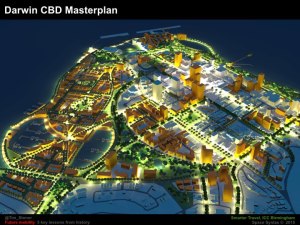
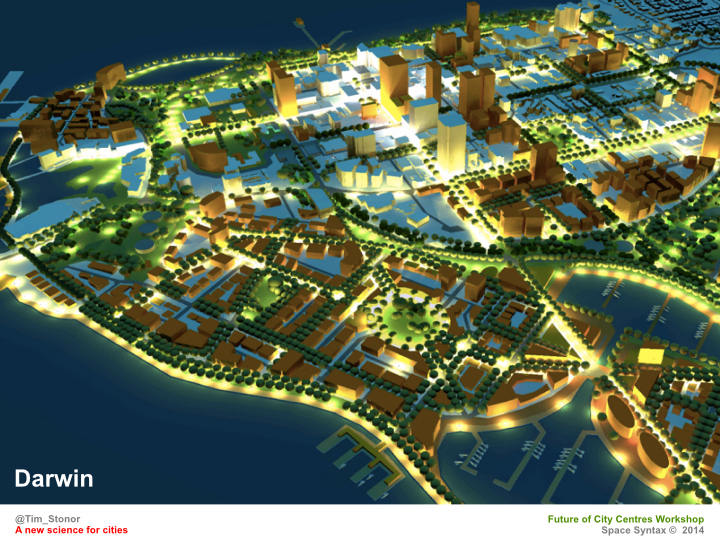
    Darwin masterplanDarwin City Centre Masterplan, Space Syntax
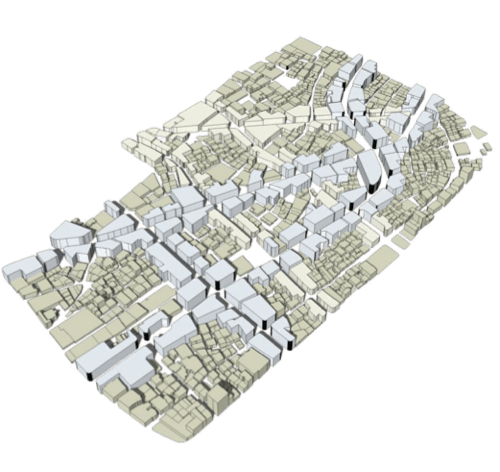
    For too long, architects and urban planners have pursued the myth that human scale means “local” scale. In doing so, they have downscaled space, thinking that by fragmenting and disconnecting towns and cities into small enclaves they would be creating “community”. They were wrong.

    Isolated and disconnected, people on inner -city housing estates, new towns and sprawling housing developments have found it hard to form social networks. To engage with the outside world. To be human.

    And this form of urban planning prevails, being exported to developing cities worldwide.

    In contrast, human scale is a combination of the local and the global, acting simultaneously on the individual. We are, unsurprisingly, more sophisticated than we were given credit for.

    What do I mean? Well, consider having a doorstep conversation with a neighbour while watching the world go by on your street, or a coffee with a friend on the High Street. These are simultaneous local:global experiences.

    Space Syntax analysis identifies the places where shops are most likely to locate in historic towns and cities. Using network models to study patterns of street connectivity, we find that shops are usually in locations that are simultaneously embedded in both local and global movement networks. Where everyday movement criss-crosses, be that local, short-distance movement or larger distance, global movement.

    We call this “multi-scale” analysis and the places it identifies are multi-scale places.

    Human behaviour is no mystery when the right kind of science is directed towards its understanding.

    And the key finding for the creation of future urban settlement is that we need to think more globally. To connect more. To embrace the outside world more. To create more multi-scale places.

    To make places work more effectively at the local scale we need to connect them more effectively at the global.

    We need to see the human scale as a multi-scale phenomenon.

  • Centres and Cities

    I’m sure you’re right about the link between street morphology and attractiveness to business. Centres seem to do one of three things through time. They either:

    1. consolidate and grow (London, Paris)

    2. move (Jeddah)

    3. implode (Sunderland).

    Oh, and some places:

    4. never have a functioning centre (Skelmersdale, UK New Towns) because they were designed in ignorance of the importance of a) grid continuity and b) multi-scale centrality – properties measured by Space Syntax models

    or

    5. divide and reunite (Berlin) but we can’t blame the architects for that!

    Email to Paul Swinney at the Centre for Cities

  • UK Spatial Infrastructure Model

    Slide1

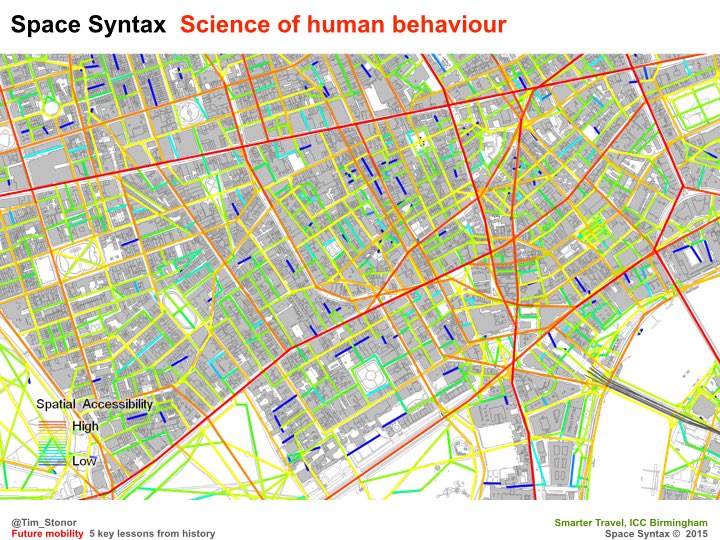
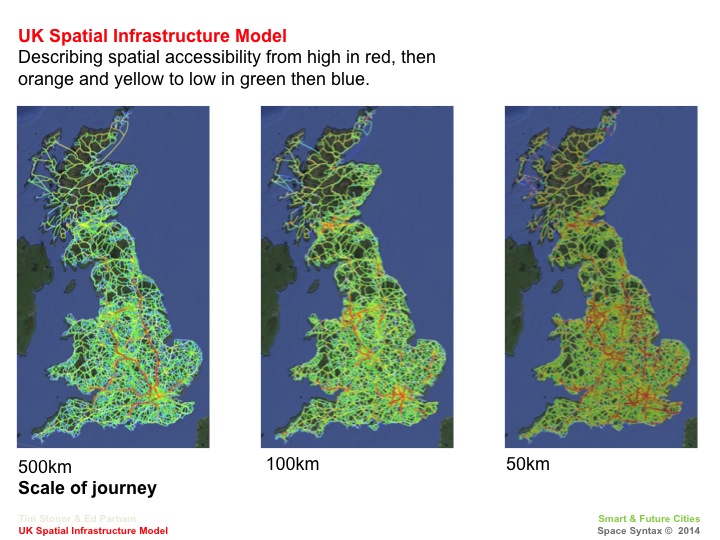
    This is a model of the spatial infrastructure of Great Britain (and will soon include Northern Ireland to become a model of the United Kingdom). It allows us to zoom in and out on cities, towns and villages as well as the connections between them. It also lets us understand the hierarchy of connections at different scales – which routes are more important at a local, pedestrian scale and which are more important at a cross-country, car scale. More important routes are coloured red, then orange and green to less well connected routes in blue. (more…)

  • Spatial Layout as Critical Infrastructure

    Stub…notes for an upcoming conference talk

    Key issue to be addressed:

    – Urban-Rural development

    – Urban Regeneration

    – Smart Cities.

    When a network of streets is laid out, planners and designers build in an enormous amount of “embedded potential”:

    • the pattern of movement
    • land use potential
    • safety
    • land value
    • social interaction
    • public health
    • carbon emissions.

    The design of the street network has a fundamental and measurable influence on each of the above.

    Later changes – to land use pattern or to the local design of streets (eg road widening or narrowing, adding cycle lanes or public transport) – can enhance or even diminish these potentials, but such later changes always occur around a benchmark that is set by spatial configuration decisions.

    Buildings come and go – are built and demolished – but the spatial network, once laid out, is harder to adjust.

    Exceptional new connections – such as bridges – can be built to connect disconnected networks but grids are resilient to change. Therefore, putting the wrong grid into an urban development can be a pathological move, setting the socio-economic potential of places for generations to come.

    How do we know this?

    The evidence-base: post-war housing estates; UK New Towns. Places that go wrong within a generation, if that – sometimes within a few years. Car-dominant transport planning. Land use zoning.

    Risk of failed UK models.

    In finding a balance between the tension of urban and rural development, Chinese towns and cities should learn from China first:

    – mixed use planning: marginal separation by linear integration.

    – mixed mode planning: roads, streets, lanes, canals: Jiading.

    – mixed character planning.

    What are the Spatial Layout requirements?

    The historic Chinese grid: rectilinear hierarchy.

    Pervasive centrality.

    A smart street-grid.

    To be developed…

  • SkyCycle – elevated but not remote

    The comparison between SkyCycle – a proposal to create a network of strategic cycling routes above London’s radial railway lines – and the City of London’s much maligned network of (unbuilt or demolished) upper level walkways is one worthy of attention.

    1.         The City of London “Pedways” often paralleled routes at street level. When they did so they effectively split the pedestrian flow between upper level and street level – thus typically making neither level particularly/sufficiently vibrant. This is why most of them did not work or were resisted from being built in the first place.

    However, as all good students of spatial networks understand, not all links are equal. When upper level walkways genuinely create routes that are not available at ground level then the evidence of observation surveys shows that they can be very well used. Some of the upper level routes through the Barbican are as well used as ground level residential streets elsewhere in London. Reality is, as always, more subtle than simplistic classification.

    2.         In contrast, SkyCycle follows railway lines that have historically created morphological “fissures” in the street network either side of them. In this way SkyCycle does not recreate routes that are already available. Instead, it create new routes.

    3.         Spatially, these SkyCycle routes have two important characteristics:

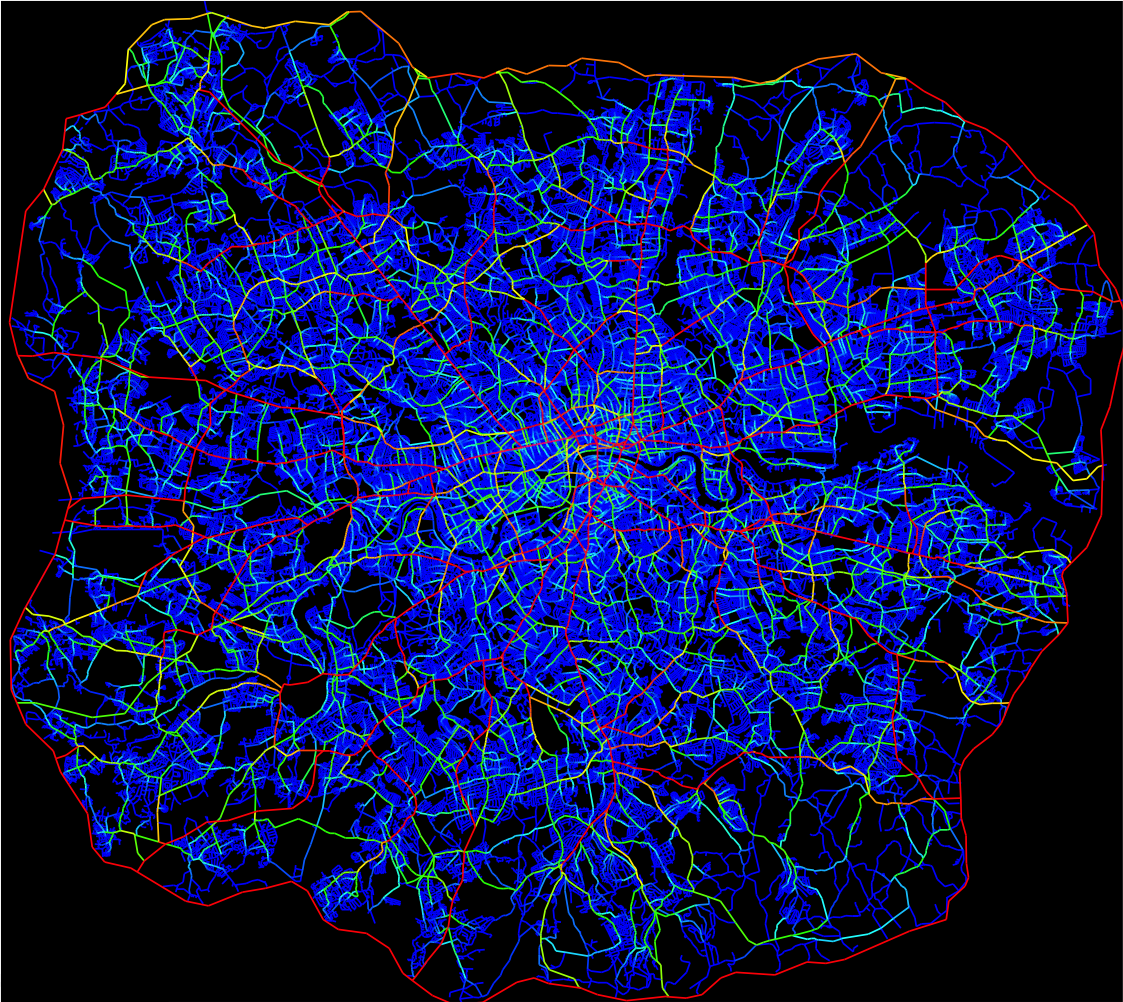
    a)         because they connect directly from the edge of London to the centre, linking to the ground level at accessible points in the street network (identified by Space Syntax through spatial accessibility analysis) SkyCycle routes add to London’s “foreground network” of important arterials (the red and orange links in a Space Syntax map of London).

    London_Global Choice

    (more…)