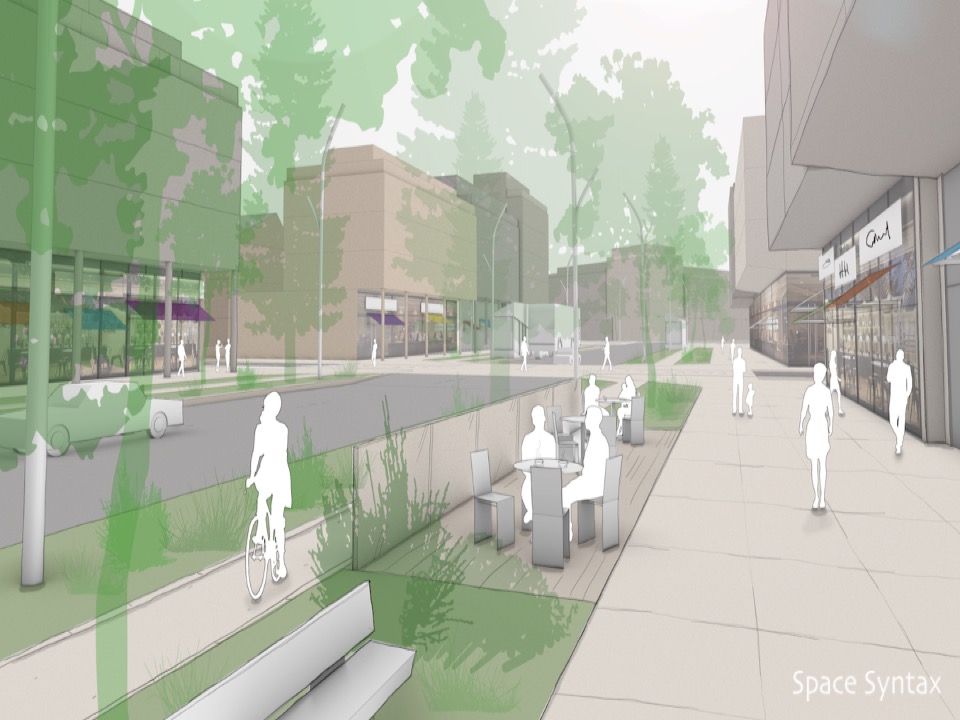
I’ve been invited to lecture to the Harvard GSD ‘Unterbau’ options studio this Thursday. They’ve been offered the concepts of the Continuous City (ie buildings aligned into street-fronting blocks) versus the Discontinuous City (ie modernist standalone architecture). This makes me think about a second pair of types: the Continuous Street Network (simple, linear, grid-like) and the Discontinuous Street Network (convoluted, labyrinth-like).
These two categorisations can be combined, I think positively, as:
CC:CSN (the most traditional form of #urbanism, found for millennia)
DC:CSN (street-based but ‘gappy’)
or negatively as:
CC:DSN (trying to be like a city but overly convoluted in layout – I see a lot of this in contemporary urbanism)
DC:DSN (the worst of the worst – complex and incoherent).
In other words, what matters most is the geometry of the street network, then the continuity/discontinuity of the buildings. Streets first, buildings second. Sometimes/often/always hard for architects to accept.
I might weave this into my talk…
 Tim Stonor
Leave a comment