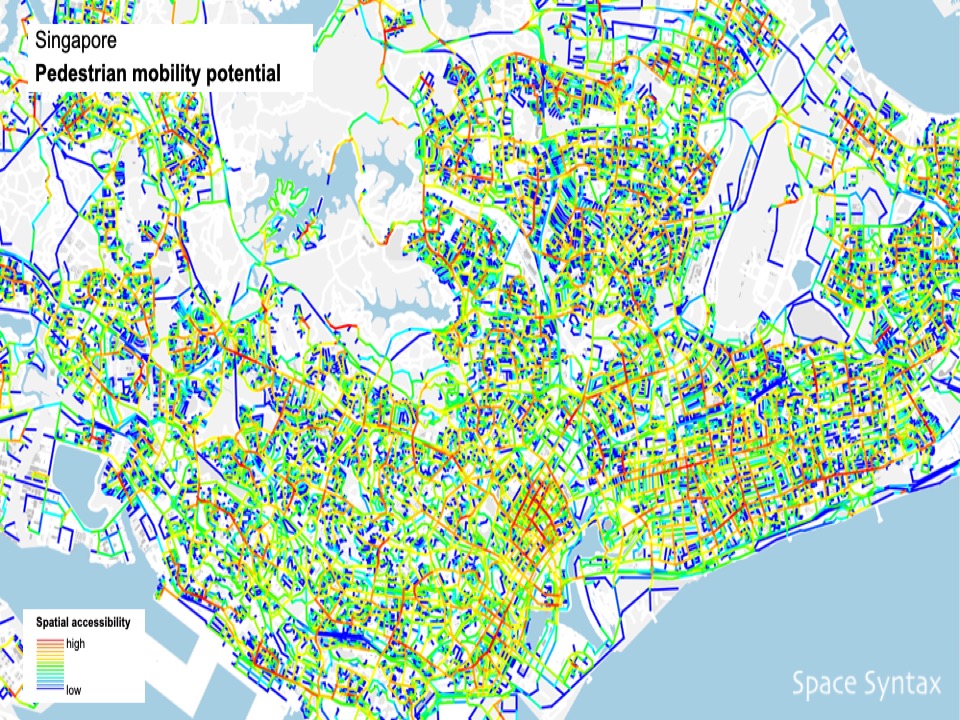
As an architect & urban planner my principal concern is to make cities work for people. This means understanding how their streets connect to either encourage low carbon transport such as walking and public transport. Or, if they’re disconnected, do they lock in car dependence and its carbon impacts?
(more…)Category: Ecological Urbanism
-
What will cities look like 30 years from now?
I joined a carbon reduction event yesterday where, by way of introducing ourselves, we were each asked to predict the future: what did we think we would see more of in 2050 – in terms of objects, experiences and services. A neat little ice-breaker if ever there was one.
Here are my top-of-the-head responses:
1. Object
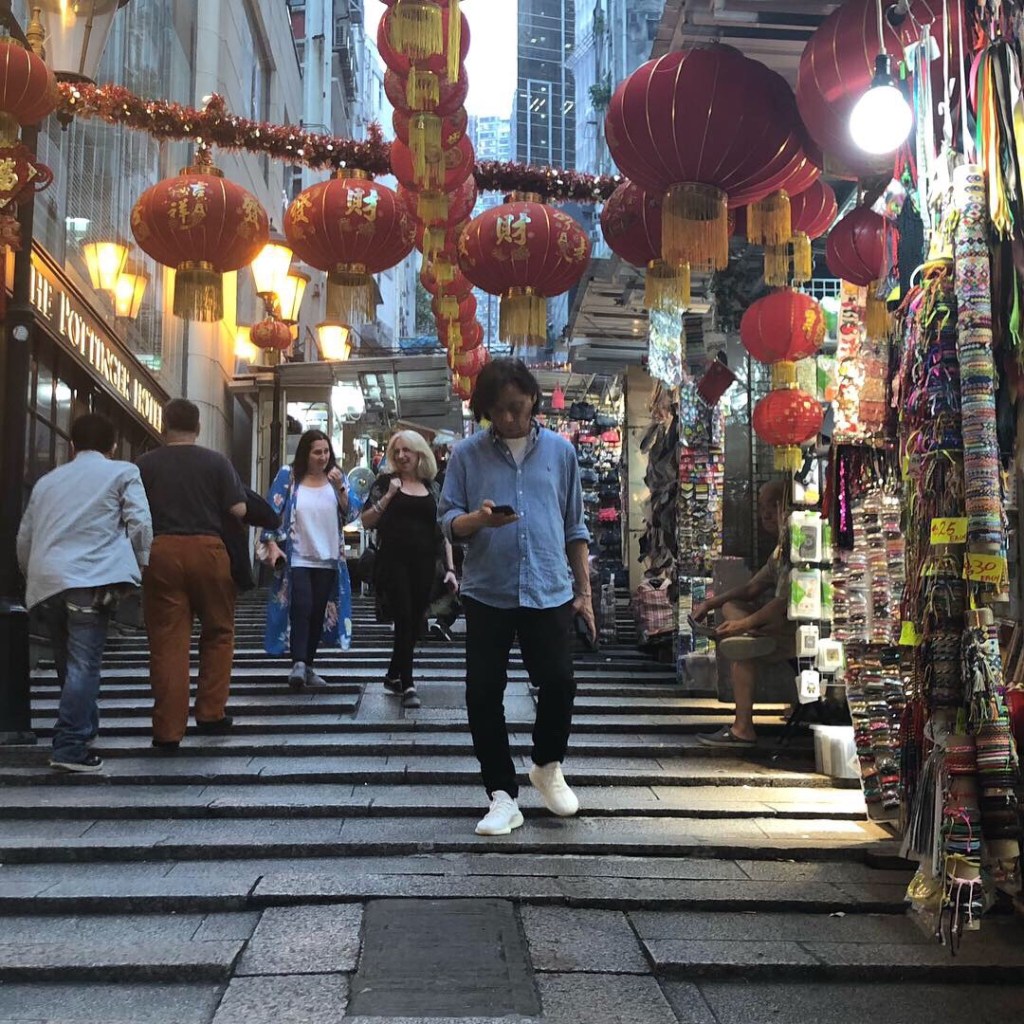
Green, shaded main streets
⁃ fronted by shops at ground level with people living above them
⁃ lined by trees that provide shade, lower air temperatures, disperse strong winds and encourage walking
⁃ forming the centres of local neighbourhoods that are built relatively densely but that are also intensely green (green walls, green roofs, green verges
⁃ connected into a secondary network of slow streets that people can walk, cycle and drive along.
2. Experience
Conviviality: the “Urban Buzz”
– people standing, sitting, talking and generally being present with one another, forming local communities.
3. Service
Data-driven urban planning & design
– harnessing machine learning and AI-driven algorithms to create future plans and predict their impacts.
The first two will help address the Climate Emergency by reducing transport emissions. The third will threaten the established authority of the architectural and urban planning professions, which will need to adapt to survive by accelerating their uptake of digital tools.
-
The Garden Street – the essential, unspoken element of the Garden City
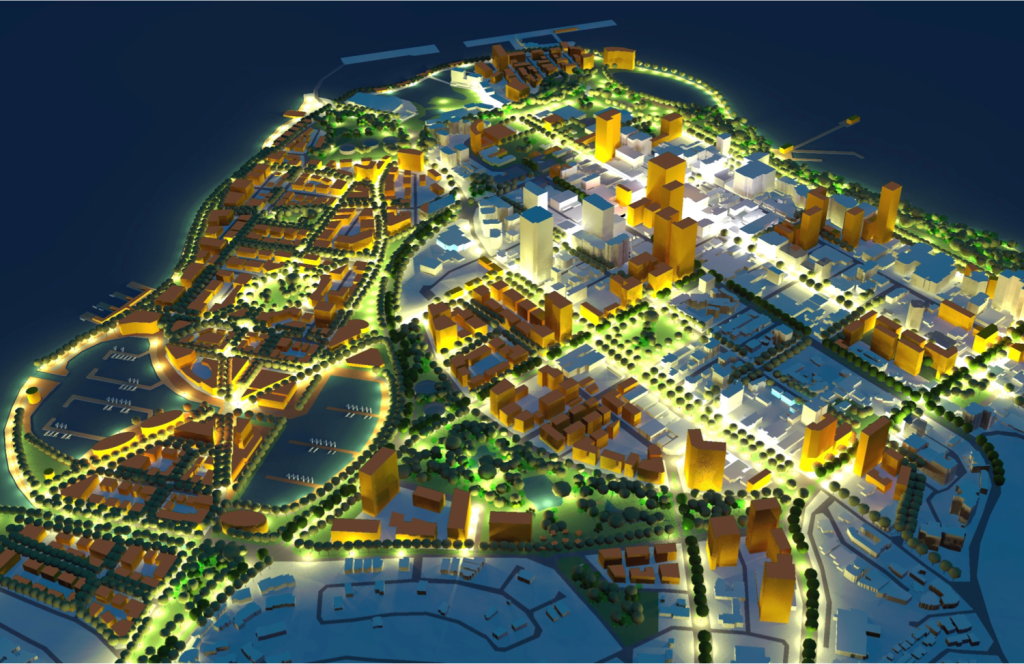
Too often the Garden City is visualised as a place of huge green spaces enfolding small pockets of grey streets. The green and the grey.
But why should streets be grey? What about avenues? Boulevards? Rows of trees? Grass verges? Street planting at various scales.
And don’t those huge green parks just separate the urbanism? Don’t Green Parks create barriers between people and opportunities? Between homes and jobs and places of leisure?
The city of the future should be a city of green streets as well as green parks? And, if we wish to call it a Garden City then we should remember to include the Garden Streets as well as the Garden Parks?
After all, they were always part of the mix.

-
AoU Landscape Urbanism notes & questions
 These notes accompany a PowerPoint presentation Fragmented urbanism: the rise of Landscape Urbanism & the threat it poses to the continuously connected city
TS intro
This is a crucial moment for urbanism. In the UK, The Portas Review, highlighting the UK’s threatened high streets. Around the world, cities are growing faster than ever. But cities – as we knew them – are under threat.First, from the car. Car-dependent urbanism is the principal form of urbanism on the planet. our cities have become so fragmented by road systems in the last century that it is now almost impossible not to be far dependent – not without a major demolition and reconnection programme.
Second, from designers, accepting of the car and intellectualising around this complicity.
The aim of this talk
I have been forming my own views about Landscape Urbanism and am looking to raise a discussion within the Academy of Urbanism and beyond. Do people agree with me? If so, how do we respond? If not, why not?Summary of the Landscape Urbanism aesthetic
Parcels of grey wrapped by ribbons of greenLandscape Urbanism as anti-ecological
“If you have a culture that is fundamentally automobile-based, then an urban model that is anti-automobile is counterintuitive at best. There’s a strange precept these days that asserts that people will abandon their cars if we simply build cities that don’t accommodate them”.
Charles WaldheimNotes
Island bio-geography.Scale – JW.
Water.
Interim uses eg temporary food production. How can this be coded?
Layouts need to be walkable and workable.
Working with the grain of nature.
GRABS – green and blue spaces.
“It was good to find out about a new academic threat to good sense, and I very much agree with your doubts about the universal value of green space.
-
Landscape Urbanism & New Urbanism: it shouldn’t be so divisive
Summary
Despite the efforts of each party to highlight its differences, there is a significant overlap between Landscape Urbanism and New Urbanism, both positive and negative. Positive: a concern about urban harmony. Negative: a tendency to fragment (call it sprawl). Urbanists of both colours would do better to recognise this common ground and realise that fragmented urbanism risks the social, economic and environmental health of cities.Some thoughts
The current Metropolis magazine exchange between Andres Duany and Alex Krieger, on the respective merits of New Urbanism and Landscape Urbanism, has brought a simmering debate to the boil. This week’s 50th Anniversary celebration of Urban Design at Harvard’s Graduate School of Design (GSD) looks set to be an intriguing engagement. Duany, a pioneer of New Urbanism, will be speaking alongside (among?) the pioneers of Landscape Urbanism. How will Daniel deal with the lions’ den?Charles Waldheim, Chair of Landscape Architecture at the GSD, gave a revealing and stimulating presentation on Landscape Urbanism recently to Christian Werthmann’s class there on “Sustainability for Planning and Design”. The foundational concept of Landscape Urbanism – that a balance needs to be found between human and non-human habitats, between the green of the landscape and the grey of the city – is undoubtedly correct. The sterility of most contemporary urban environments is evidence of ignorance or antipathy among planners and designers towards the biodiverse landscape. The consequential impact of insensitive, resource-depleting and damaging development on watersheds, soils, flora and fauna is ultimately costly for the human economy. Water is, especially, a resource that can and does provoke hostility and conflict.
Landscape Urbanism proposes that a new attitude is taken towards first, the preservation of natural habitats and second, the introduction of these into the barren settings of our towns and cities. This is a difficult proposition to argue against in principle. However, in practice it is apparent that the means by which the ecological enhancement of cities takes place – the manner in which urban places are “greened” – is, above all, a design problem. And here’s the rub. (more…)
 Tim Stonor