
Released today, Deloitte Real Estate’s London Office Crane Survey reports a 50% reduction in the construction of new office space in central London in six months. Yet even such a significant reduction in supply may not be enough to offset a greater reduction in demand. As a result, there is likely to be an oversupply of office space in central London.
Mike Cracknell, director at Deloitte Real Estate, said, “By transforming outdated buildings into COVID-safe, high-quality workspaces, developers are looking to upgrade and futureproof their offices in a market where occupational demand is increasingly discerning.”
Indeed, in a buyers’ market, what matters is quality not quantity. And not only the functional specification of office space in terms of health and safety – such as air quality, general environmental cleanliness and the presence or not of touchless interfaces – but also in terms of organisational performance: is this an office in which my organisation can thrive?
When evaluating their needs, organisations must consider the fundamental purpose of an office.
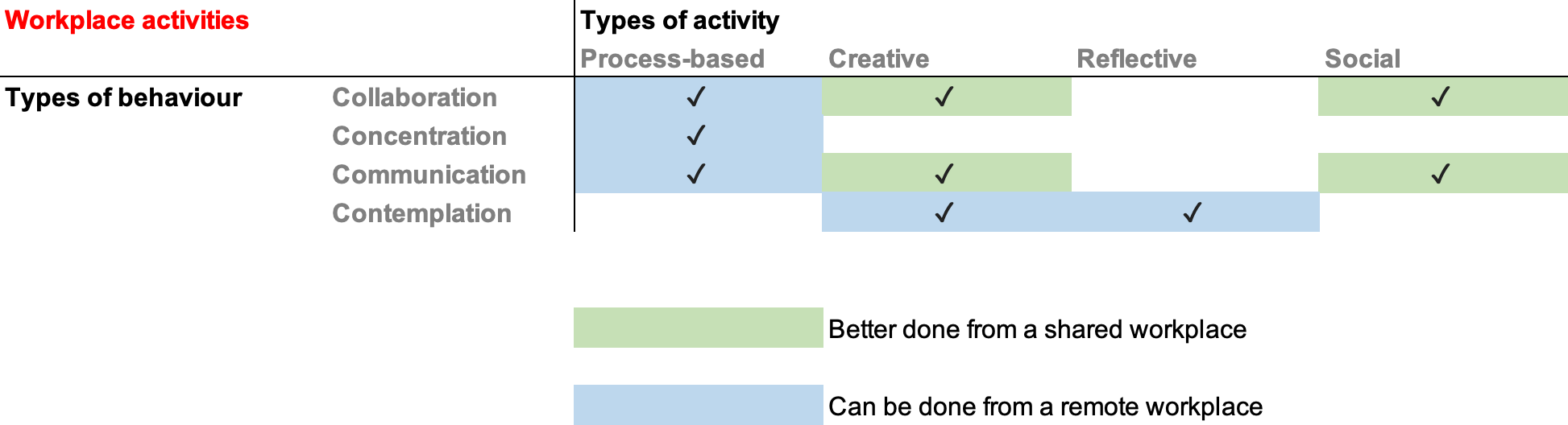
It is no longer enough – if ever it were – to think of an office as a place that’s big enough to get most people together to give them a place to work from where they can occasionally gather in large rooms for group meetings. That can all be done, to some degree of success, on Zoom. Nor is it about having a desk where everyone can work from. For most, a kitchen table or home office may still be good enough.
No, what matters is everything that doesn’t get programmed into the working day: the incidental, the serendipitous. Sometimes thought only of in terms of ‘the social side of things’, the informal interactions that occur in offices are actually the hard currency of operational effectiveness. Offices that ‘buzz’ are places where ideas are born and shared. Where people not only want to work but want to stay working. And where outsiders want to visit, bringing with them their own ideas, their own colleagues and, in so doing, enhancing the melting pot of creativity.



 Tim Stonor