 An article in the New Zealand Dominion Post, titled “On your feet, Wellington” reports on Space Syntax’s proposals to reconnect the pedestrian infrastructure of the capital.
Category: Sustainability
-
“On your feet, Wellington”
-
Carbon emissions & spatial connections
 I spoke today to Dr Joyce Rosenthal’s “Environmental Planning & Sustainable Development” class at the Harvard University Graduate School of Design.
My presentation “Carbon emissions & spatial connections” can be viewed on Slideboom.
-
Connectivity is only the beginning – networking is the goal
 For digital users
2010 was the year to get connected; 2011 will be the year to become networked.
It is one thing to buy an iPhone, join Facebook and Twitter, get a blog, friend and follow. It is another to keep it all going.Already, people are being encouraged to unplug. But why unplug when it is possible to network? How? The solution is to link Twitter and Facebook to a blog; to connect the blog to LinkedIn, taking advantage of the interconnections so that things are only done once.
In other words, connectivity is only the beginning – networking is the goal. And not just for tech geeks but for all users of urban places…
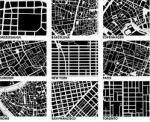 For urbanists
The 20th century was about cities getting connected; the 21st will be about cities becoming networked. (more…) -
Performance planning – beauty has a functional component
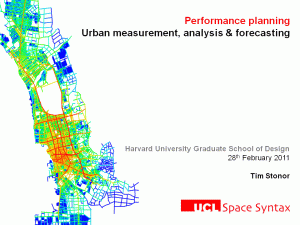 I spoke yesterday to Prof Jerold Kayden’s “Design Law Policy” class at the Harvard University Graduate School of Design.
My presentation “Performance planning – urban measurement, analysis & forecasting” can be downloaded from Slideboom. (more…)
-
Spatial transformation – Berlin
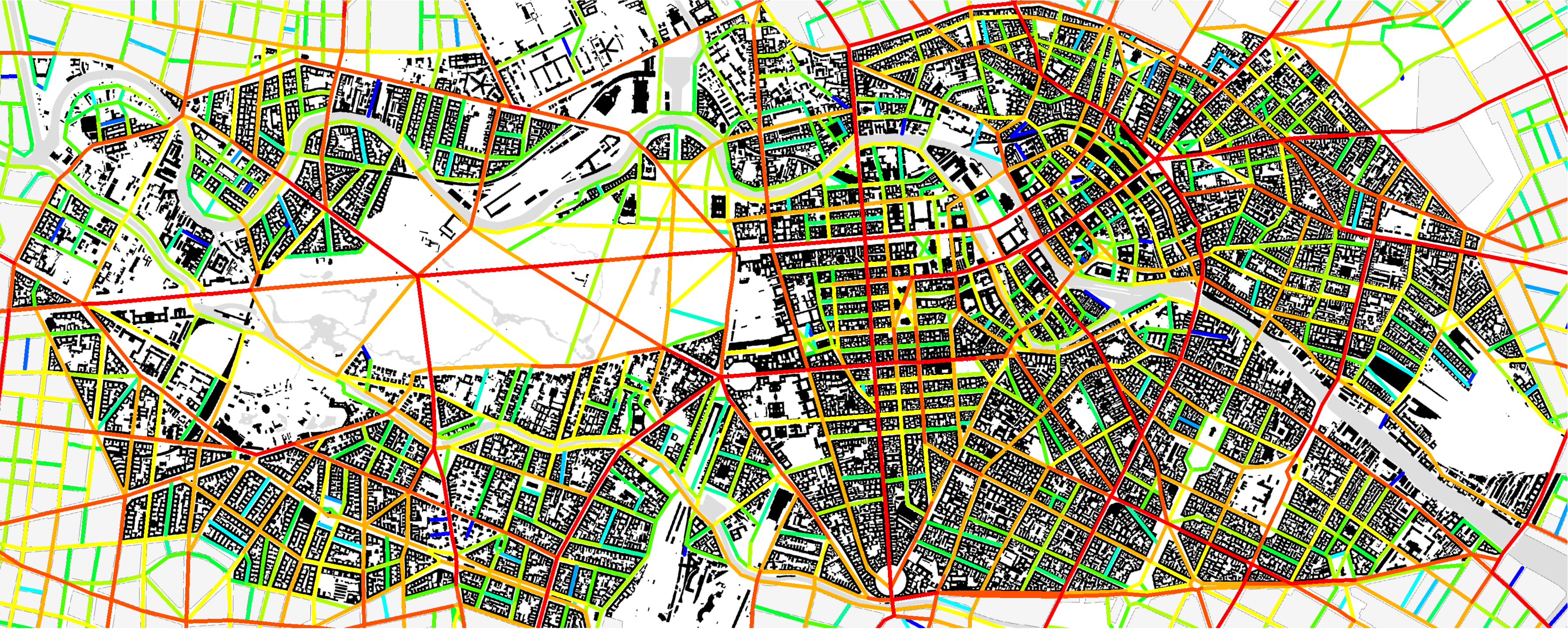
The following images of Berlin have been prepared by Anna Rose and Christian Schwander at Space Syntax Limited as part of a wider study of the city. They show the pattern of “spatial integration” in Berlin at three key periods in history: 1940, 1989 and 2011. The colours read like a temperature scale, with highest levels of integration in red, orange then yellow, and lower levels of integration in green, blue then dark blue. Spatial integration measures the degree to which an urban street is connected into the overall street network. Connectedness is a key influence on the social, economic and environmental performance of urban places. The effects of the post-war division are clear, with the once integrated centre becoming disconnected until Reunification after 1989.
Anna Rose gave a keynote presentation on the spatial transformation of Berlin on 3rd March at the Berlin Kulturforum.
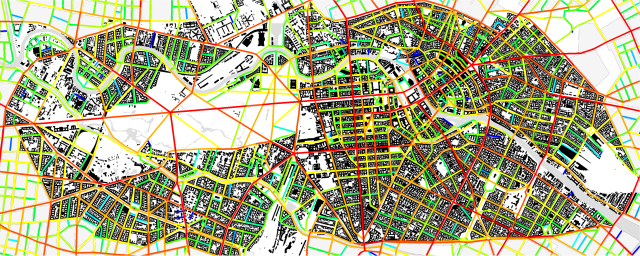
Berlin 1940 
Berlin 1989 
Berlin 2010 -
Giving it all away? Space Syntax & the future of urban planning software
Notes for a lecture to be given at the Lincoln Institute of Land Policy, 23rd March 2011
Themes
With notable exceptions, the current use of technology in planning and, especially, urban design/architecture practice is medieval. More visual than analytic. More about the “Wow!” than the “Why?”, the “Which?” or the “Will it?” Example of animation in traffic models – “Our clients like to see them move!”
Urban imperative – rapid scaling up of urban centres – provokes need for new thinking.
We need to look more at how places work than how they look.
We need to bring academic research into practice and for academia to be better led by the needs of practice.
We need to think about online social networks as well as “real-world” physical/spatial networks. Indeed real world is as much online as physical/spatial.We need to share our data. The future will be made by great partnerships, not great individuals. It has arguably ever thus been.
Open source makes commercial as well as ethical sense as the route to collaboration.
Space Syntax as the case study. (more…)
-
Achieving prosperous local communities – physical connectedness is key
Community prosperity means social, economic and environmental prosperity. Each of these dimensions is strongly influenced by the physical design of the places where people live. Physical design influences human behaviour, which in turn influences community prosperity. The most important aspect of physical design is connectedness. Connectedness can be measured scientifically. Its effects on societal wealth have been identified by UK scientific research over the last forty years.
-
Millennium Development Goals
MDG 1
Eradicate extreme poverty and hungerMDG 2
Achieve universal primary educationMDG 3
Promote gender equality and empower womenMDG 4
Reduce child mortalityMDG 5
Improve maternal healthMDG 6
Combat HIV/AIDS and other diseasesMDG 7
Ensure environmental sustainability -
Portland: city of hub and spoke centrality
 Thank you to all the people that kindly hosted me in Portland over the past three days: Portland Bright Lights, the City of Portland, Portland State University, Ankrom Moisan and Portland TriMet. Thank you to everyone that came to hear me speak – five talks in three days was a challenge that I was happy to accept. To those of you who came more than once, I salute your interest as well as your patience.
 My first presentation, “From highways to handshakes” is now online.
-
Dharavi – slum for sale
Notes from screening at Harvard GSD
The key issue is employment, not housing. Need to retain micro-industry as well as housing.
Resident’s comment on high rise housing proposal (but no clear proposal for providing places of work): “Will the oxygen up there fill our stomachs?”
Industry generates 750 million dollars per annum. Dharavi therefore as an economic object. Much of the economy is informal.
Redevelopment as a step backwards because people can’t continue their previous trade and have to shift to new trades – “lift men and doorkeepers”
“Let people build for themselves – give them water not money.”
SPARC: Don’t leave it to the international developers.
The proposed redevelopment is not just professionally poor but morally poor because it raises expectations among the poor. The plan should instead be done by the municipality.
One objective should be to see Dharavi as a test case of dense, mixed use, low carbon community.
The lack of evidence seems important. Proposals being made in a vacuum of knowledge.
Bryan Bell – need to tap into social capital there rather than turn up in a Mercedes.
-
Connecting the disconnected – how much is enough?
Yesterday evening, Ed Parham gave a talk at the Graduate School of Design on Space Syntax’s work redesigning unplanned settlements in Jeddah, Saudi Arabia. Despite the really awful weather, which turned Cambridge into a pedestrian sludge, there was a full house.
Ed showed how Jeddah’s unplanned settlements share a common spatial property of being locally walkable but globally disconnected from the bigger movement structure of the city. This supresses the economic potential of these places. To counter this, the Space Syntax team has developed Area Action Plans for dozens of unplanned settlements, identifying opportunities to bridge between the local and global movement networks with new streets lined with commercial activity. These streets allow the unplanned settlements to trade outwards in new ways.
The big question raised by this work is: to what degree should unplanned settlements be reintegrated into the spatial fabric of the city? To a degree, the spatial distinction of these places creates a cultural identity for the inhabitants, with certain social benefits. The risk of reintegration is that this identity will be diluted or even lost by the new flow of movement, social identity and capital through the unplanned areas.
Ed described how, in fact, a spatial hierarchy can be created that leaves much of the original spatial fabric intact, especially the fine-grained, more residential and more spatially segregated fabric that helps to structure the cultural identity of the unplanned settlements. The long audience discussion that followed Ed’s talk showed how relevant the challenge of urban connectivity is to urban practice.
-
From landscapes of extraction to creative industries of organic matter & waste
Monday, 14th February 2011 at 6pm
Stubbins Room, Harvard Graduate School of Design, 48 Quincy Street, Cambridge, MA 02138Participants
Pablo Rey, Basurama
Manolo Mansylla, Trashpatch
Robin Nagle, anthropologist of material culture (waste)
Scientist doing research in biomaterials (Wyss Institute for Biologically Inspired Engineering/ Materials Research Science and Engineering Center – School of Engineering and Applied Sciences)Moderator
Richard Forman
Abstract
Technology has no limits. Science has no limits. Human creativity and imagination have no limits. The limits are imposed by matter. Raw materials are being extracted from the remotest of geographies and we are beginning to exhaust the last reservoirs of available minerals in order to perpetuate a production system based on disposability and the consumption of wholes, not parts; of large, not small; of new, not old; of multiple, not the one that is needed. In order to extract such minerals, we often deplete forests, along with the cultures that inhabit them, or contaminate river basins. Science and technology can produce brilliant responses to our environmental problems, but unless they take into account the source of the materials they consume, the counter landscapes of extraction, those of waste and slums (people get displaced as we render their land useless through monoculture or extraction), will continue to grow; setting off our good intentions to move towards a more sustainable future. (more…) -
Upcoming talk: “Planning the unplanned: An evidence-based approach to design in informal settlements”
Harvard Graduate School of Design, 18th January 2011, 6:30pm
With the world population of slum dwellers set to increase to 2 billion over the next 30 years, the need to provide adequate living conditions for the urban poor is recognised as a major challenge. Political and economic pressure to implement improvements quickly, often means that the contribution slums make to the wider city is not recognised as part of the solution.
Using the case study of his work in Jeddah, Saudi Arabia, Ed Parham of Space Syntax will explain how advanced techniques of spatial analysis have been used to identify a core spatial problem at the heart of the slum condition. These techniques have been used further to develop solutions in the form of individual area profiles, city-wide prioritisation strategies, settlement-specific needs-based improvement strategies, and to help generate detailed area action plans. Based on in-depth knowledge of the role and importance of spatial networks in cities, these solutions can be implemented incrementally and flexibly with the long-term aim of reintegrating the unplanned settlements, and their residents, through the minimum disruption.
-
If planning doesn’t work, is the answer chaos? Surely not…
“I mean, bluntly, there comes a question in life – do you believe planning works, that clever people sitting in a room can plan how people’s communities should develop? Or do you believe it can’t work?
“I believe it can’t work, David Cameron believes it can’t, Nick Clegg believes it can’t. Chaotic therefore in our vocabulary is a good thing.
“Chaotic is what our cities are when we see how people live, where restaurants spring up, where they close, where people move to.
“Would you like to live in a world where you could predict any of that? I certainly wouldn’t.”
Nicholas Boles, Conservative MP for Grantham and StamfordNicholas Boles’ remarks are understandable but at the same time worrying for many involved in the planning, design and management of places, urban or rural. Thinking that the answer to planning is chaos not only questions the budgets currently allocated to the activity but also critiques the intellectual basis of the profession.
Understandable because, from failed housing estates to the Dome, the UK planning system has a poor record of doing things “top-down”.
Worrying because people who have taken time to study how cities evolve have concluded that they do so in ways that are far from chaotic. Instead, urban scientists, such as Prof Bill Hillier of University College London, have found that places are structured by the interplay between the attraction of assets and the location of these in the spatial network of towns and cities. Successful places have attractive assets and effective spatial networks. Having both makes planning and managing such places all the easier. Placing key assets in the wrong place – like the Dome, which was built at the tip of a poorly connected peninsula – is a recipe for failure.
Urban experts have also found that places are, at best, probabilistic in the way they operate, never deterministic. You can’t make anything happen – only provide conditions that facilitate things happening.
The problem for some people is that this kind of analysis is often too subtle and sophisticated. People are looking for simple answers. So, when Nicholas Boles concludes that planning doesn’t work, he announces that the answer lies in a soundbite: chaos.
Saying that chaos is the answer to top-down planning is akin to saying that anarchy is the answer to autocracy. Far from it, the answer is not in chaos but in a looser fit form of planning that recognises the fact that cities work well when individual acts of settlement and occupation occur within a well connected and well maintained movement network; when attractors are well located; when the street system promotes walking, cycling and public transport as well as the car.
It is a fantasy to think that this will happen unless the efforts of individuals are emboldened by a vision and coordinated as a system. We used to call this planning.
-
Social Entrepreneurship in the Built Environment
Tweetroll from an evening at the Harvard Graduate School of Design with actor/activist Edward Norton and developer Jonathan Rose
Social Entrepreneurship in the Built Environment
Piper Auditorium, 1st December 2010Edward Norton quoting his grandfather Jim Rouse: The purpose of business is not profit but the provision of an authentic service from which profit is a derivative @HarvardGSD
Jonathan Rose
Cities are the answer to the increase in population and demands on energy.
People who live in New York City consume 25% energy of people in suburbs.
Birth rates a lower in cities.
Opportunities are greater.Edward Norton
Jim Rouse: Assess the field of opportunities and go for the most difficult. Blow off people who say you shouldn’t because the most difficult problems are the ones that most people should be going for.Jim Rouse: Intractable problems are problems of apathy and complacency and not of impossibility.
Jim Rouse: Form should follow function and function should emerge from the service the project provides, especially in the urban design.
Jonathan Rose: Cities are about connectivity, culture, universities, access to nature. Cities are not just piles of buildings clustered together.
Edward Norton: We need to promote a reboot of our sense of self. We are not #1. We are not who we project ourselves as being. @HarvardGSD
-
Much much more with much much less
Inspired by a comment by Rahul Mehrotra, “Much much more with much much less” is the theme of next semester’s Loeb Fellowship Public Seminar series.
The four seminars in the series will take place at the Harvard University Graduate School of Design.
The working titles for the seminars are:
Technology
Resources, Money & Economy
Food, Agriculture & Basic Needs
Process, Participation & EngagementDates to follow…
-
Why it isn’t all about common sense…
There is a view that historic cities have all the answers and we just need to look at them. Or, in any case, it’s just common sense. If professionals had a bit more common sense they would make a better set of decisions.
There are at least three reasons why this can’t be entirely the case. Or, if it is, why our definition of common sense needs careful construction. (more…)
-
Technology – it’s the new concrete!
Stub…
Pouring concrete used to be the “macho” expression of urban planning power. Today it is technology. “Macho” has translated into “cool”.
Risk – we jump too quickly through the filter of common sense ie the “What’s all this for?” filter.
-
Landscape Urbanism & New Urbanism: it shouldn’t be so divisive
Summary
Despite the efforts of each party to highlight its differences, there is a significant overlap between Landscape Urbanism and New Urbanism, both positive and negative. Positive: a concern about urban harmony. Negative: a tendency to fragment (call it sprawl). Urbanists of both colours would do better to recognise this common ground and realise that fragmented urbanism risks the social, economic and environmental health of cities.Some thoughts
The current Metropolis magazine exchange between Andres Duany and Alex Krieger, on the respective merits of New Urbanism and Landscape Urbanism, has brought a simmering debate to the boil. This week’s 50th Anniversary celebration of Urban Design at Harvard’s Graduate School of Design (GSD) looks set to be an intriguing engagement. Duany, a pioneer of New Urbanism, will be speaking alongside (among?) the pioneers of Landscape Urbanism. How will Daniel deal with the lions’ den?Charles Waldheim, Chair of Landscape Architecture at the GSD, gave a revealing and stimulating presentation on Landscape Urbanism recently to Christian Werthmann’s class there on “Sustainability for Planning and Design”. The foundational concept of Landscape Urbanism – that a balance needs to be found between human and non-human habitats, between the green of the landscape and the grey of the city – is undoubtedly correct. The sterility of most contemporary urban environments is evidence of ignorance or antipathy among planners and designers towards the biodiverse landscape. The consequential impact of insensitive, resource-depleting and damaging development on watersheds, soils, flora and fauna is ultimately costly for the human economy. Water is, especially, a resource that can and does provoke hostility and conflict.
Landscape Urbanism proposes that a new attitude is taken towards first, the preservation of natural habitats and second, the introduction of these into the barren settings of our towns and cities. This is a difficult proposition to argue against in principle. However, in practice it is apparent that the means by which the ecological enhancement of cities takes place – the manner in which urban places are “greened” – is, above all, a design problem. And here’s the rub. (more…)
-
Go looking for the thing you can’t see
Architecture is obsessed with what things look like. Hence the focus on form and style; on the materials that buildings are made from; on the processes by which these materials are brought together. In school, in practice and in the media.
But this isn’t everything and it isn’t enough. Architecture is much more important. It is not only a physical and visual discipline but a social, economic and environmental one too.
Architecture creates social networks by influencing how people use the places they are given. It channels the flow of money down streets and corridors and it provides the locations in which this money changes hands. It influences the flow of energy from the micro scale of the lightbulb to the macro regional scale of the transport system.
As Rahul Mehrotra says, “The spectacle of the city is not the buildings but the activity that takes place between them”. He calls this the “Kinetic City”. (more…)



 Tim Stonor