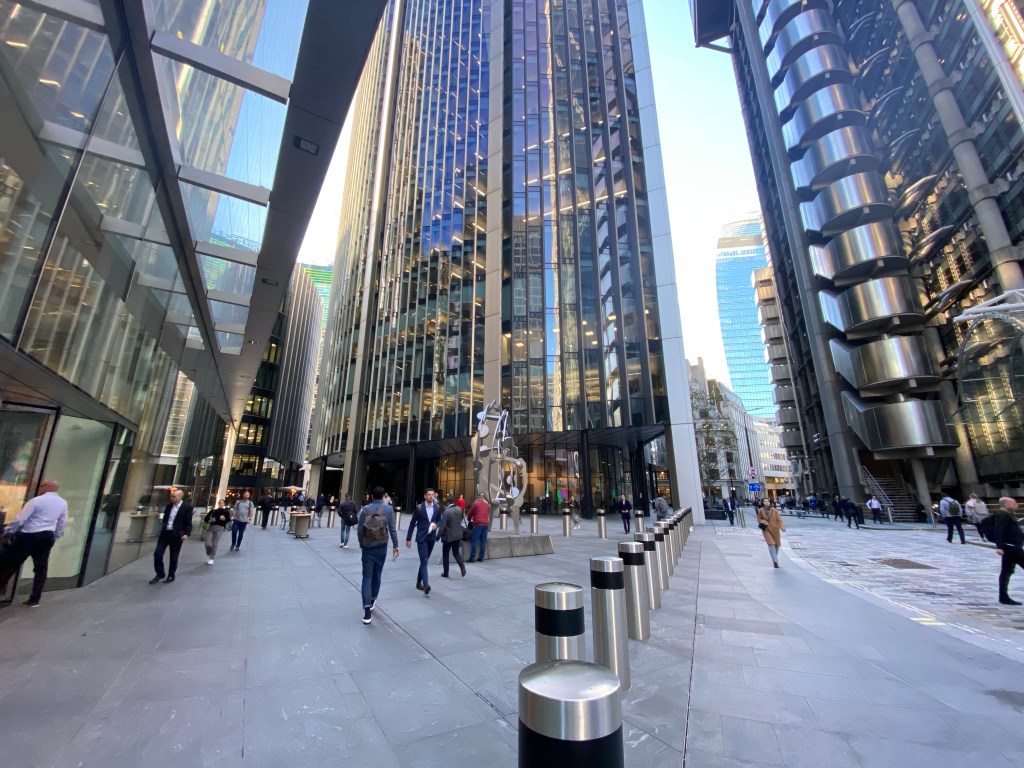
Category: Public space

  • Form ⇝ Flow ⇝ Function

    Form ⇝ Flow ⇝ Function

    Many places work in ways not originally intended. The artist’s impression is often unrealised, with public spaces less well used than in the drawings, shops not getting the footfall shown in the CGIs, tracks worn into green spaces painted as pristine in the renderings.

    The actual function of places – as opposed to their intended function – follows the flows set up by the spatial form of those places, independent of their designers’ wishes otherwise.

    It’s risky to think that form follows function if you don’t first understand how the actual functioning of places is a consequence of the flows shaped by their physical forms.

    If you don’t understand how physical forms shape human flows and these flows then support functions (such as sitting, shopping, resting, feeling comfortable or feeling unsafe) then you risk designing the wrong physical forms and ending up with problematic functions.

    So, in the classroom it might be:

    “Form follows function”

    But in reality it’s the other way round:

    Function follows flow, and flow follows form.

    In other words:

    Function follows flow follows form.

    With software that forecasts flows by analysing physical forms, and with design principles shaped by decades of experience, my colleagues at Space Syntax and I have been able to de-risk the design process. We’ve analysed forms, predicted flows and been able to anticipate the functioning of schemes at the earliest stages of design, feeding back our recommended changes to the physical shape of design proposals in order to optimise flows and close the gap between intended and actual functions.

  • Intense relationships: measuring urban intensity

    Enriching design practice by the mapping of human behaviour patterns could transform urban space

    An article published in the Architectural Review on 30th April 2018.

    There’s much debate about how to measure density – dwellings per hectare, bedrooms per hectare or people per hectare; including or excluding major highways, parks and open spaces; the permanent population only or the transient one too? 

    While this gives urban planners something to disagree about, it risks missing the point: great urban places are not created by density; they’re created by intensity. The difference matters. When people describe the buzz of a market they don’t say, ‘Wow – it was so dense’. They’re much more likely to say how intense it was. Density is a word used by planners. Intensity is a word that real people use, and perhaps because it describes the outcomes that people experience rather than the inputs that have gone into creating them. It’s the outcomes that are ultimately more important.

    But planning professionals like density. Even though density doesn’t capture the essence of what it feels like to be somewhere, the term appeals to professional instincts. It describes the raw ingredients that planners have to handle and, once you choose which version of the formula to use, density is easy to measure. It involves a simple calculation of straightforward urban quantities such as the number of people, of houses or of bedrooms, all divided by the geographic area over which those ingredients occur. Easy.

    By contrast, intensity seems more difficult to pin down, not least because it appears to have a subjectively emotional dimension; it speaks of feelings, responses, stimuli; raising problems about how it can be measured. But intensity is also a response to context, to place and above all to people – and here we find clues to its measurement.

    (more…)