How might cities be planned in the future?
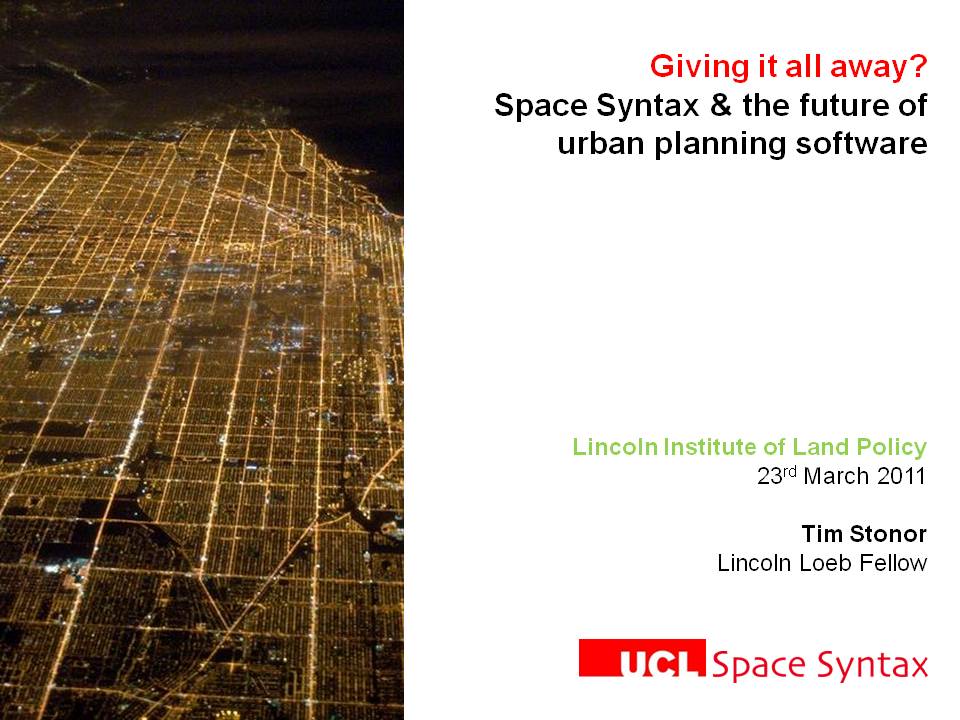
This is not only a question of how they might look but also, and more importantly, about how they might be laid out as patterns of buildings and spatial connections.
Laying out a city means answering two key questions: “what goes where?” and the “how does it all connect together?” The answers to these questions have fundamental implications for the social, economic and environmental performance of urban places. And the jury is out as to which is the best way to do so: to use spatial planning to create place.
The global urban risk is that architects and planners have created, and continue to create, highly unsustainable city layouts – car dependent, socially divisive, congested and life-suppressing. And, it would seem, the more technologically advanced cities have become, the less efficiently they have worked.
By contrast, the street-based, continuously connected grid – the kind of layout that the slow, incremental evolution of cities produced before the intervention of modernism – has largely fallen out of fashion.
My argument in this piece is that the continuously connected grid is the only form of urban layout that can deliver sufficient social, economic and environmental value. The only kind of grid that is truly sustainable. (more…)
 I spoke today to
  Tim Stonor